Potatoes (Leaving Cert Agricultural Science): Revision Notes
📚Revision Notes
Potatoes
Introduction to potatoes
Potatoes hold a special place in Irish agriculture as the most popular vegetable consumed throughout the country. This root crop belongs to the Solanaceae family, which also includes other important plants like tomatoes and tobacco. Understanding this family relationship helps explain some of the shared characteristics and growing requirements these crops have.
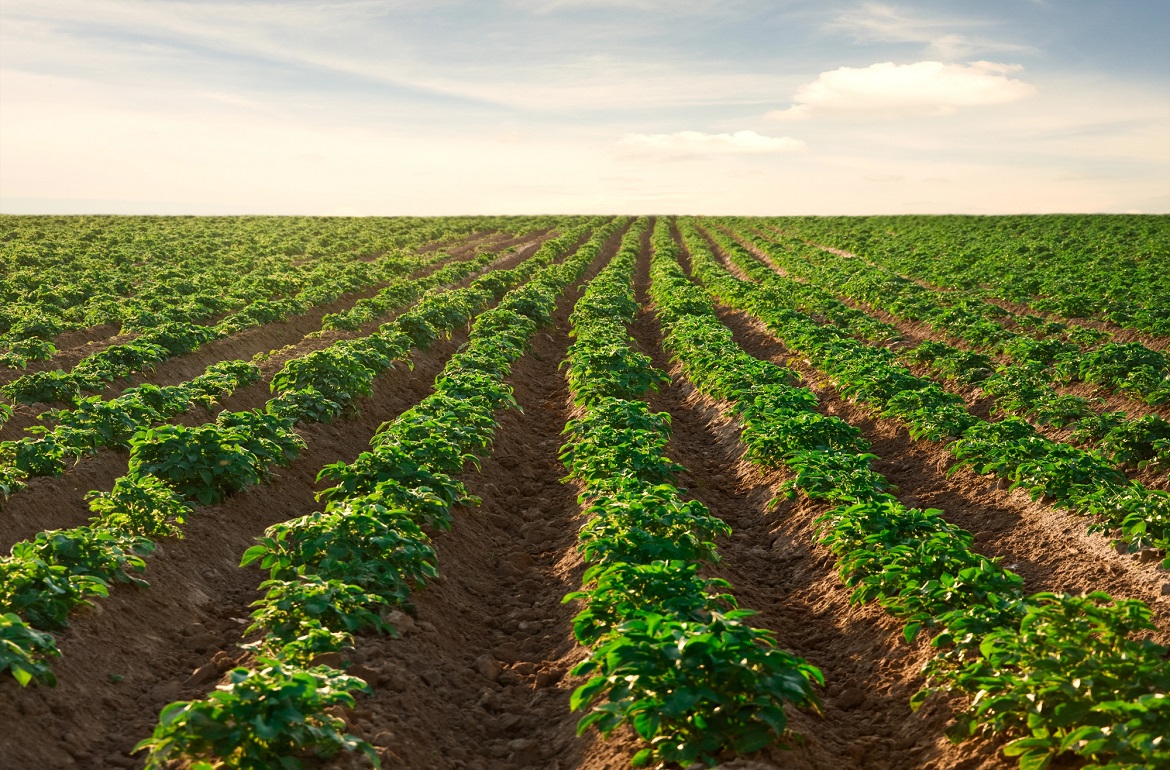
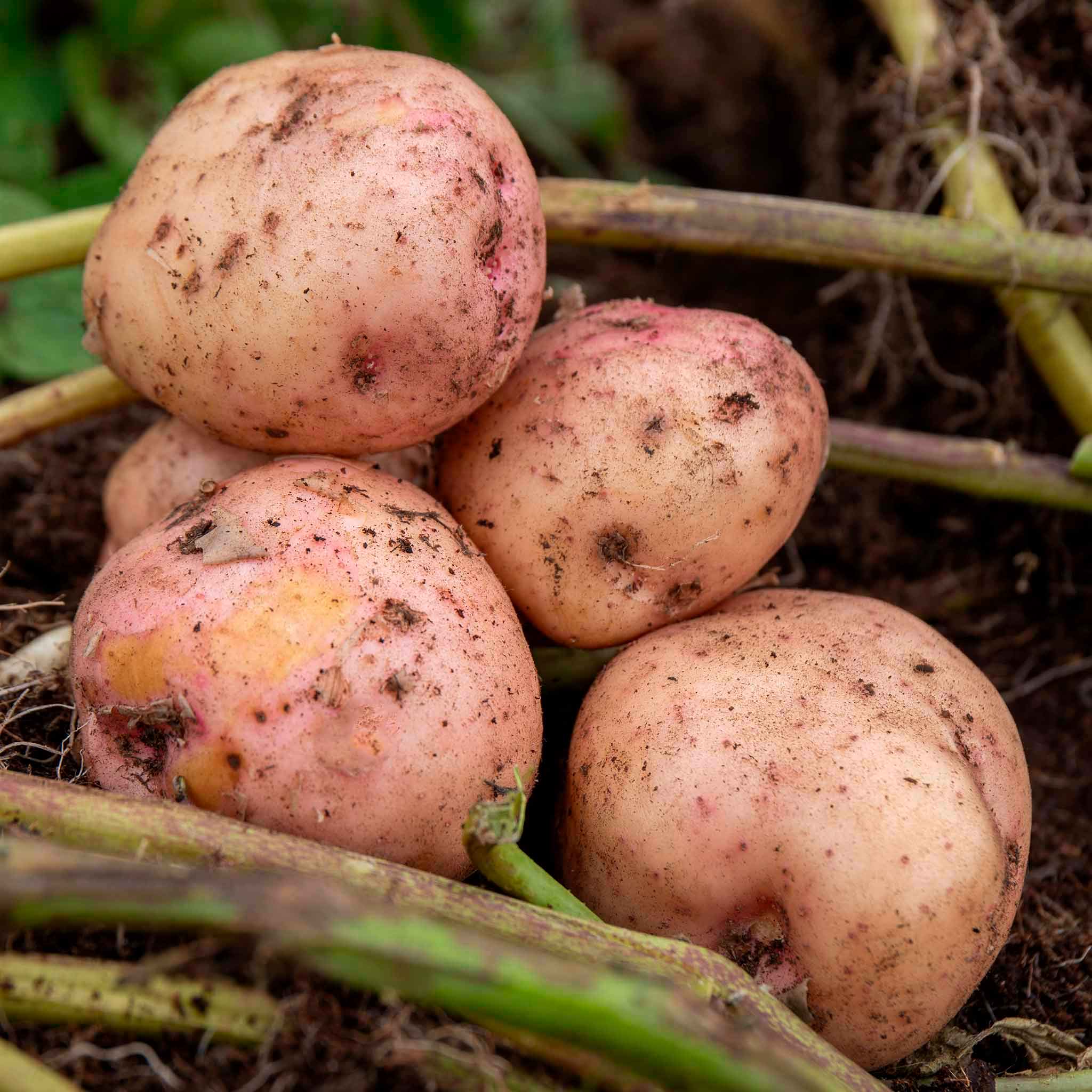
The part of the potato plant that we eat is actually a tuber, which is a modified stem that the plant uses for food storage. This underground storage system allows the plant to survive through difficult conditions and provides the starchy, nutritious food source that has become central to diets worldwide.
Note
The Solanaceae family relationship explains why potatoes share similar growing requirements and pest susceptibilities with tomatoes and other nightshade plants. This knowledge helps farmers plan crop rotations and pest management strategies more effectively.
Categories of potatoes
Potato production in Ireland is organised into distinct categories based on planting and harvesting times. There are three main types: first earlies, second earlies, and maincrop potatoes.
First and second earlies are planted in February and are designed for earlier harvest. These varieties are harvested from May onwards while still immature, which means they produce lower yields but command higher prices in the market. Popular varieties in this category include Home Guard and British Queen. The advantage of growing earlies is that they provide farmers with earlier cash flow and can take advantage of premium pricing when fresh potatoes are in high demand.
Maincrop potatoes are harvested from September onwards when they are fully mature. These varieties produce significantly higher yields but sell for lower prices per unit. They form the backbone of potato supply throughout the winter months, lasting until May of the following year. Examples include Rooster and Kerr's Pink varieties. Maincrop potatoes are particularly valued for their high dry matter content and their ability to produce floury tubers that are excellent for processing.
Example
Timing Comparison: Early vs Maincrop Potatoes
First/Second Earlies:
- Planted: February
- Harvested: May onwards (immature)
- Yield: Lower quantities
- Price: Higher market value
- Examples: Home Guard, British Queen
Maincrop:
- Planted: February
- Harvested: September-October (fully mature)
- Yield: Higher quantities
- Price: Lower per unit
- Examples: Rooster, Kerr's Pink
Seed production systems
The potato industry relies on two distinct production categories: certified seed potatoes and ware production. Certified seed potatoes are specially grown tubers that meet strict quality standards and are used by farmers to plant new crops.
Ireland's main seed potato production occurs in County Donegal, where the windy coastal conditions provide several important advantages. The strong winds help prevent aphid infestations, which are crucial to control because aphids can spread viral diseases that would ruin seed quality. Additionally, Donegal's isolated location from other major potato-growing regions helps keep disease risks low, ensuring the seed potatoes remain healthy and viable.
Ware production focuses on growing potatoes for direct human consumption, representing the bulk of commercial potato farming across the country.
Important
County Donegal's windy coastal conditions are essential for quality seed production because they naturally prevent aphid infestations. Aphids are particularly dangerous for seed potatoes as they transmit viral diseases that can ruin entire seed lots and affect future crops.
Soil requirements and cultivation
Potatoes can grow successfully in various soil types, but they perform best in deep, well-drained loam soils. The ideal soil conditions provide good drainage to prevent waterlogging, which can lead to tuber rot, while still retaining enough moisture to support healthy plant growth.
The optimal soil pH for potato cultivation ranges from to . This slightly acidic range is important because it helps prevent certain diseases. If soil becomes too alkaline (pH above 7), potato scab can develop, which affects crop growth and reduces the quality of the tubers. When soils are too acidic, trace elements become less available to the plants, which can limit growth and yield.
Farmers often add manure to potato soils because it helps improve the soil's ability to retain water, which is essential for consistent tuber development throughout the growing season.
Important
Critical pH Range: 5.5-6.0
Maintaining proper soil pH is essential because:
- Too alkaline (>7.0): Promotes potato scab disease
- Too acidic (<5.5): Reduces trace element availability
- Optimal range: Prevents disease while ensuring nutrient accessibility
Rotation practices
Potato crops require careful rotation management to maintain soil health and prevent disease buildup. The recommended rotation cycle is one year in four, meaning potatoes should only be grown on the same field once every four years.
This rotation system serves several important purposes. It helps break disease cycles that could build up in the soil, prevents the depletion of specific nutrients that potatoes heavily use, and allows the soil structure to recover between intensive potato crops.
Note
The four-year rotation system is based on the lifecycle of potato-specific diseases and pests. This timing allows soil pathogens to die off naturally while preventing the buildup of potato-specific problems that could devastate future crops.
Seed bed preparation
Proper seed bed preparation is essential for successful potato cultivation. The soil needs to be deep and well-cultivated to provide the right conditions for tuber development. Deep ploughing is particularly important because potatoes are planted in spring when soil conditions need to be optimal.
During preparation, farmers must remove stones and large clods from the soil. This step is crucial because these obstacles can cause damage to developing tubers, leading to misshapen potatoes that are less valuable in the market. A smooth, well-prepared seed bed also makes planting and later harvesting operations much more efficient.
Note
Stone removal during seed bed preparation isn't just about soil quality—it's directly linked to market value. Misshapen potatoes caused by soil obstacles receive significantly lower prices and may be rejected entirely by processors.
Planting methods
When sowing seed potatoes, they are planted centimetres below the ridge with spacing of to centimetres between individual tubers. This spacing allows each plant enough room to develop a good root system and produce multiple tubers without competing too heavily with neighbouring plants.
The ridge system used in potato planting serves multiple purposes. It improves drainage around the developing tubers, makes earthing up easier later in the season, and helps keep the tubers covered to prevent them from turning green when exposed to sunlight.
Sprouting (chitting)
Chitting or sprouting is an essential practice when growing early potato varieties. This process involves exposing seed potatoes to light before planting, which encourages them to develop sprouts.
The chitting process gives early varieties a significant head start in their development, meaning they can be harvested earlier and achieve better yields. Seeds are typically placed in shallow trays under light conditions until sprouting occurs, then they are carefully replanted in the field. This technique is particularly valuable for earlies because it extends their growing season and improves their market timing.
Example
Chitting Process for Early Potatoes
Step 1: Place seed potatoes in shallow trays
Step 2: Expose to light conditions (not direct sunlight)
Step 3: Wait for sprouts to develop (typically 2-4 weeks)
Step 4: Carefully plant sprouted tubers in prepared seed beds
Result: Earlier harvest and improved yields for early potato varieties
Fertiliser management
Fertiliser application plays a crucial role in potato production, but it requires careful management to achieve the best results. The three main nutrients - nitrogen, phosphorus, and potassium - each have different effects on potato crops.
Nitrogen increases tuber yield, but excessive amounts can cause problems. Too much nitrogen makes plants become watery and decreases the dry matter content of the tubers. Over-fertilised plants also become more susceptible to blight disease, creating additional management challenges.
Phosphorus helps increase dry matter content and encourages early root development, which is particularly beneficial for getting crops established quickly.
Potassium increases tuber yields, but like nitrogen, too much can cause problems by reducing dry matter content.
The key to successful fertiliser management is finding the right balance. Excess fertiliser can damage yields or even act as a toxin to the plants. This is why fertiliser applications are carefully regulated, particularly for potato crops where quality is just as important as quantity.
Important
Fertiliser Balance is Critical
Nitrogen: Increases yield BUT excess causes:
- Watery tubers with low dry matter
- Increased blight susceptibility
- Quality degradation
Key principle: More fertiliser does not always mean better results - excess can be toxic to plants.
Weed control and earthing up
Weed management in potatoes involves both chemical and mechanical methods. Potato crops are typically sprayed with contact and residue herbicides when 20% of the potato plants have emerged. The contact herbicide may initially damage the potato crop, but the plants recover quickly while the weeds are controlled.
Earthing up is a traditional mechanical method that involves covering the haulms (shoots and leaves) with additional soil. This technique serves multiple purposes: it prevents sunlight from reaching the soil surface where weed seeds might germinate, provides physical support for the potato plants, and helps prevent blight spores from being washed from leaves onto the tubers below.
Modern farming practices have reduced the use of earthing up because seed drills now plant potatoes deep enough to prevent tuber exposure to sunlight. However, earthing up still provides valuable disease prevention benefits and some farmers continue to use this method.
Note
The 20% emergence rule for herbicide application represents the optimal timing when potato plants are strong enough to recover from contact herbicide damage, but weeds are still vulnerable to control measures.
Disease management
Potato blight
Potato blight is the most serious disease affecting potato crops and was historically responsible for the Great Famine in Ireland. This airborne fungal disease can cause devastating crop losses if not properly managed.
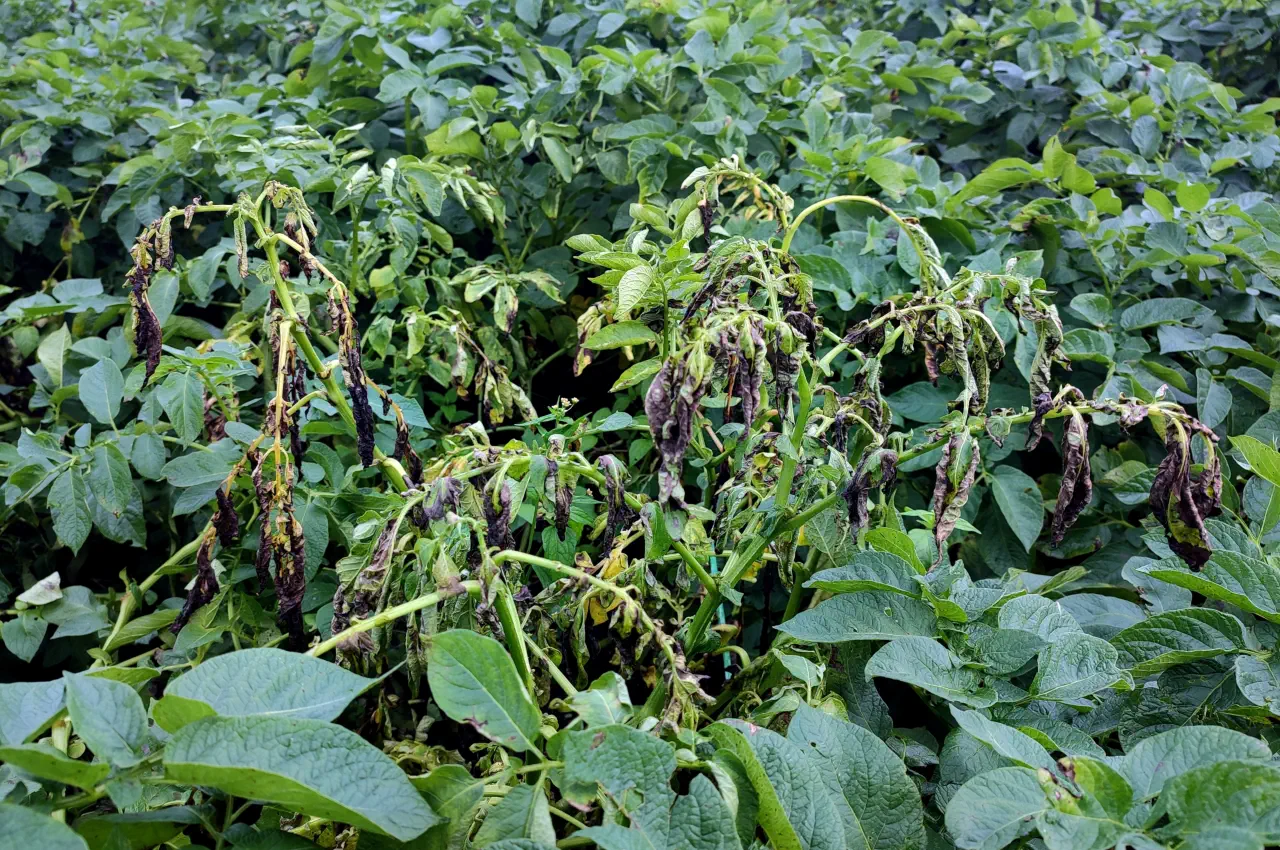
The fungus that causes blight can travel impressive distances - spores can spread up to 1.6 kilometres from infected plants. These spores germinate in humid weather conditions when temperatures exceed 10 degrees Celsius, making warm, wet summers particularly challenging for potato growers.
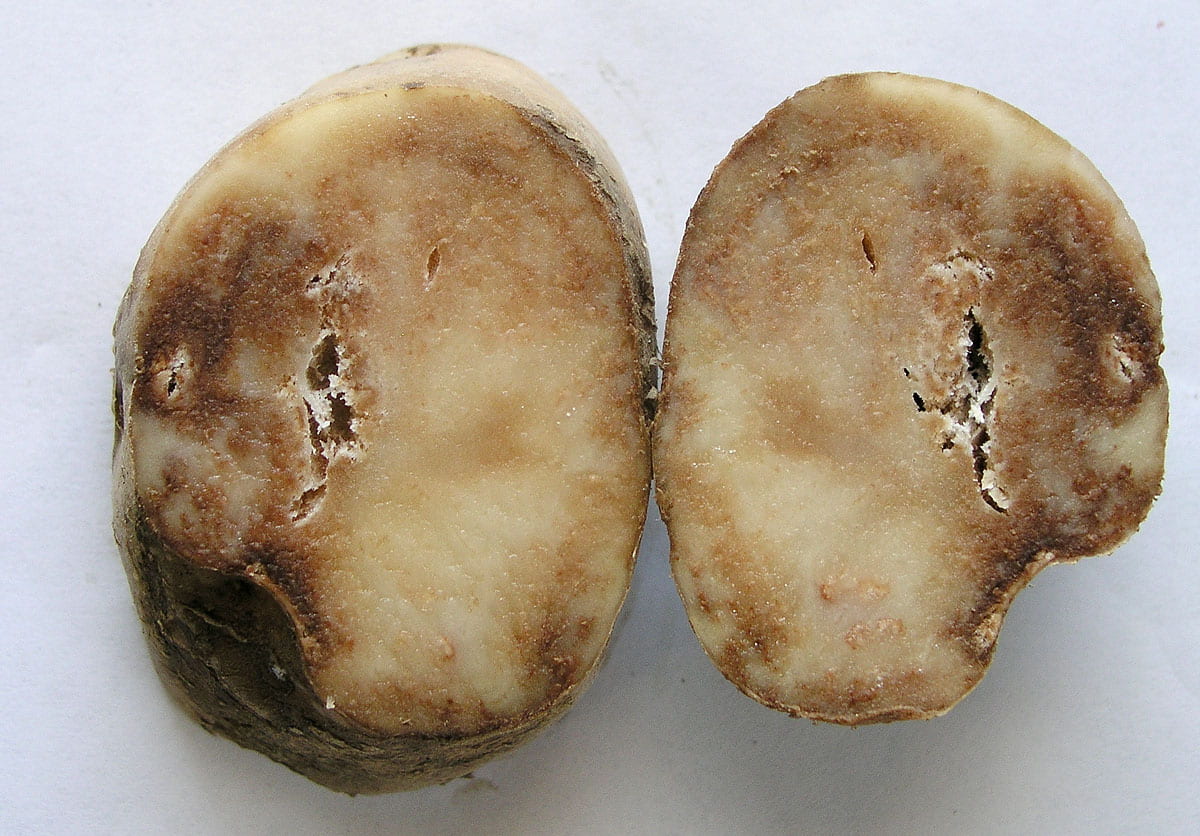
The early signs of blight appear as yellow spots on leaves that gradually turn black, with a characteristic white furry growth (sporangia) visible on the undersides of affected leaves. As the disease progresses, the fungus produces more spores that can be washed down into the soil, where they infect the developing tubers.
Met Éireann provides blight warnings to help farmers time their spray applications effectively. During high-risk periods, farmers need to spray their potato crops every 10 days until harvest to maintain protection.
Blight conditions typically occur during summer months, which means farmers growing early varieties face less risk because their crops are harvested before the main blight season begins. However, organic farmers face particular challenges with blight because they have limited chemical control options and often resort to removing and burning infected haulms to prevent further spread.
Genetically modified potato varieties have been developed that show blight resistance, offering potential future solutions to this persistent problem.
Important
Potato Blight: Ireland's Most Serious Potato Disease
Why it's dangerous:
- Caused the Great Famine in Ireland
- Spores travel up to 1.6 km from infected plants
- Can devastate entire crops if uncontrolled
High-risk conditions:
- Warm, humid weather (>10°C)
- Summer months (July-September)
Control requirement: Spray every 10 days during high-risk periods
Example
Identifying Potato Blight
Early symptoms:
- Yellow spots appear on leaves
- Spots gradually turn black
- White furry growth visible on undersides of leaves
Disease progression:
- Fungus produces more spores
- Spores wash down to soil level
- Tubers become infected underground
Action required: Immediate fungicide application and removal of affected plant material
Blackleg
Blackleg is a bacterial disease that has become increasingly problematic for potato farmers. The bacterium causes soft rot in tubers both during the growing season and in stored crops, making it a concern for both production and post-harvest handling.
The disease is easily identified by yellowing leaves and characteristic black stems. Blackleg spreads primarily through contaminated seed potatoes, which is why proper seed inspection and handling is so important.
Prevention strategies include using certified seed potatoes, practising crop rotation, and carefully inspecting seed stocks before planting. Any broken or damaged seed potatoes should not be planted because they provide easy entry points for the bacterium. If blackleg appears in a crop, affected plants need to be removed completely, including the tubers, to prevent the disease spreading to healthy plants.
Important
Preventing Blackleg Disease
Key prevention strategies:
- Use only certified seed potatoes
- Practice proper crop rotation
- Inspect seed stocks before planting
- Never plant broken or damaged seed tubers
If blackleg appears: Remove entire affected plants including tubers immediately to prevent spread
Pest management
The main pests affecting potato crops include aphids, wireworms, and slugs. These pests become particularly problematic when crops are not sprayed with appropriate pesticides.
Aphids are especially concerning because they can transmit viral diseases between plants, potentially ruining seed potato quality. This is one reason why windy locations like Donegal are preferred for seed production, as the wind helps prevent aphid establishment.
Harvest, storage and yield
The timing of potato harvest varies significantly between crop types. Early potatoes are harvested from late May onwards, while maincrop varieties are harvested from late September to October.
Before harvest, the haulms are killed off using herbicides. This process helps the tubers develop harder skins, which prevents bruising during the harvesting process. After the haulms are killed, the tubers typically remain in the ground for up to three weeks to allow their skins to set properly.
Modern potato harvesting uses specialised machines called potato harvesters that lift the tubers from the ground and separate them from soil and debris.
Proper storage is crucial for maintaining potato quality after harvest. Potatoes must be stored in well-ventilated, leak-proof, insulated, and frost-proof facilities. Storage in sacks is preferred, but the sack size is important - sacks that are too large generate heat that causes sprouting, making the potatoes unsellable.
Many commercial operations use refrigerated storage units to maintain optimal conditions and prevent sprouting in large-scale storage facilities.
Expected yields vary considerably between crop types:
- Early varieties: tonnes per hectare
- Maincrop varieties: tonnes per hectare
Example
Harvest Timing and Yield Comparison
Early Potatoes:
- Harvest: Late May onwards
- Yield: 7-10 tonnes per hectare
- Advantage: Higher prices, earlier cash flow
Maincrop Potatoes:
- Harvest: Late September-October
- Yield: 30-40 tonnes per hectare
- Advantage: Much higher volume production
Preparation: Haulms killed 3 weeks before harvest to develop protective skins
Factors affecting dry matter content
Dry matter (DM) content is a crucial quality indicator for potatoes, affecting their processing characteristics and market value. Four main factors can cause low dry matter content in potato crops:
Incorrect fertiliser use - particularly too much nitrogen - reduces dry matter content and creates watery tubers. Lack of potassium also contributes to reduced dry matter, as this nutrient is essential for proper tuber development.
Lack of sunshine during the growing season prevents plants from producing sufficient carbohydrates through photosynthesis, resulting in lower dry matter accumulation in the tubers.
Maturity delay means tubers haven't had sufficient time to accumulate dry matter before harvest, which is why maincrop varieties that mature fully generally have higher dry matter content than early varieties harvested immature.
Important
Four Key Factors Reducing Dry Matter Content:
- Incorrect fertiliser use (especially excess nitrogen)
- Lack of potassium in soil
- Lack of sunshine during growing season
- Maturity delay (insufficient development time)
Remember: Dry matter content directly affects processing quality and market value
Summary
Summary
Key Points to Remember:
-
Potatoes are Ireland's most popular vegetable and belong to the Solanaceae family, with tubers being modified stems for food storage.
-
Early varieties are planted in February and harvested from May (lower yields, higher prices), while maincrop varieties are harvested September-October (higher yields, lower prices).
-
Ideal growing conditions include deep, well-drained loam soils with pH 5.5-6.0, grown in a one-year-in-four rotation system.
-
Major disease threats include potato blight (airborne fungus requiring regular spraying) and blackleg (bacterial disease spread through contaminated seed).
-
Proper fertiliser balance is crucial - excess nitrogen reduces dry matter and increases blight susceptibility, while correct NPK ratios optimise both yield and quality.