Biological Properties (Leaving Cert Agricultural Science): Revision Notes
📚Revision Notes
Overview
Understanding the biological properties of soil is essential for successful agricultural management. These properties reveal how living organisms in the soil work together to create fertile, productive growing conditions for crops. The biological activity in soil determines nutrient availability, soil structure, and overall soil health.
Note
The biological properties of soil are the foundation of agricultural success - they control how nutrients become available to plants, how soil maintains its structure, and how the entire soil ecosystem functions to support crop growth.
Soil microbiome
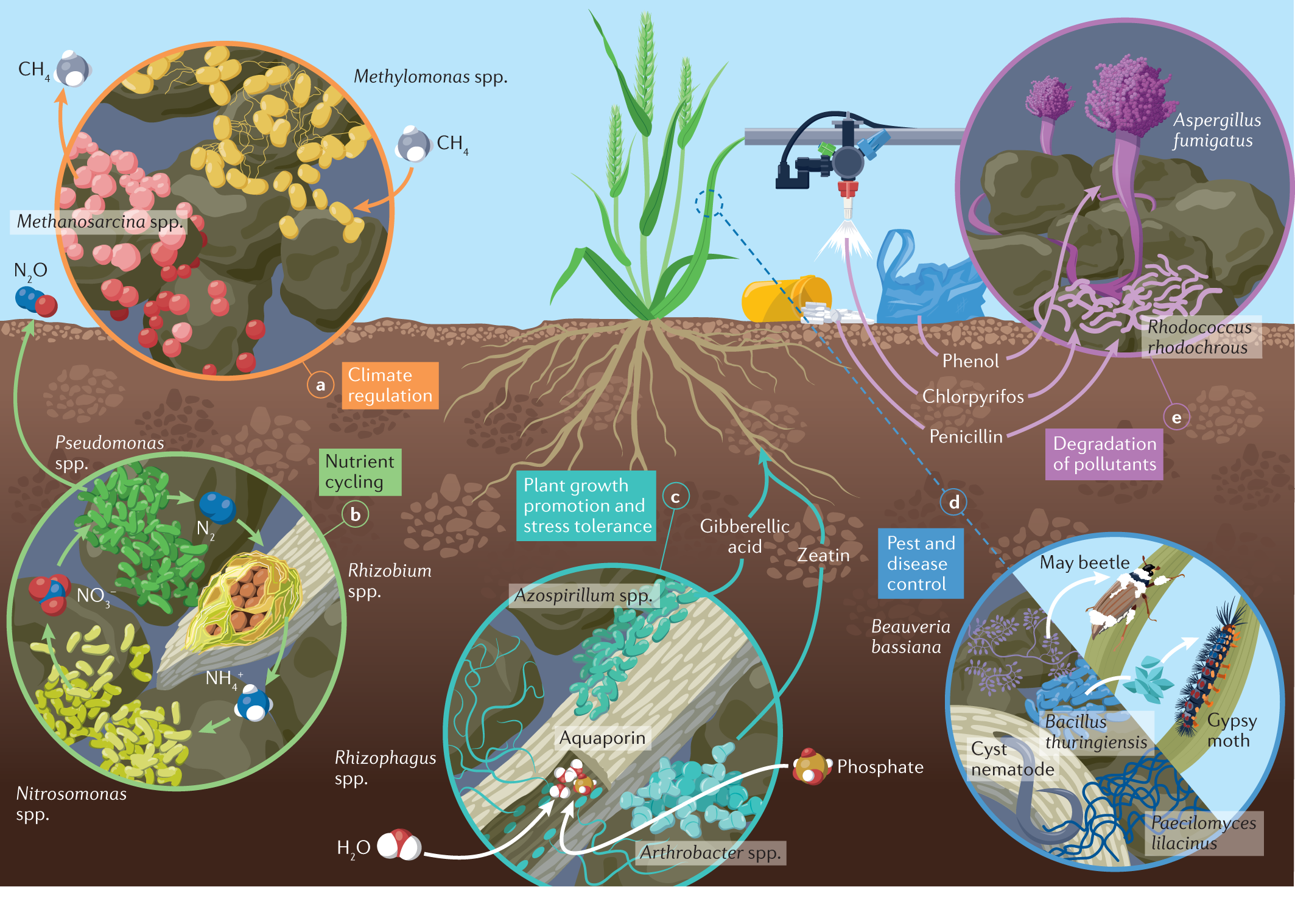
The soil microbiome refers to the vast community of tiny living organisms found in soil, including bacteria, fungi, protozoa, actinomycetes, and algae. Think of these microorganisms as nature's recycling team - they work continuously to break down dead plant and animal material.
These microscopic organisms perform several crucial functions:
- Decomposition - breaking down organic matter into simpler compounds
- Nutrient cycling - making essential nutrients available to plants
- Nitrogen fixation - converting atmospheric nitrogen into forms plants can use
- Disease suppression - competing with harmful pathogens
A diverse and active microbiome is a clear indicator of fertile, healthy soil. The more variety in soil organisms, the better the soil can support plant growth.
Earthworm activity
Earthworms are often called "ecosystem engineers" because they literally reshape the soil environment. These beneficial creatures create an extensive network of tunnels as they move through the soil, which provides several advantages:
- Improved aeration - tunnels allow air to reach plant roots
- Better drainage - water can move more easily through the soil
- Organic matter mixing - earthworms pull surface organic matter deeper into the soil
- Nutrient-rich castings - earthworm waste products are packed with plant nutrients
Note
The presence of earthworms in your soil is an excellent sign of soil fertility and biological activity. Healthy soils typically contain large populations of active earthworms.
Organic matter (OM)
Organic matter consists of decomposed plant and animal materials in various stages of breakdown. This component is absolutely crucial for soil health and performs multiple vital functions:
- Structure improvement - helps bind soil particles together, creating better soil structure
- Water-holding capacity - acts like a sponge, helping soil retain moisture during dry periods
- Nutrient reservoir - stores essential nutrients and releases them slowly to plants
- Cation exchange capacity (CEC) - increases the soil's ability to hold onto nutrients
Important
Management impacts on organic matter:
Continuous tillage leads to faster decomposition of organic matter, resulting in poorer soil structure and reduced fertility.
Permanent grassland maintains higher levels of organic matter, promoting better soil structure, enhanced fertility, and increased biological activity.
High organic matter content creates stronger connections between the physical, chemical, and biological aspects of soil fertility.
Nitrogen cycle in soil
The nitrogen cycle is a complex series of transformations that nitrogen undergoes in soil. Understanding this cycle helps explain how plants access this essential nutrient.
Key processes in the nitrogen cycle:
- Nitrogen fixation - certain bacteria convert atmospheric nitrogen gas into ammonia that plants can absorb
- Nitrification - soil bacteria convert ammonia into nitrite, then into nitrate (the form most easily absorbed by plants)
- Assimilation - plants absorb nitrate and ammonia through their roots
- Ammonification - when organic materials decompose, nitrogen returns to ammonia form
- Denitrification - some bacteria convert nitrate back into nitrogen gas, which returns to the atmosphere

Example
Worked Example: Nitrogen Cycle in Action
Step 1: Nitrogen fixation - Bacteria in root nodules convert N₂ gas into NH₃ (ammonia)
Step 2: Nitrification - Soil bacteria oxidise NH₃ → NO₂⁻ (nitrite) → NO₃⁻ (nitrate)
Step 3: Plant uptake - Crop roots absorb NO₃⁻ and NH₄⁺ for protein synthesis
Step 4: Return to soil - Plant residues decompose, releasing N back to the soil system
This cycle balances nitrogen inputs and outputs in the soil system, determining crop nutrient availability and reducing pollution risks from excess nitrogen.
Carbon cycle in soil
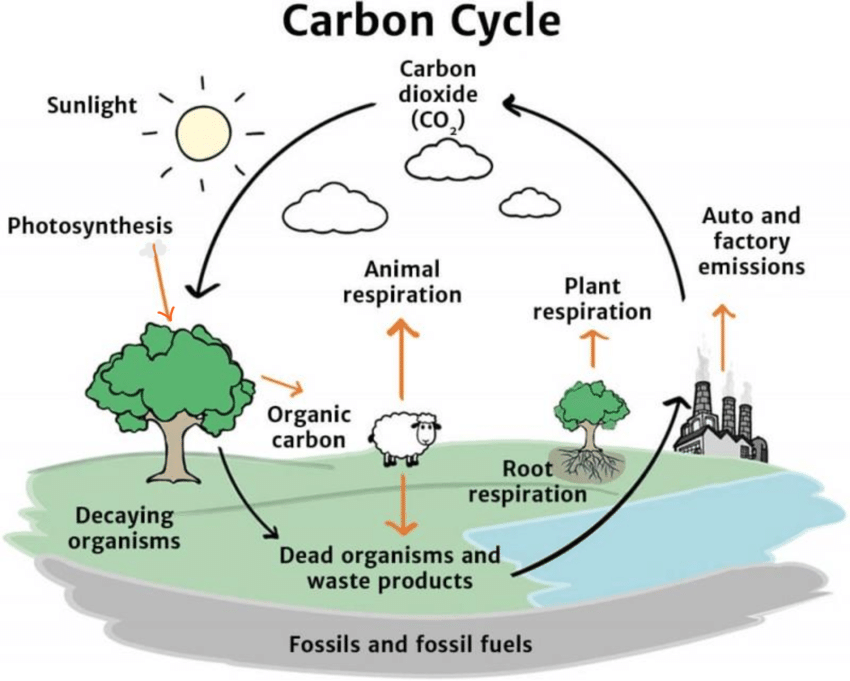
The carbon cycle describes how carbon moves between plants, soil, and the atmosphere. This cycle is fundamental to soil fertility and climate regulation.
How the carbon cycle works:
- Carbon fixation - plants absorb carbon dioxide from the air during photosynthesis
- Carbon input - when plants die, their roots and residues add carbon to the soil
- Decomposition - microbes break down organic materials, releasing some carbon dioxide back to the atmosphere
- Long-term storage - some carbon becomes stable humus, remaining in soil for many years
Note
Importance for agriculture:
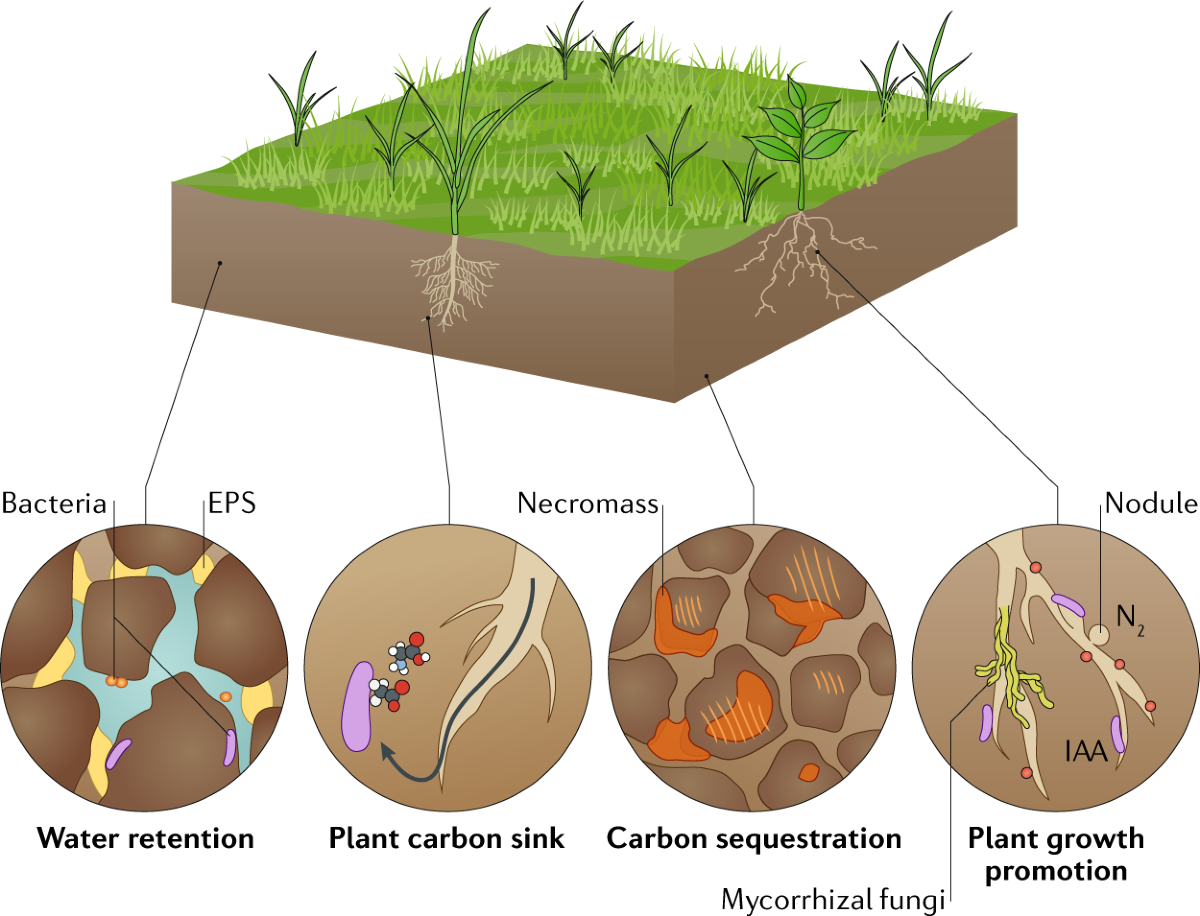
Carbon storage in soil improves fertility and structure, while also helping mitigate climate change by removing carbon dioxide from the atmosphere. Carbon sequestration - the process of storing carbon in soil long-term - benefits both farmers and the global environment.
Rhizosphere and soil fungi
The rhizosphere is the active soil zone immediately surrounding plant roots. This area buzzes with biological activity as roots interact with soil organisms.
Root zone interactions:
- Root exudates - roots release sugars and other compounds that feed soil microbes
- Nutrient exchange - microbes help break down nutrients for plant absorption
- Mycorrhizal fungi form beneficial partnerships with plant roots
Mycorrhizal fungi benefits:
- Form symbiotic relationships with plant roots, creating extensive underground networks
- Dramatically increase nutrient uptake, especially phosphorus
- Improve plant drought tolerance by accessing water from greater distances
- Boost overall plant productivity and resilience
These fungal networks can be thought of as nature's internet, connecting plants and facilitating communication and resource sharing.

Organic matter and management practices
Understanding how different management practices affect organic matter levels helps farmers make informed decisions about their soil management strategies.
Important
Comparing Management Approaches:
Continuous tillage effects:
- Reduces organic matter content through faster decomposition
- Creates weaker soil structure with less pore space
- Decreases water infiltration and storage capacity
- Reduces overall soil fertility and biological activity
Permanent grassland benefits:
- Maintains higher organic matter levels
- Develops stronger soil aggregates and better structure
- Improves aeration and water movement
- Increases cation exchange capacity and biological activity
The key principle is that higher organic matter content strengthens the links between physical, chemical, and biological soil fertility components, creating a more resilient and productive soil system.
Summary
Key Points to Remember:
- Soil biology underpins fertility - microbes, earthworms, and fungi work together to create the conditions plants need to thrive
- Nutrient cycles are managed by soil organisms - the nitrogen and carbon cycles depend on biological processes to function properly
- Rhizosphere interactions enhance productivity - the partnership between plant roots and soil fungi dramatically improves nutrient and water uptake
- Organic matter is the foundation - it connects and enhances all aspects of soil health, from physical structure to chemical fertility to biological activity
- Tillage reduces organic matter and biological activity, while grassland systems maintain and enhance soil biology