Overview (Leaving Cert Agricultural Science): Revision Notes
📚Revision Notes
Overview
Soil management represents one of the most crucial aspects of agricultural science, as soil forms the foundation of all agricultural production. Understanding how to properly manage this vital resource is essential for maintaining productive farming systems whilst protecting the environment.
Why soil management matters
Soil represents a finite natural resource that cannot be easily replaced once damaged or lost. This makes effective management absolutely critical for several key reasons. Proper soil stewardship directly impacts crop productivity, influences animal production systems, and determines the long-term sustainability of farming operations.
Important
When soil management practices are inadequate, farmers face serious consequences including reduced fertility levels, increased erosion rates, and various forms of pollution that can affect both local and regional environments.
Essential drainage systems
Waterlogging occurs when soil becomes saturated with water, creating anaerobic (oxygen-free) conditions that severely limit plant growth. Effective drainage systems address this problem by removing excess water and improving soil aeration, which allows plant roots to access the oxygen they need for healthy development.
Example
Drainage System Implementation
Modern drainage approaches include several techniques:
- Mole drains create channels deep in clay soils using specialised equipment
- Pipe drains use perforated pipes buried underground to collect and remove excess water
- Surface ditches provide channels for water runoff in problem areas
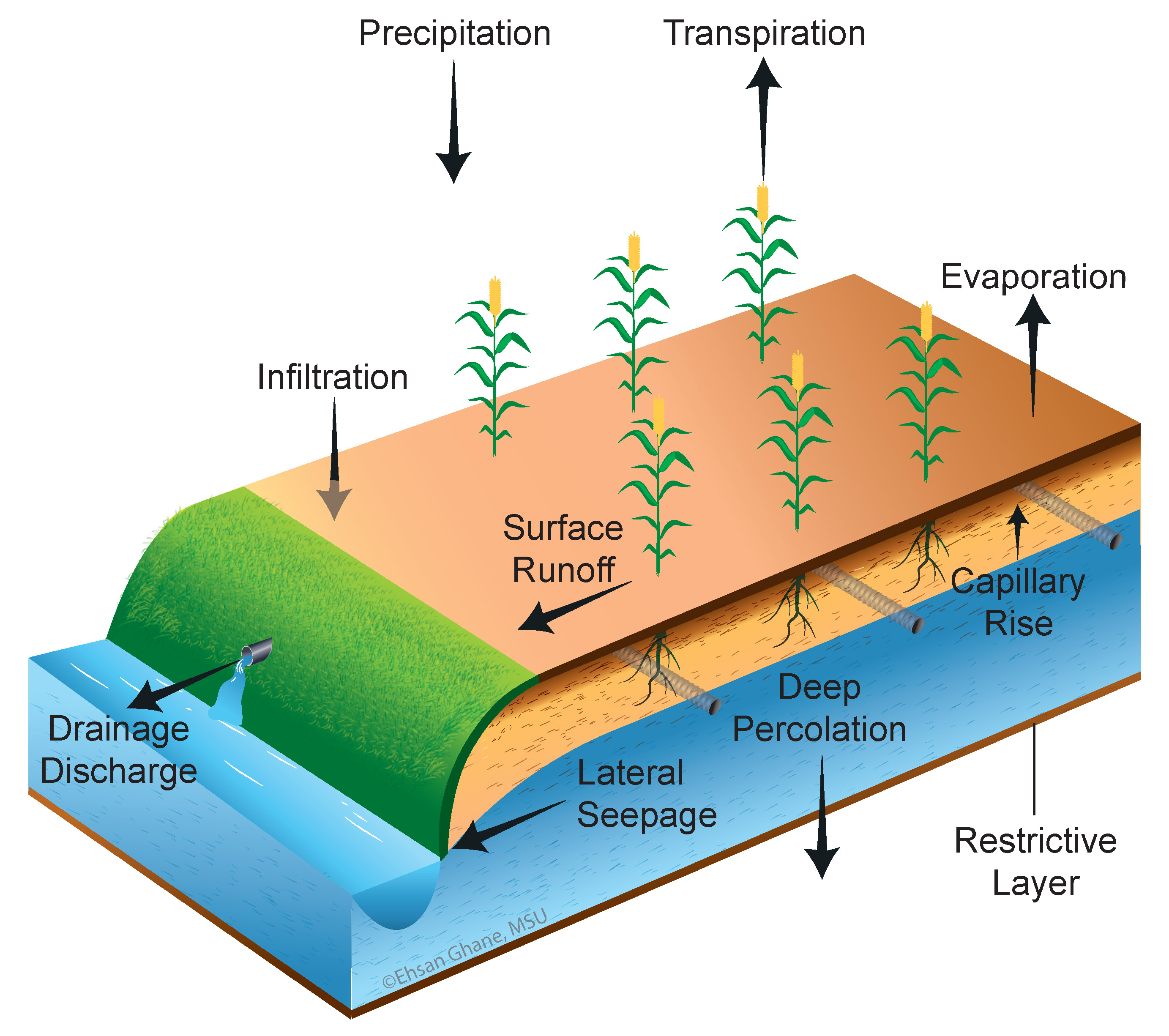
These systems not only prevent waterlogging but also reduce nutrient losses through improved soil structure and increase overall soil workability for farming operations.
Maintaining soil health and fertility
Healthy soils require a careful balance of physical, chemical, and biological properties working together. The physical structure determines how well water and air can move through the soil, whilst chemical properties like pH levels and nutrient availability directly affect what plants can grow successfully.
Soil pH represents a critical factor that farmers must monitor regularly. When soils become too acidic or alkaline, plants cannot effectively absorb nutrients even when those nutrients are present. Liming helps correct acidic soils by raising pH to optimal levels for crop growth.
Note
Biological activity in soil comes from countless microorganisms, earthworms, and other creatures that help break down organic matter and cycle nutrients. Maintaining this biological community requires regular additions of organic matter and avoiding practices that harm soil life.
Soil sampling, testing and analysis
Regular soil testing provides farmers with essential information for making informed management decisions. Soil sampling involves collecting soil cores from multiple locations across a field, typically at a depth of 10 centimetres, to get representative samples for analysis.
Example
Soil Testing Parameters
Laboratory tests measure several key parameters:
- pH levels to determine if liming is needed
- Phosphorus (P) levels for phosphate fertiliser requirements
- Potassium (K) levels for potash fertiliser needs
- Organic matter (OM) content to assess soil health
These test results guide farmers in applying exactly the right amounts of fertiliser, preventing both waste of expensive inputs and potential environmental pollution from over-application.
Fertiliser and organic manure application
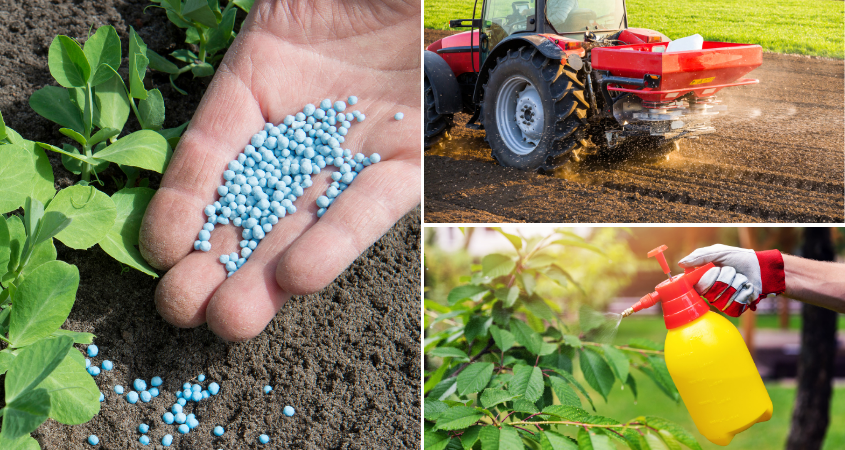
Chemical fertilisers provide plant nutrients in readily available forms that crops can use immediately. However, they must be applied at the correct growth stages and in appropriate amounts to maximise efficiency whilst avoiding environmental damage.
Organic manures like farmyard manure, slurry, and compost offer multiple benefits beyond just providing nutrients. They add valuable organic matter to improve soil structure, enhance water-holding capacity, and feed beneficial soil organisms. The key is timing - applications should occur when plants can best utilise the nutrients, whilst avoiding wet soil conditions that increase runoff risks.
Important
Irish farmers must also comply with Nitrates Directive regulations that limit nitrogen applications to prevent water pollution, making precise nutrient management even more important.
Sustainable land use and management practices
Rotational cropping and grazing systems prevent the continuous depletion of specific nutrients by varying the crops grown or the grazing intensity in different seasons. This approach maintains soil fertility naturally whilst reducing the need for external inputs.
Minimum tillage practices preserve soil structure and organic matter by reducing the amount of cultivation. This approach maintains beneficial soil organisms and prevents the breakdown of stable soil aggregates.
Note
Cover crops protect bare soil between main crops, reducing erosion whilst adding organic matter when they decompose. These crops also prevent nutrient leaching during periods when no main crop is growing.
Buffer strips of permanent vegetation near water courses help philtre runoff and prevent soil and nutrients from reaching streams and rivers, protecting water quality downstream.
Understanding animal impacts on soil
Livestock can have both positive and negative effects on soil health. On the positive side, animals return valuable nutrients to the soil through their dung and urine, whilst their movement stimulates soil biological activity.
However, poaching occurs when animals compact wet soils with their hooves, creating hard, impermeable layers that restrict root growth and water infiltration. This is particularly problematic on slopes where it can lead to increased erosion and uneven nutrient distribution across fields.
Careful management of grazing timing and intensity helps maximise the benefits whilst minimising the negative impacts of livestock on soil health.
Preventing and managing soil compaction
Soil compaction results from excessive pressure applied to soil, typically from heavy machinery or livestock trampling. This pressure compresses soil particles together, reducing the pore spaces that normally allow air and water movement.
Important
Warning Signs of Soil Compaction:
- Reduced water infiltration leading to increased surface runoff
- Restricted root growth and development
- Decreased aeration affecting plant health
- Increased risk of erosion on slopes
Prevention strategies include avoiding field operations when soils are too wet, using controlled grazing systems, and implementing subsoiling techniques to break up compacted layers when they do occur.
Pollution prevention and conservation
Poor soil management practices can lead to various forms of pollution that extend far beyond the farm boundary. Water pollution occurs when excess nitrates and phosphates from fertilisers reach groundwater or surface water bodies, potentially causing eutrophication - the over-enrichment of water with nutrients leading to algal blooms and oxygen depletion.
Air pollution results from ammonia emissions when fertilisers and slurries are applied inappropriately, whilst greenhouse gas emissions include carbon dioxide from soil organic matter loss, methane from anaerobic soil conditions, and nitrous oxide from poor nitrogen management.
Important
Conservation practices focus on careful fertiliser application, maintaining soil cover, implementing erosion control measures, and preserving soil organic matter to reduce these environmental impacts.
Maintaining organic matter and carbon sequestration
Organic matter serves multiple crucial functions in agricultural soils. It improves soil structure by helping particles bind together into stable aggregates, enhances water-holding capacity during dry periods, and provides a slow-release source of nutrients as it decomposes.
Maintaining organic matter requires ongoing inputs through practices like:
- Establishing permanent grassland areas
- Reducing intensive tillage operations
- Adding organic manures and compost regularly
- Growing cover crops between main seasons
Note
Soil carbon sequestration occurs when organic matter accumulates in soil, effectively storing atmospheric carbon dioxide in a stable form. This process not only improves soil health but also contributes to climate change mitigation by reducing greenhouse gas concentrations in the atmosphere.
Environmental impacts beyond the farm
Modern soil management must consider impacts on water systems, air quality, and climate change. Nitrate leaching and phosphate runoff from poorly managed soils can travel considerable distances, affecting water quality in rivers, lakes, and coastal areas far from their original source.
Ammonia emissions from fertiliser and slurry applications affect air quality and can contribute to acid rain formation. Greenhouse gas emissions from soil management practices contribute to climate change through releases of carbon dioxide, methane, and nitrous oxide.
Good soil management practices help reduce these emissions whilst maintaining agricultural productivity, demonstrating that environmental protection and profitable farming can work together effectively.
Summary
Key Points to Remember:
- Soil is irreplaceable - once lost through erosion or degradation, it takes centuries to reform naturally
- Regular testing guides decisions - soil analysis prevents waste and environmental damage whilst optimising crop nutrition
- Balance is key - healthy soils require physical structure, chemical fertility, and biological activity working together
- Timing matters - applying fertilisers and manures when crops can use them maximises efficiency and minimises pollution risks
- Prevention beats cure - protecting soil structure and organic matter is easier than restoring damaged soils