Blood Flow Through the Heart (Leaving Cert Biology): Revision Notes
📚Revision Notes
Blood Flow Through The Heart
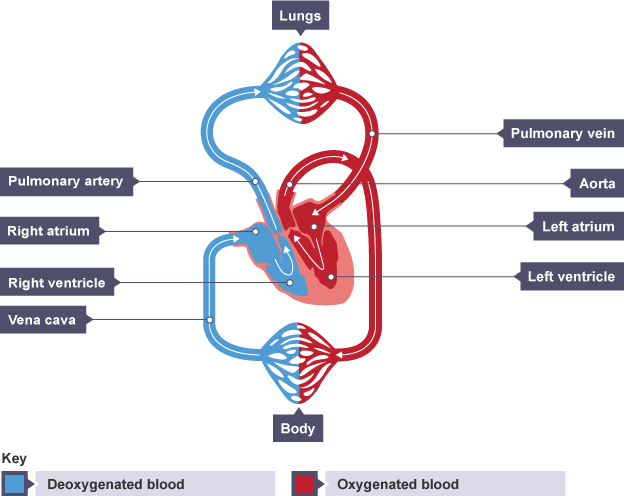
The heart pumps blood through the body in a double circulation system:
- Pulmonary Circulation (to and from the lungs).
- Systemic Circulation (to and from the rest of the body).
Blood Flow Through the Heart
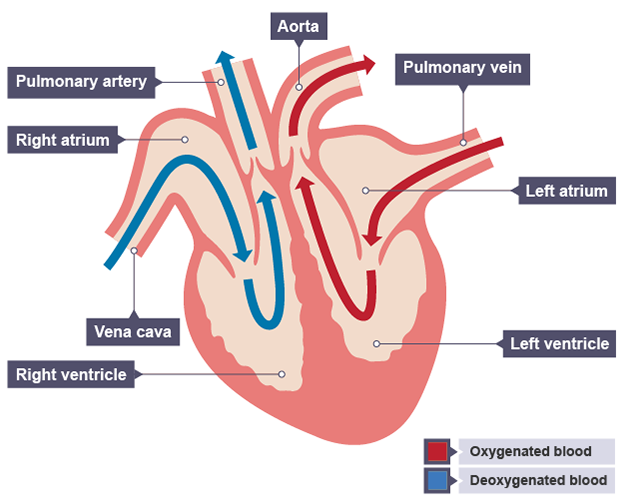
- Deoxygenated blood enters the right atrium of the heart (from all over the body) through the vena cava.
- The right atrium pumps the blood down to the right ventricle through the tricuspid valve.
- The right ventricle pumps the blood out through the pulmonary artery to the lungs.
- Oxygenated blood enters the left atrium of the heart (blood coming from the lungs) through the pulmonary vein.
- The left atrium pumps the blood through the bicuspid valve to the left ventricle.
- The left ventricle pumps the blood out to the rest of the body through the aorta.
Note
Simplified Steps:
- Right Atrium → Right Ventricle → Pulmonary Artery → Lungs
- Left Atrium → Left Ventricle → Aorta → Body
Additional Notes:
- The tri and bicuspid valves ensure that blood does not flow back into the atria from the ventricles.
- The semi-lunar valves ensure that blood does not flow back into the heart from the pulmonary artery and the aorta.
- The walls of the atria are thin. Blood only has to be pumped a short distance to the ventricles.
- The walls of the ventricles are much thicker as blood is pumped a long distance.