Lymph Vessels and Lymph Nodes (Leaving Cert Biology): Revision Notes
📚Revision Notes
Lymph Vessels and Lymph Nodes
Lymph Vessels
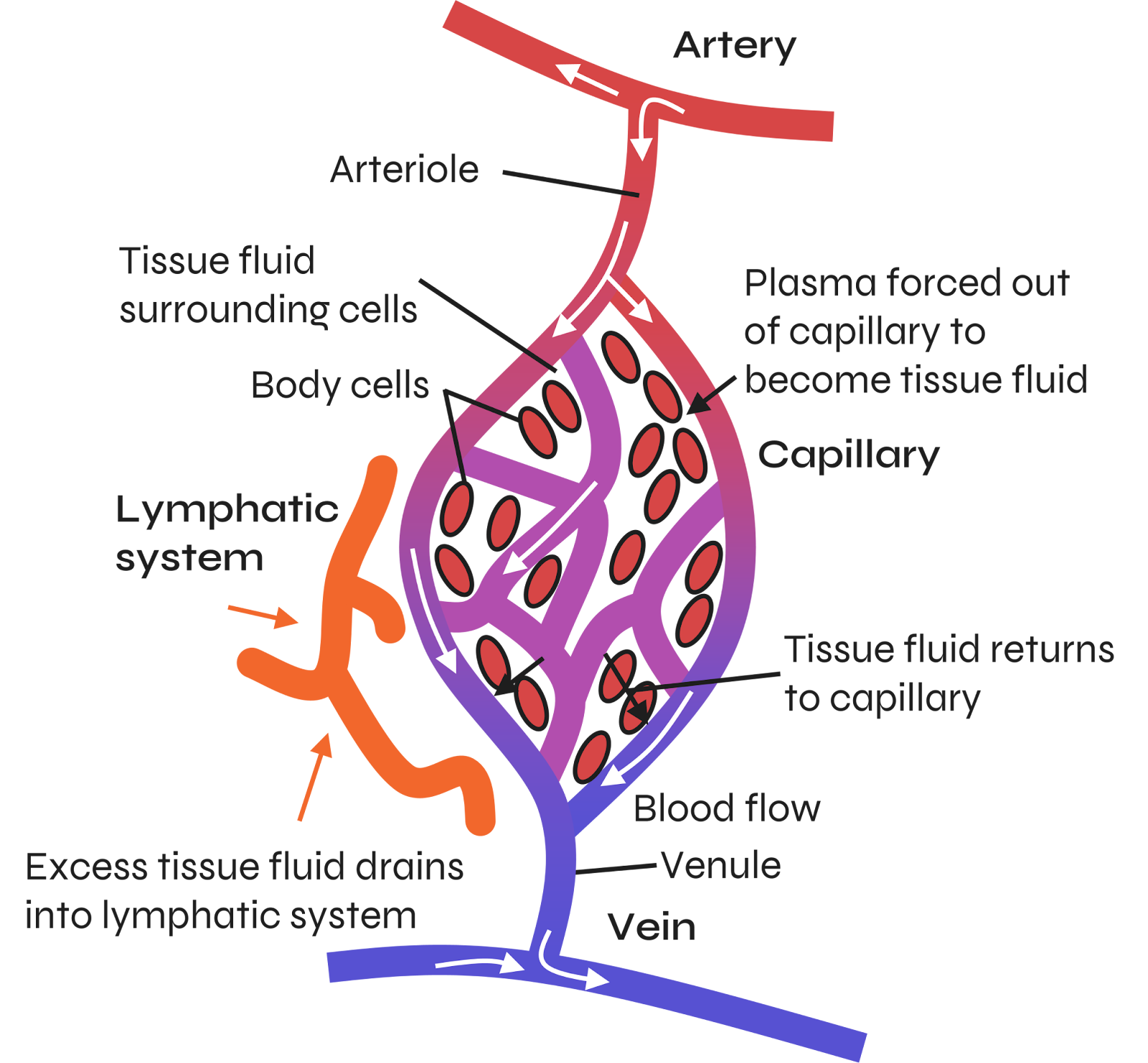
- Lymph is transported in lymph vessels in the same way that blood is transported in veins.
- Movement is aided by:
- Muscular walls of the vessels.
- Body movements pressing on the vessels.
- Lymph flows slowly through the lymph vessels and returns to the blood near the neck at the subclavian veins via:
- The thoracic duct (left side of the body).
- The right lymphatic duct (right side of the body).
Lymph Nodes
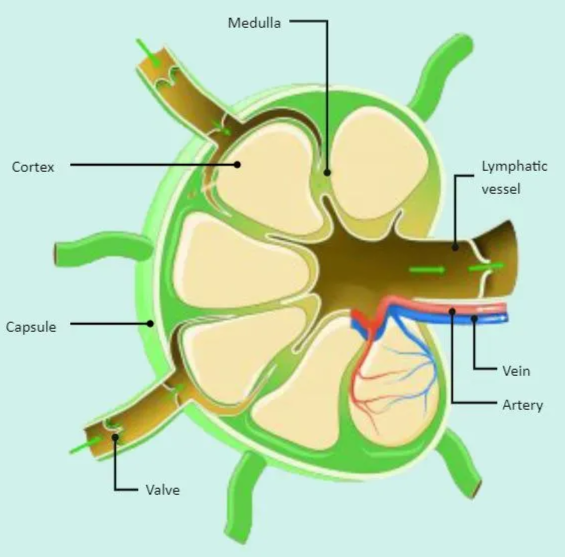
- Lymph vessels have many small swellings called lymph nodes**.**
- Clusters of these lymph nodes (glands) are found near the throat, armpits, chest, appendix and groyne.
- Lymph nodes contain white blood cells (lymphocytes)****.
- Lymph nodes fight infection in 2 ways:
- They filter out bacteria and other harmful substances from lymph as it flows through.
- They mature and store large numbers of lymphocytes.
- When fighting disease, lymph nodes can become swollen. This indicates that the person has an infection.
- If lymph vessels are blocked or if a person is inactive for several hours, swelling can occur.
- Example: swollen ankles after sitting during a long flight.
Other Lymphatic Organs
The spleen, thymus, adenoids and tonsils are all part of the lymphatic system.
- Spleen: Philtres bacteria, recycles red blood cells and stores lymphocytes.
- Thymus: Aids in lymphocyte development.
- Adenoids and tonsils:
- The adenoids are found at the back of the throat.
- The tonsils are found towards the back of the mouth on either side.
- They can become inflamed and enlarged, affecting breathing.
- If tonsils become infected regularly, they may have to be removed.