Cytokinesis (Leaving Cert Biology): Revision Notes
📚Revision Notes
Cytokinesis
What is cytokinesis?
Cytokinesis is the final stage of cell division that occurs immediately after mitosis is complete. During this process, the cytoplasm divides to create two separate daughter cells from the original parent cell.
After mitosis finishes, the original cell splits to form two new cells. Each daughter cell receives the same number of identical chromosomes as the parent cell. Additionally, each new cell gets approximately half of the cell organelles and biomolecules that were present in the original cell.
Note
Cytokinesis is essential for ensuring that both daughter cells receive not only the genetic material (handled by mitosis) but also the cellular machinery and organelles needed to function as independent cells.
Cytokinesis in animal cells
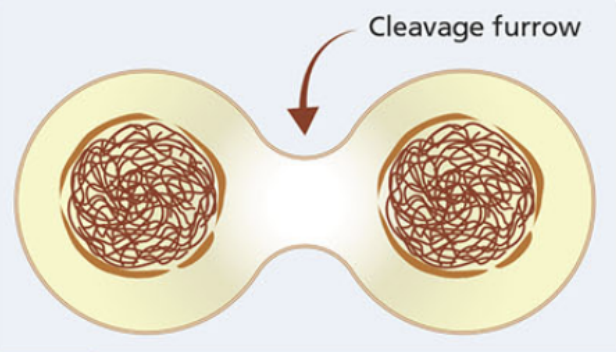
Animal cells undergo cytokinesis through a process called cleavage. Here's how it works:
- A shallow groove, known as a cleavage furrow, forms around the cell's surface
- This furrow appears at the same position where the cell's equator was located during metaphase
- The cleavage furrow gradually becomes deeper as it pinches inward
- Eventually, the furrow completely divides the cytoplasm, causing the cell to split into two separate cells
Note
The cleavage furrow essentially "pinches" the cell membrane inward from all sides until the cell completely separates into two daughter cells. This pinching action is driven by contractile proteins that form a ring around the cell's circumference.
Cytokinesis in plant cells
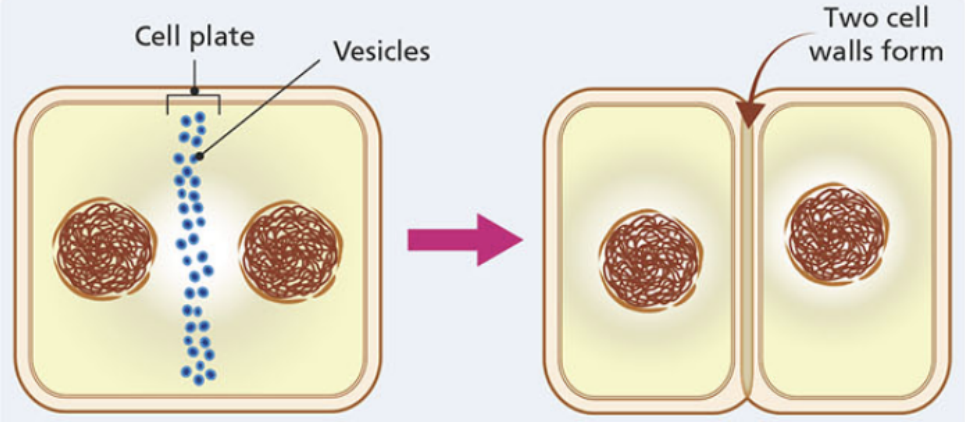
Plant cells face a unique challenge during cytokinesis because their rigid cell walls prevent the formation of a cleavage furrow. Instead, they use a different approach:
- Small membrane-enclosed sacs called vesicles gather in the region between the two newly formed nuclei
- These vesicles contain materials, primarily cellulose, which will form the new cell walls
- The vesicles combine to create a structure called a cell plate
- The cell plate grows outward and forms new cell walls on both sides, effectively separating the two daughter cells
Important
Unlike animal cells that can "pinch" apart, plant cells must build a wall to separate themselves. This fundamental difference is due to the presence of the rigid cellulose cell wall that provides structural support but prevents flexible membrane movements.
Key differences between animal and plant cytokinesis
The fundamental difference lies in how each cell type deals with separation:
Summary
Key Differences in Cytokinesis:
- Animal cells: Use a cleavage furrow that pinches the cell membrane inward
- Plant cells: Build a cell plate from the centre outward due to their rigid cell wall structure
Both methods achieve the same goal of creating two separate daughter cells, but the approach differs based on the structural requirements of each cell type.
Important
Exam Tip
Remember that cytokinesis is different from mitosis - mitosis deals with chromosome separation, while cytokinesis handles the physical division of the cell itself. They occur in sequence, with cytokinesis beginning as mitosis completes.
Summary
Remember - Key Points:
- Cytokinesis divides the cytoplasm to form two separate cells immediately after mitosis
- Animal cells use a cleavage furrow that pinches the cell membrane inward
- Plant cells form a cell plate from vesicles because their rigid cell walls prevent cleavage furrow formation
- Both methods ensure each daughter cell receives approximately half of the parent cell's organelles and biomolecules
- The timing is crucial - cytokinesis occurs right after mitosis is complete, ensuring proper cell division