Chromosomes (Leaving Cert Biology): Revision Notes
📚Revision Notes
Chromosomes
What are Chromosomes?
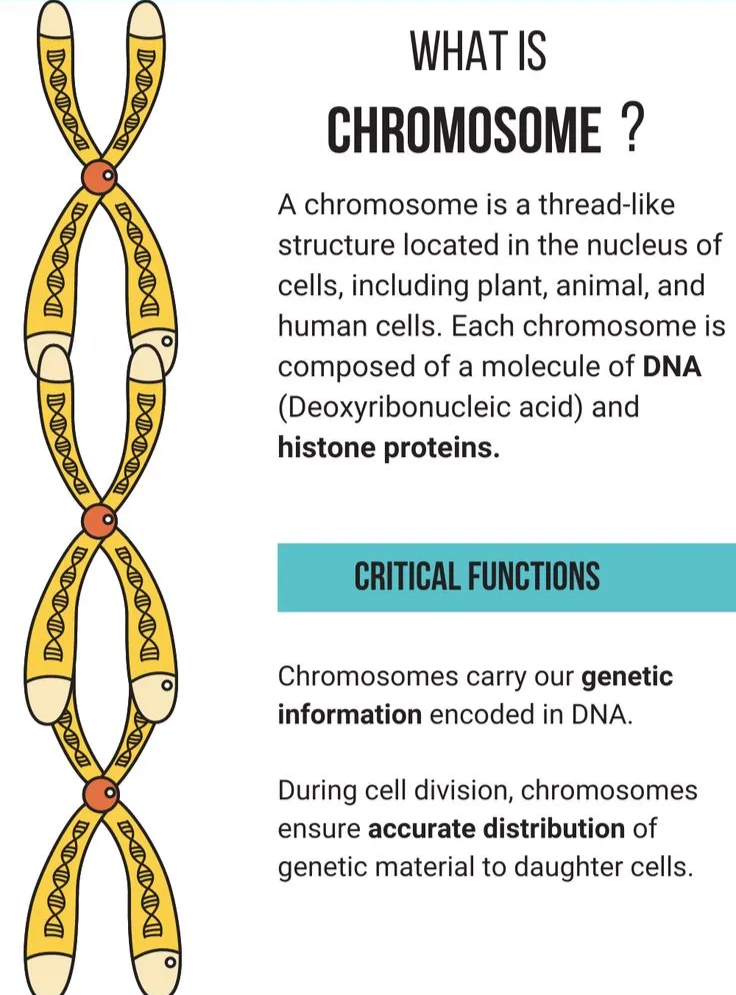
- Chromosomes are found in the nucleus of a cell.
- They are made up of DNA (deoxyribonucleic acid) and proteins.
- DNA contains a sugar called deoxyribose.
- When the cell is not dividing (in interphase), the chromosomes are stretched out into long, thin threads called chromatin.
- During cell division, chromatin contract to form visible chromosomes.
Functions of Chromosomes
Chromosomes
- Control cell activity.
- Are passed on from cell to cell when cells divide.
- Are also passed to offspring when gametes (sex cells) fuse during sexual reproduction.
Genes on Chromosomes
Note
A gene is a section of DNA that contains the instructions for the formation of a protein.
- Genes are sections of DNA located along the length of each chromosome.
- Genes are known as the units of inheritance because they carry the traits passed from parents to offspring.
- In humans, genes control features like eye colour, hair colour, and face shape.
- In plants, genes control traits like flower colour, height, and leaf shape.
- All the genes in an organism make up its genome.
Chromosome Numbers
- In somatic cells (non-reproductive cells), the number of chromosomes is constant for each species.
- Each species has a specific number of chromosomes.
- In humans:
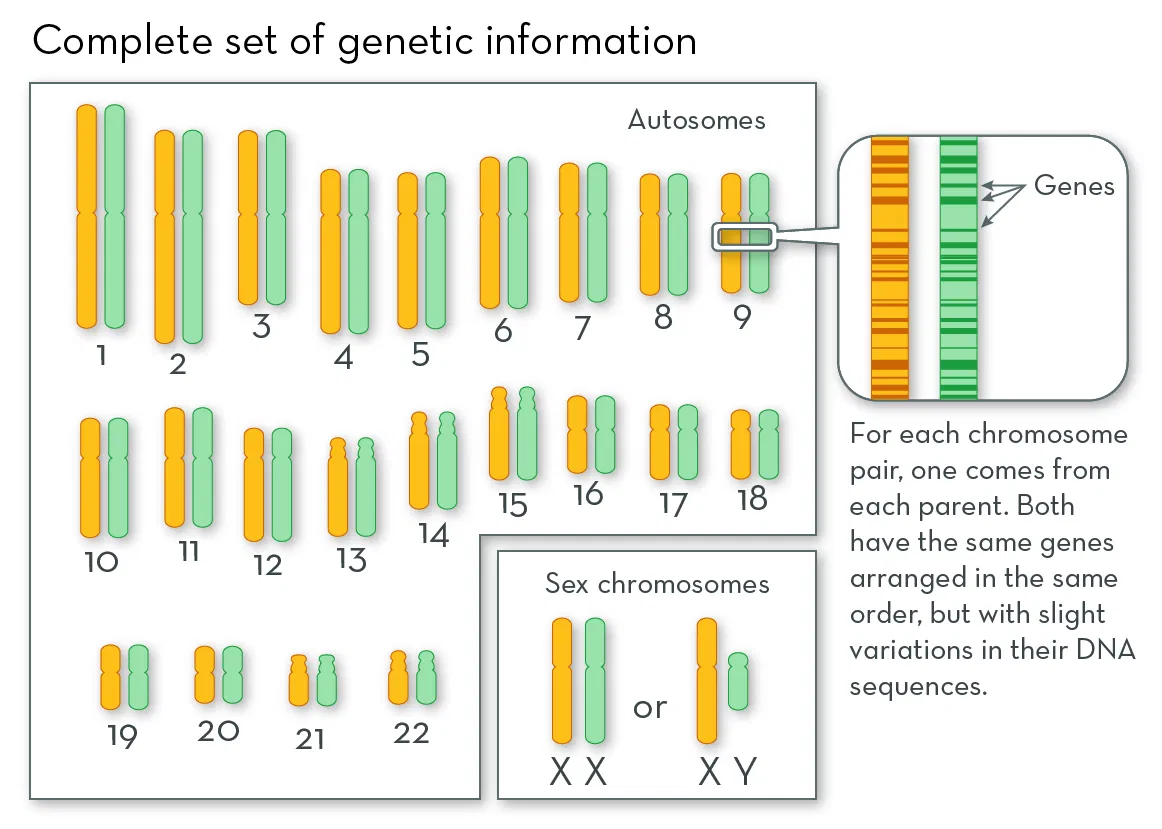
- Most cells have 46 chromosomes, arranged in 23 pairs.
- Sex cells (sperm in males and eggs in females) have 23 chromosomes.
- The first 22 pairs of chromosomes are called autosomes and control everyday cell functions.
- The 23rd pair are the sex chromosomes, which determine an individual's gender.
Note
Genome: the collection of all the genes in an organism.
Note
Somatic cells are any cells in the body that are not involved in reproduction. E.g. skin cells.
Note
Why do sex cells only have 23 chromosomes each? When a sperm and egg come together during fertilisation, they combine to form 46 chromosomes, giving the offspring a complete set.