Cytokinesis (Leaving Cert Biology): Revision Notes
📚Revision Notes
Cytokinesis
Note
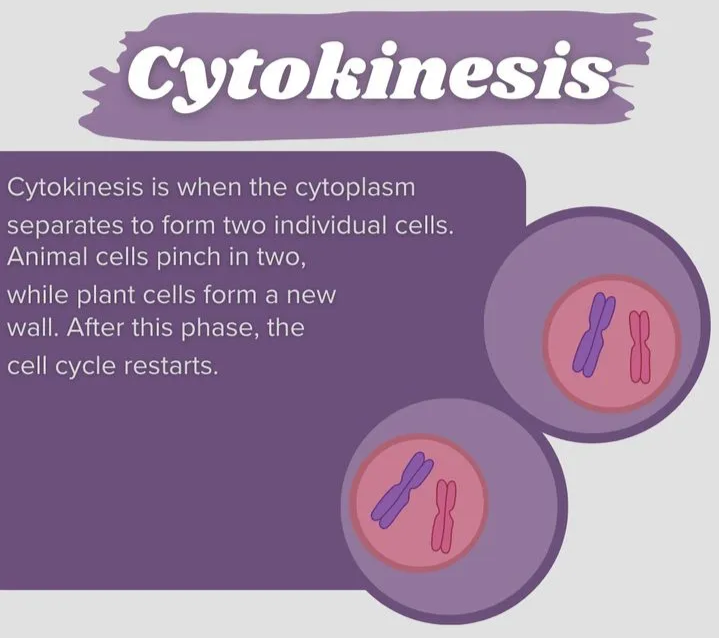
Cytokinesis is the splitting of the cell to form two identical daughter cells.
After mitosis is complete, the cell must fully split into two identical cells. This process is called cytokinesis.
Cytokinesis in Animal Cells
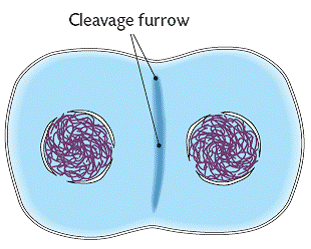
- In animal cells, the cell splits in two by forming a groove called a cleavage furrow.
- This furrow forms at the spot where the chromosomes lined up during mitosis (the equator of the cell).
- The furrow deepens until the cell splits.
- Proteins such as actin and myosin pull the cell membrane inward, causing the cell to pinch in and separate into two cells.
Cytokinesis in Plant Cells
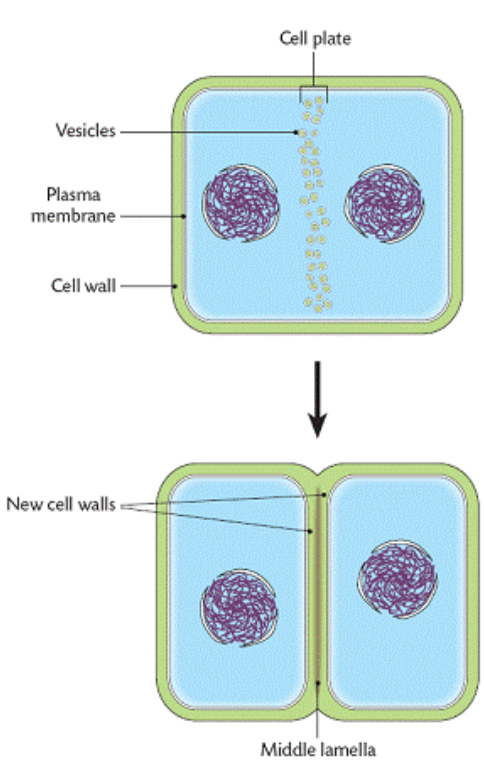
- In plant cells, the rigid cell wall prevents a cleavage furrow from forming.
- Instead, a cell plate made of cellulose and calcium forms at the equator.
- The cell plate divides the cell, eventually becoming part of the new cell walls of the two daughter cells.
Note
Animal cell —> Cleavage furrow Plant cell —> Cell plate, made of cellulose and calcium