Functions (Leaving Cert Biology): Revision Notes
📚Revision Notes
Functions
DNA and RNA work together as the molecular basis of all life, storing genetic information and converting it into the proteins that control every aspect of cellular function.
Functions of DNA
DNA serves three essential functions in living organisms, making it the foundation of all life processes.
Storing inherited information
DNA acts as the cell's information storage system, containing all the genetic instructions needed for an organism to develop and function. Each chromosome contains one long DNA molecule that is divided into many sections called genes. The inherited information within each gene provides the instructions for making a specific protein. These proteins are responsible for controlling all the cellular activities that keep organisms alive and functioning properly.
Note
Every gene in your DNA contains the blueprint for a specific protein. It's like having a vast library where each book contains instructions for building one particular component your body needs to function.
Passing on inherited information
One of DNA's most remarkable abilities is its capacity to make exact copies of itself through a process called DNA replication. This ensures that genetic information can be transmitted from one generation to the next, maintaining consistency across cell divisions.

Important
During cell division, DNA replication creates two identical copies of each chromosome. When the cell divides, each new daughter cell receives exactly the same genetic information as the parent cell. This process ensures that inherited characteristics are preserved and passed on to offspring through reproductive cells (sperm and egg cells).
Making proteins through gene expression
The third crucial function of DNA is directing the production of proteins. While DNA contains the genetic instructions, it doesn't directly control cellular activities. Instead, gene expression is the process by which a gene causes the production of a specific protein. These proteins then carry out the actual work in cells, acting as enzymes, structural components, and regulatory molecules.
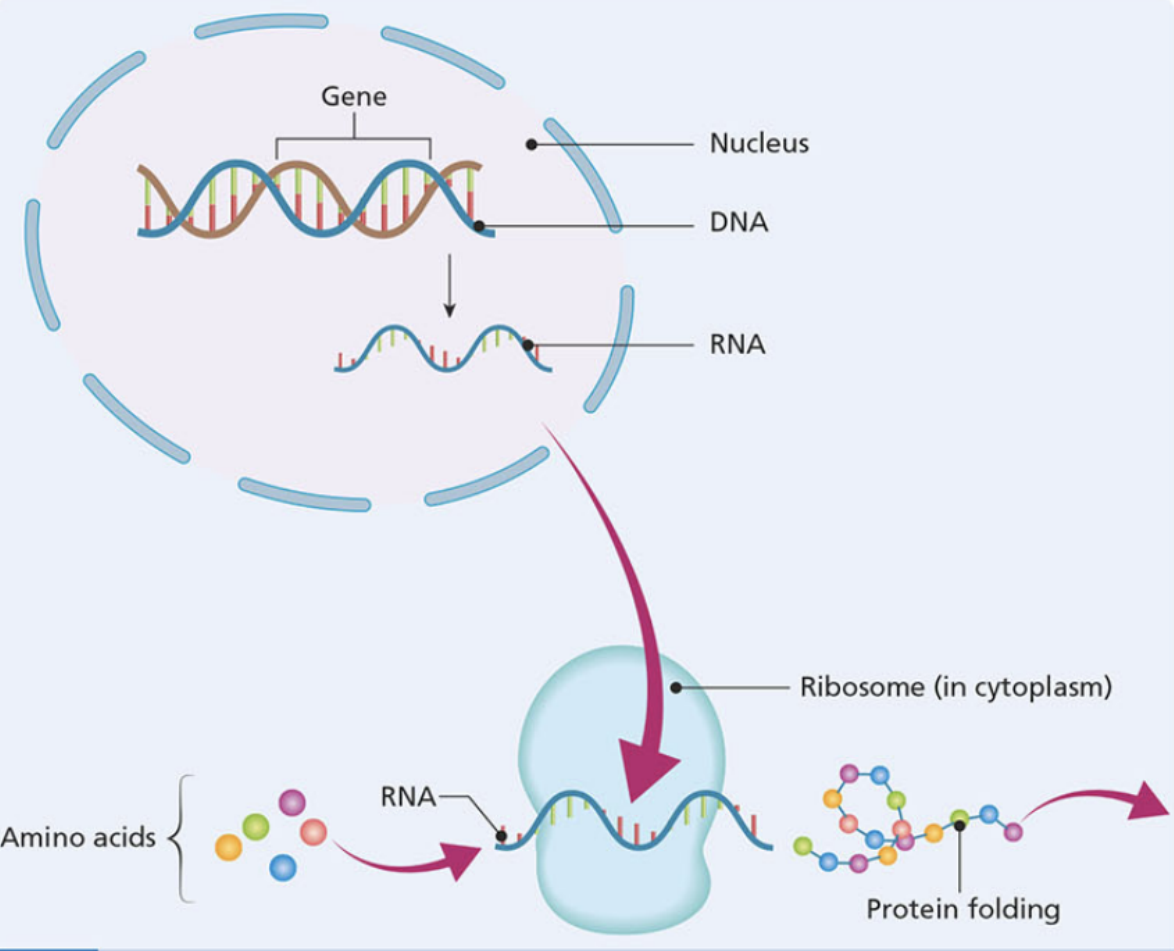
The flow of genetic information follows a specific pathway known as the central dogma: DNA → RNA → protein. This represents how genetic information moves from storage (DNA) to action (proteins) in all living organisms.
Note
Think of the central dogma as an assembly line: DNA holds the master plans, RNA carries the instructions to the factory floor, and proteins are the final products that do the actual work.
Functions of RNA
RNA serves as the crucial intermediary molecule that enables DNA's genetic instructions to be converted into functional proteins.
Carrying genetic instructions
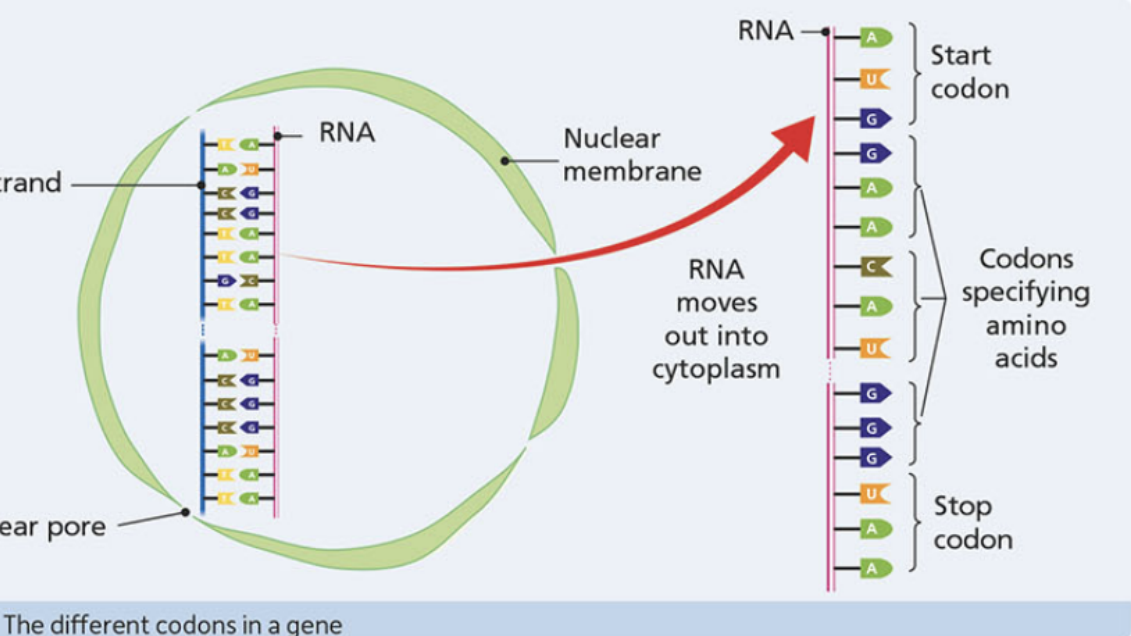
RNA's primary function is to transport genetic information from DNA in the nucleus to the protein-making machinery in the cytoplasm. Unlike DNA, which remains safely stored in the nucleus, RNA molecules can move freely through nuclear pores into the cytoplasm where protein synthesis occurs.
Each gene in the DNA produces a corresponding RNA molecule that carries the genetic code for making a specific protein. This RNA molecule moves from the nucleus to structures called ribosomes, located in the cytoplasm.
Enabling protein synthesis
At the ribosome, RNA directs the assembly of amino acids in the correct sequence to form a functional protein. The ribosome reads the genetic code carried by the RNA and translates it into a chain of amino acids. This chain then folds into a three-dimensional shape to become a working protein.
Note
RNA molecules are like molecular messengers that carry genetic recipes from the DNA cookbook in the nucleus to the protein-making kitchens (ribosomes) in the cytoplasm.
This process demonstrates how RNA functions as the essential link between the genetic information stored in DNA and the proteins that actually perform cellular functions.
The genetic code and gene expression
The genetic code is the set of rules that determines how the sequence of bases in DNA controls the sequence of amino acids in proteins.
How codons function
The genetic code works through groups of three bases called codons (or triplets). Each codon specifies which amino acid should be added next during protein synthesis. Since there are four different bases in DNA and RNA, there are 64 possible combinations of three bases, providing more than enough codons to specify all 20 amino acids used in proteins.
A codon functions like a three-letter word that gives specific instructions to the protein-making machinery. When the ribosome reads each codon in sequence, it adds the corresponding amino acid to the growing protein chain.
Example
Understanding Codons in Action
Imagine reading the genetic code like a sentence made of three-letter words:
- The sequence "ATG-CCG-TAA" contains three codons
- ATG might code for the amino acid methionine
- CCG might code for the amino acid proline
- TAA serves as a stop signal
The ribosome reads each three-letter "word" and adds the corresponding amino acid to build the protein chain.
Types of codons
There are three important types of codons that serve different functions in gene expression:
- Start codon: This marks the beginning of a gene and signals where protein synthesis should begin. It acts like a capital letter at the start of a sentence.
- Amino acid-specifying codons: The majority of codons code for specific amino acids. These provide the instructions for building the protein chain.
- Stop codon: This indicates the end of a gene and signals where protein synthesis should stop. It functions like a full stop at the end of a sentence.
Important
Start and stop codons are crucial for proper protein synthesis. Without them, the cell wouldn't know where to begin or end making a protein, leading to faulty or incomplete proteins that could harm the cell.
The gene expression process
Gene expression occurs in two main stages:
- Transcription: The genetic information in a DNA gene is copied to make an RNA molecule in the nucleus.
- Translation: The RNA moves to a ribosome in the cytoplasm, where its codon sequence is read to assemble amino acids into a protein.
This process ensures that the genetic information stored in DNA can be converted into functional proteins that carry out cellular activities and determine an organism's characteristics.
Note
Gene expression is like translating a book from one language to another: transcription creates a copy in RNA "language," and translation converts that into the "protein language" that cells can use.
Summary
Key Points to Remember:
-
DNA has three main functions: storing genetic information, replicating itself for inheritance, and directing protein production through gene expression
-
RNA acts as a messenger that carries genetic instructions from DNA in the nucleus to ribosomes in the cytoplasm where proteins are made
-
The central dogma (DNA → RNA → protein) describes the flow of genetic information in all living organisms
-
Codons are three-base sequences that specify which amino acids should be used to build proteins, with start and stop codons acting like punctuation marks
-
Gene expression is the complete process by which genetic information in DNA is converted into functional proteins that determine cellular activities and organism characteristics