Variations, Mutations, and Selection (Leaving Cert Biology): Revision Notes
📚Revision Notes
Variations, Mutations, and Selection
What are variations?
Variation refers to the differences we see between members of the same species. Even though all humans belong to the same species, we differ in characteristics like hair colour, height, and skin colour. The same principle applies to all living organisms - each individual has unique features that make them distinct.
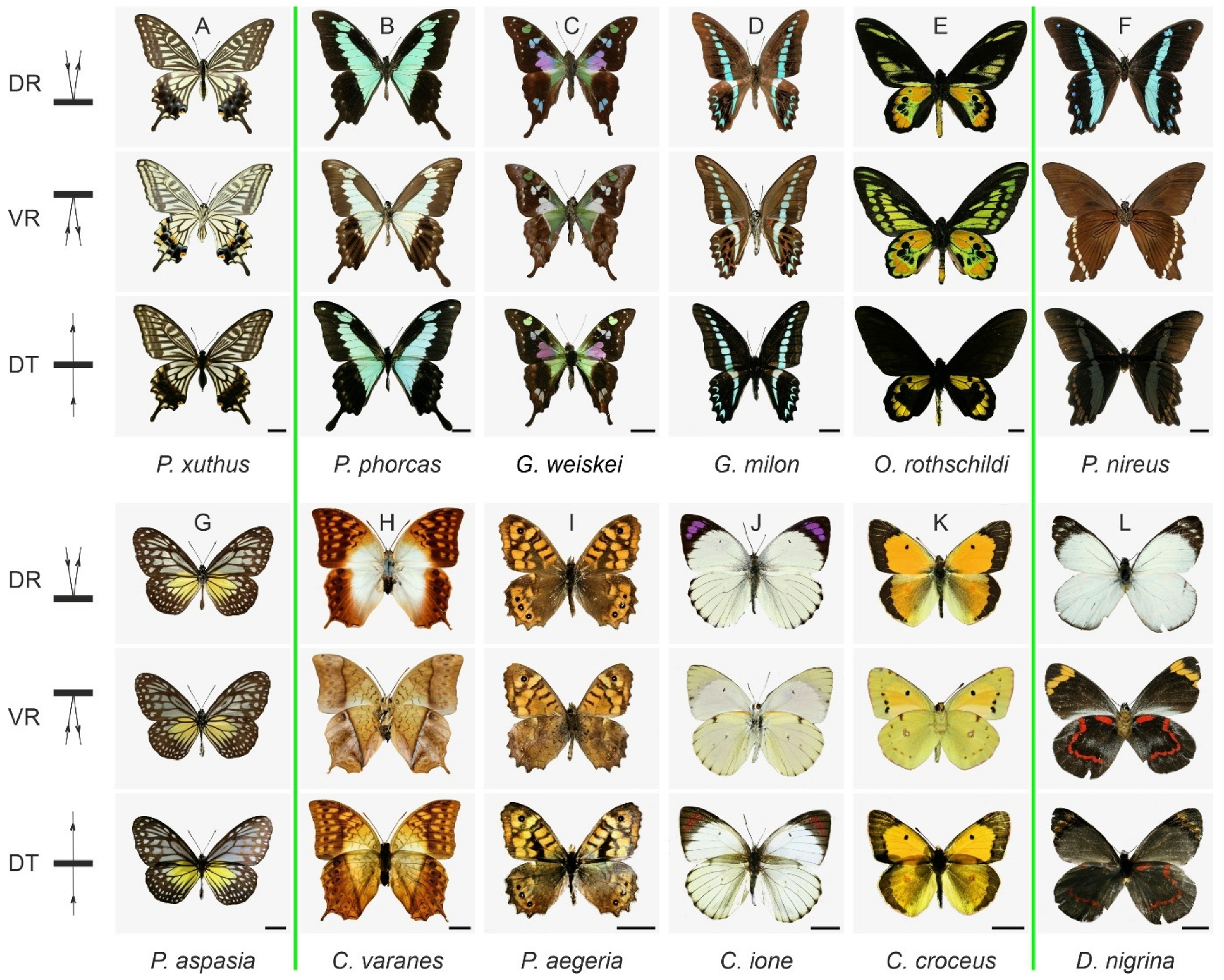
There are two main types of variation that create these differences between organisms:
Note
Understanding the difference between acquired and inherited variations is fundamental to genetics. This distinction helps explain which traits can be passed to offspring and which cannot.
Acquired variations
These are characteristics that organisms develop during their lifetime through learning or environmental influences.
Important
Acquired variations are not genetically controlled and cannot be passed on to offspring through reproduction.
Key features of acquired variations:
- Learned or developed during an organism's lifetime
- Not inherited by offspring
- Result from environmental factors or personal experiences
Example
Examples of Acquired Variations:
- Learning to walk, speak a language, or ride a bicycle - these are skills developed through practice
- Using a computer or playing a musical instrument - learned abilities
- Physical changes from exercise or diet - body modifications through lifestyle
- Scars from injuries - permanent marks from environmental damage
Inherited variations
These are characteristics that are genetically controlled and passed from parents to offspring through genes. Unlike acquired variations, inherited traits are present from birth and determined by an organism's DNA.
Important
Inherited variations are the foundation of heredity - they explain why children resemble their parents and why certain traits run in families. These variations are coded in our genes and cannot be changed through learning or practice.
Key features of inherited variations:
- Controlled by genes inherited from parents
- Present from birth or development
- Can be passed to future generations
Example
Examples of Inherited Variations:
- Blood groups (A, B, AB, O) - determined by specific genes
- Eye and hair colour - controlled by multiple genes
- Attached or detached earlobes - simple genetic traits
- Freckles and natural ear shape - inherited physical characteristics
Causes of inherited variations
Inherited variations arise from two main sources: sexual reproduction and mutations.
Sexual reproduction as a source of variation
Sexual reproduction is responsible for creating most of the genetic variation we observe in each generation. This process works by rearranging genetic material and creating new combinations of genes.
Note
Sexual reproduction is nature's way of shuffling genetic information. Think of it like dealing cards - each new individual gets a unique hand from the same deck of genetic possibilities.
How sexual reproduction creates variation:
- Organisms inherit genes from both parents
- Each offspring receives a different combination of genes compared to their parents
- Sex cells (gametes) are genetically unique due to genetic recombination
- This results in offspring that are genetically distinct from their parents and siblings
The result is that each individual has a unique genetic makeup, which explains why family members share similarities but are not identical (except for identical twins).
Mutations as a source of variation
Mutations are spontaneous changes that occur in an organism's genes or chromosome structure. These random changes in DNA can create new variations within a population.
Effects of mutations
Most mutations have little to no effect on an organism because cells have repair mechanisms that can fix DNA damage. However, when mutations do have an effect, they usually fall into three categories:
Important
Critical Concept: Most mutations are actually neutral or harmful - beneficial mutations are rare but extremely important for evolution. Without beneficial mutations, species could not adapt to changing environments.
Harmful mutations:
- Often produce negative effects on the organism
- May cause diseases or disorders
- Can affect an organism's ability to survive and reproduce
- Example: mutations causing increased cell division rates may lead to tumours
Neutral mutations:
- Have no significant impact on the organism's survival
- May occur in non-coding regions of DNA
- Often go unnoticed as they don't change protein function
Beneficial mutations:
- Rarely occur but can provide advantages to organisms
- May improve protein function or create new beneficial traits
- These mutations can become more common in populations through natural selection
- Serve as raw material for evolutionary change
Types of mutations
Note
Mutations can occur at different scales - from single DNA base changes to large chromosomal rearrangements. The scale of the mutation often determines its potential impact on the organism.
Gene (point) mutations:
- Involve changes in a single gene
- Affect one or a small number of DNA bases (nucleotides)
- May alter the protein produced by that gene
- The changed gene is called an allele
Chromosomal mutations:
- Involve large-scale changes to chromosome structure or number
- Affect multiple genes simultaneously
- May involve entire chromosomes or large sections of chromosomes
- Generally more visible under a microscope than gene mutations
Artificial selection
Artificial selection is the process where humans deliberately choose organisms with desirable traits to breed together. This selective breeding aims to produce offspring with enhanced or specific characteristics that humans find useful or appealing.
The process involves:
- Identifying organisms with desired traits
- Selecting these organisms as breeding parents
- Allowing them to reproduce
- Selecting the best offspring from the next generation
- Repeating this process over many generations
Note
Artificial selection is essentially humans acting as the selecting agent instead of natural environmental pressures. This allows us to shape species according to our needs rather than environmental demands.
Examples of artificial selection
Example
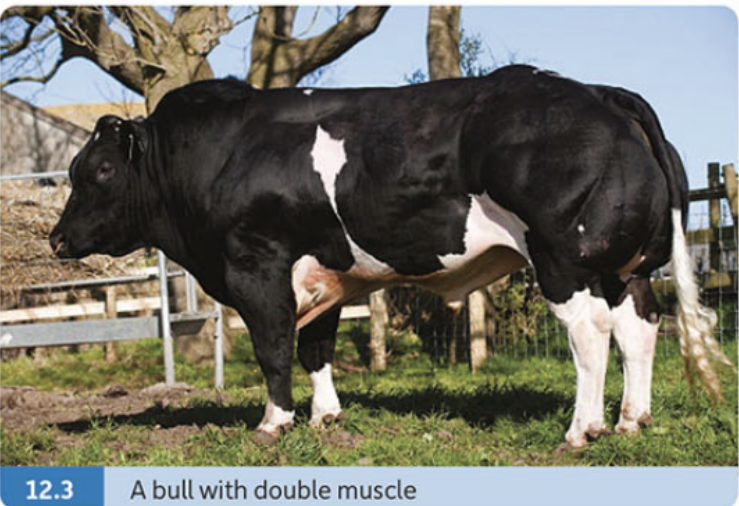
Livestock Breeding:
- Cattle have been bred to produce large quantities of high-quality milk or meat
- Horses and sheep have been selectively bred for specific working abilities
- Different breeds now serve different human needs
Example
Crop Development:
- Modern crops produce much greater amounts of high-quality food
- Wheat has been bred to create varieties that resist diseases and grow in different climates
- Many crops now produce larger grains or fruits than their wild ancestors
Example
Pet Breeding:
- Dogs have been bred for desirable traits like temperament and appearance
- Modern dog breeds show remarkable diversity in size, coat, and behaviour
- All dog breeds descended from wolves through centuries of selective breeding

Example
Laboratory Research:
- Scientists selectively breed laboratory organisms to study genetic diseases
- This helps develop treatments that may benefit humans
- Research animals are bred to have specific genetic characteristics for medical research
Natural selection
Natural selection is the mechanism by which organisms with genetically controlled characteristics that help them survive in their environment are more likely to survive and reproduce. This process allows beneficial traits to be passed on to future generations.
How natural selection works
Natural selection operates on the principle that organisms best adapted to their environment have the greatest chance of survival and reproduction. Over time, this leads to changes in the characteristics of populations.
Important
Key Principle: Natural selection can only work on inherited (genetic) variations, not acquired ones. This is why understanding the difference between these types of variation is crucial.
The process involves:
- Variation - organisms in a population show genetic differences
- Competition - organisms compete for limited resources
- Selection - those with advantageous traits are more likely to survive
- Reproduction - successful organisms pass their beneficial genes to offspring
- Inheritance - advantageous traits become more common in the population
Example: Peppered moths
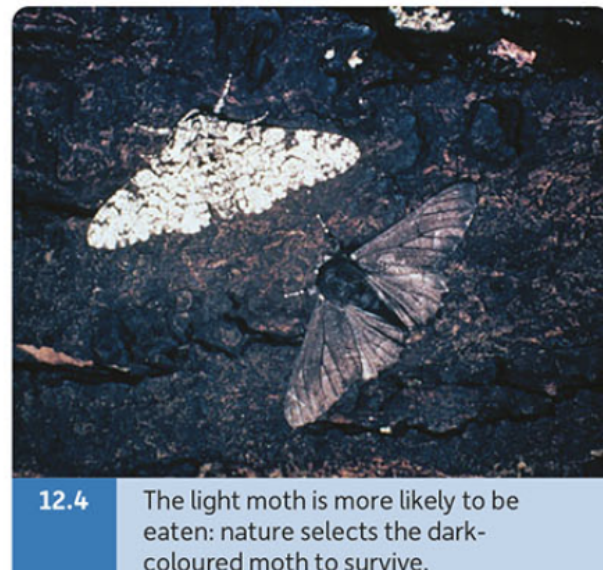
The peppered moth provides a classic example of natural selection in action. This study demonstrates how environmental changes can affect which traits provide survival advantages.
Example
The Peppered Moths Study:
Before industrial pollution:
- Light-coloured moths were well-camouflaged on pale tree bark
- Dark moths were easily spotted by predators
- Light moths had higher survival rates
During industrial pollution:
- Tree bark became darkened by soot and pollution
- Dark moths now had better camouflage
- Light moths became more visible to predators
- Natural selection favoured the dark-coloured moths
Note
This example shows how natural selection responds to environmental changes, with different traits becoming advantageous under different conditions. It demonstrates that there is no "best" trait - only traits that are best suited to current environmental conditions.
Darwin's contribution
Natural selection forms the foundation of Darwin's theory of evolution. Darwin proposed that this mechanism could explain how species change over time and how new species might arise. According to this theory, organisms that are well-adapted to their environment will be naturally selected to survive and pass their genes to future generations.
Summary
Key Points to Remember:
-
Variation exists within all species due to genetic differences and environmental influences - acquired variations are learned, while inherited variations are controlled by genes
-
Mutations create new genetic variations by causing random changes in DNA - most are harmless, but some can be beneficial or harmful to organisms
-
Artificial selection allows humans to breed organisms with desirable traits, creating new varieties of crops, livestock, and pets over many generations
-
Natural selection is nature's way of favouring organisms with advantageous traits - those best adapted to their environment are more likely to survive and reproduce
-
The peppered moth example demonstrates how environmental changes can shift which traits provide survival advantages, showing natural selection in action