The Alimentary Canal: The Mouth and the Oesophagus (Leaving Cert Biology): Revision Notes
📚Revision Notes
The Alimentary Canal: The Mouth and the Oesophagus
- Mouth
- Oesophagus
- Stomach
- Small intestine
- Liver
- Pancreas
- Large intestine
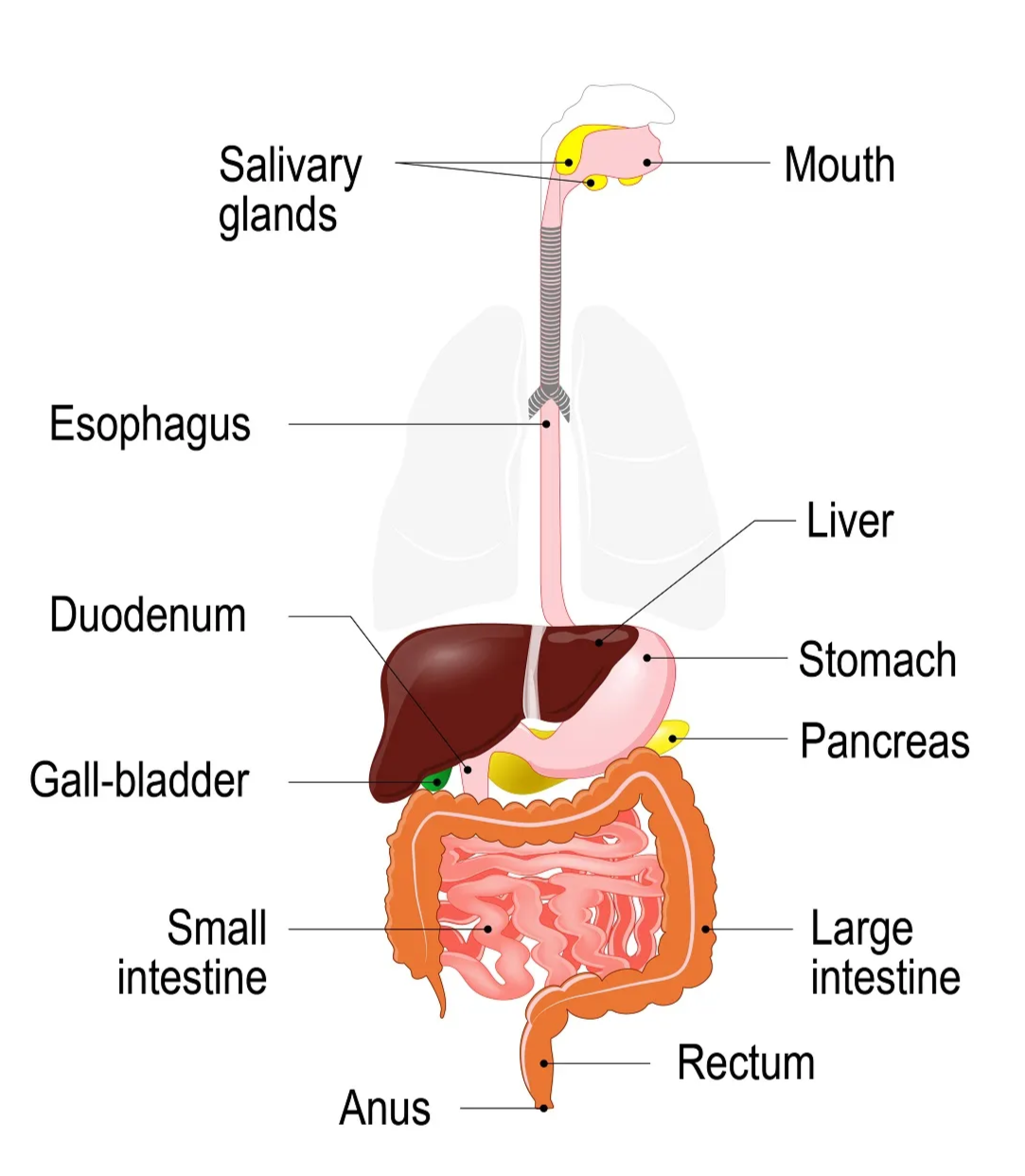
1. Mouth
Mechanical (physical) and chemical digestion occur in the mouth.
Note
Mechanical (physical) digestion: the physical breakdown of large pieces of food into smaller pieces by chewing and stomach churning.
Note
Chemical Digestion: The breakdown of food into simpler molecules by enzymes and digestive juices.
Mechanical Digestion (Teeth)
- Teeth break food into smaller pieces.
- This increases the surface area for enzyme action and speeding up the digestion of food.
- It is a form of mechanical/physical digestion.
- There are four types of teeth: | 1. Incisors | Cutting and slicing food. | |---|---| | 2. Canines | Gripping and tearing food. | | 3. Pre-molars | Chewing and grinding food. | | 4. Molars | Chewing and grinding food. |
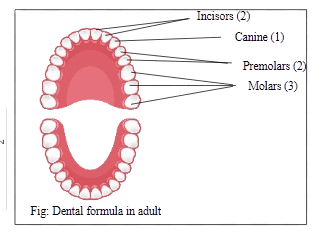
Adult Dental Formula:
I = incisor
C = canine
P = pre-molar
M = molar
Mouth: Chemical Digestion
- Chemical digestion is carried out in the mouth by the enzyme amylase.
- Amylase is found in saliva which is produced by the salivary glands. These glands are located under the tongue, at the back of the jaws and in the cheeks.
- Saliva contains water, salts, mucous, amylase, and lysozyme.
- Amylase converts starch (polysaccharide) to maltose (a disaccharide).
- Ideal pH in the mouth: 7-8.
Note
Lysozyme is part of the general defence system and helps to destroy microorganisms.
- Food is formed into a bolus and pushed into the pharynx.
- A flap of tissue called the epiglottis covers the trachea (windpipe) to ensure that the bolus enters the oesophagus.
2. Oesophagus
- The oesophagus, like the rest of the alimentary canal, is made of involuntary muscle.
- This muscle contracts to push food along the alimentary canal.
- This process is called peristalsis.
- Fibre (cellulose) in the diet stimulates peristalsis.
Note
Peristalsis: an involuntary wave of muscular contraction that causes food to move through the alimentary canal. Peristalsis also occurs in the fallopian tubes.