The Alimentary Canal: The Stomach (Leaving Cert Biology): Revision Notes
📚Revision Notes
The Alimentary Canal: The Stomach
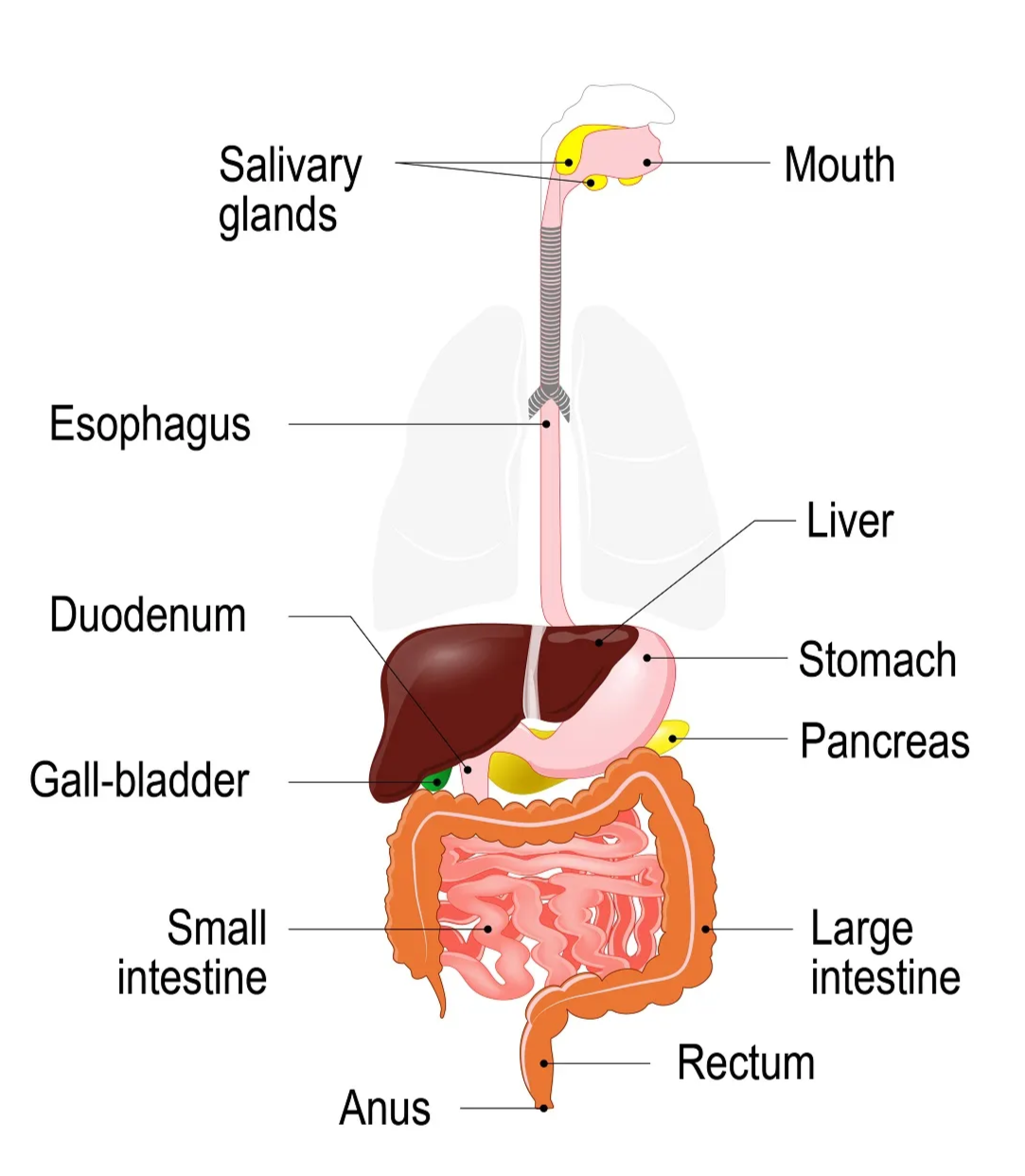
- Mouth
- Oesophagus
- Stomach
- Small intestine
- Liver
- Pancreas
- Large intestine
3. The Stomach
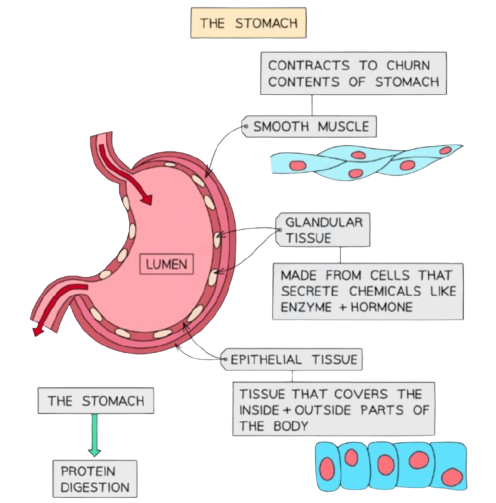
- The stomach is a J-shaped sac that stores and digests food.
- Food enters the stomach through the cardiac sphincter muscle at the top of the stomach.
- A sphincter muscle is a circular muscle that can open and close.
Components of the Stomach
- Mucous: Produced by goblet cells lining the stomach. It protects the stomach wall from being digested by its own enzymes and acid (prevents self-digestion).
- Hydrochloric acid (HCl): Provides a pH of 1-2, kills bacteria, and activates pepsinogen. HCl is not an enzyme.
- Pepsin: An enzyme that breaks down proteins into peptides.
Chemical Digestion
- Enzymes carry out chemical digestion.
- Pepsinogen is an inactive enzyme produced by glands lining the stomach.
- It is activated by HCl to form pepsin.
- Pepsin digests proteins into smaller units called peptides.
- The stomach is protected from digestion by a mucous layer.
- Pepsin only becomes active when mixed with stomach acid.
- An ulcer can form if there is too much acid in the stomach.
Physical Digestion
- The stomach churns food and mixes it with gastric juices to form a liquid called chyme.
- This increases the surface area of the food, allowing enzymes to digest the food more quickly.