Bacterial Reproduction (Leaving Cert Biology): Revision Notes
📚Revision Notes
Bacterial Reproduction
- Bacterial reproduction is asexual.
- The process is called binary fission.
Binary Fission
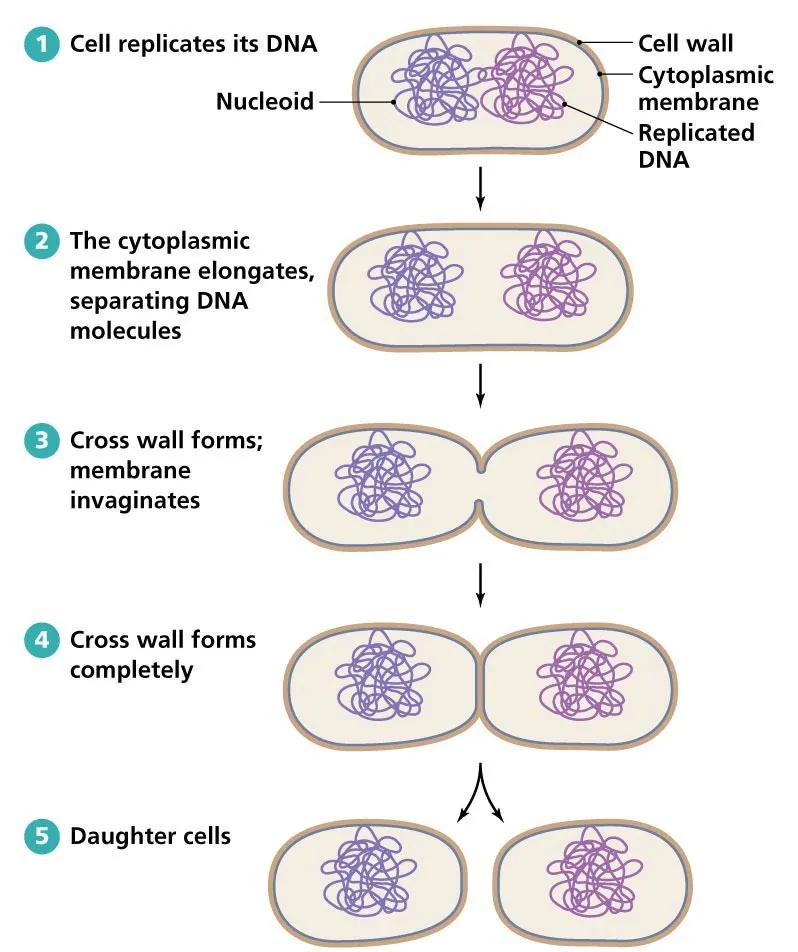
- DNA replicates and the cell elongates.
- The two identical pieces of DNA move to opposite ends of the cell.
- Ingrowths form in the cell wall.
- The cell splits in two (cytokinesis) and two identical cells are formed.
- In suitable conditions, bacteria can reproduce every 20 minutes.
- Due to this rapid reproduction, mutations can pass quickly from one generation to the next.
Endospores
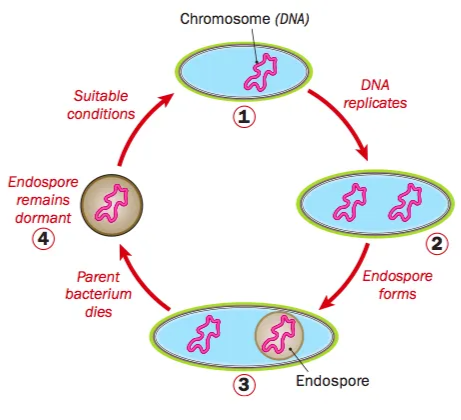
- When conditions are unsuitable (e.g.extreme temperatures), bacteria can produce endospores which can survive harsh conditions.
- Endospores are:
- Thick, tough-walled, dormant bacterial cells.
- Able to survive for up to 100 years.
- When conditions become suitable again, the endospore absorbs water, the tough wall breaks and binary fission (bacterial reproduction) resumes.
Note
An endospore is a thick, tough-walled, dormant, dehydrated bacterial cell formed during unsuitable conditions.
Note
Dormant: not active but capable of becoming active when conditions improve.