Business Models (Leaving Cert Business): Revision Notes
📚Revision Notes
Business Models
What is a business model?
A business model is a fundamental part of any business plan that explains how a company will operate and make money. Think of it as the blueprint that shows how a business will create, deliver, and capture value for its customers while generating profit.
Note
The business model answers key questions like:
- Who are the target customers?
- What problem does the business solve?
- How will the business make money?
- What resources and activities are needed?
- How will the product or service reach customers?
A good business model looks at both what value is created by the business and how that value will generate revenue. It considers the target market for the product or service and analyses how the business will compete effectively.
The Business Model Canvas
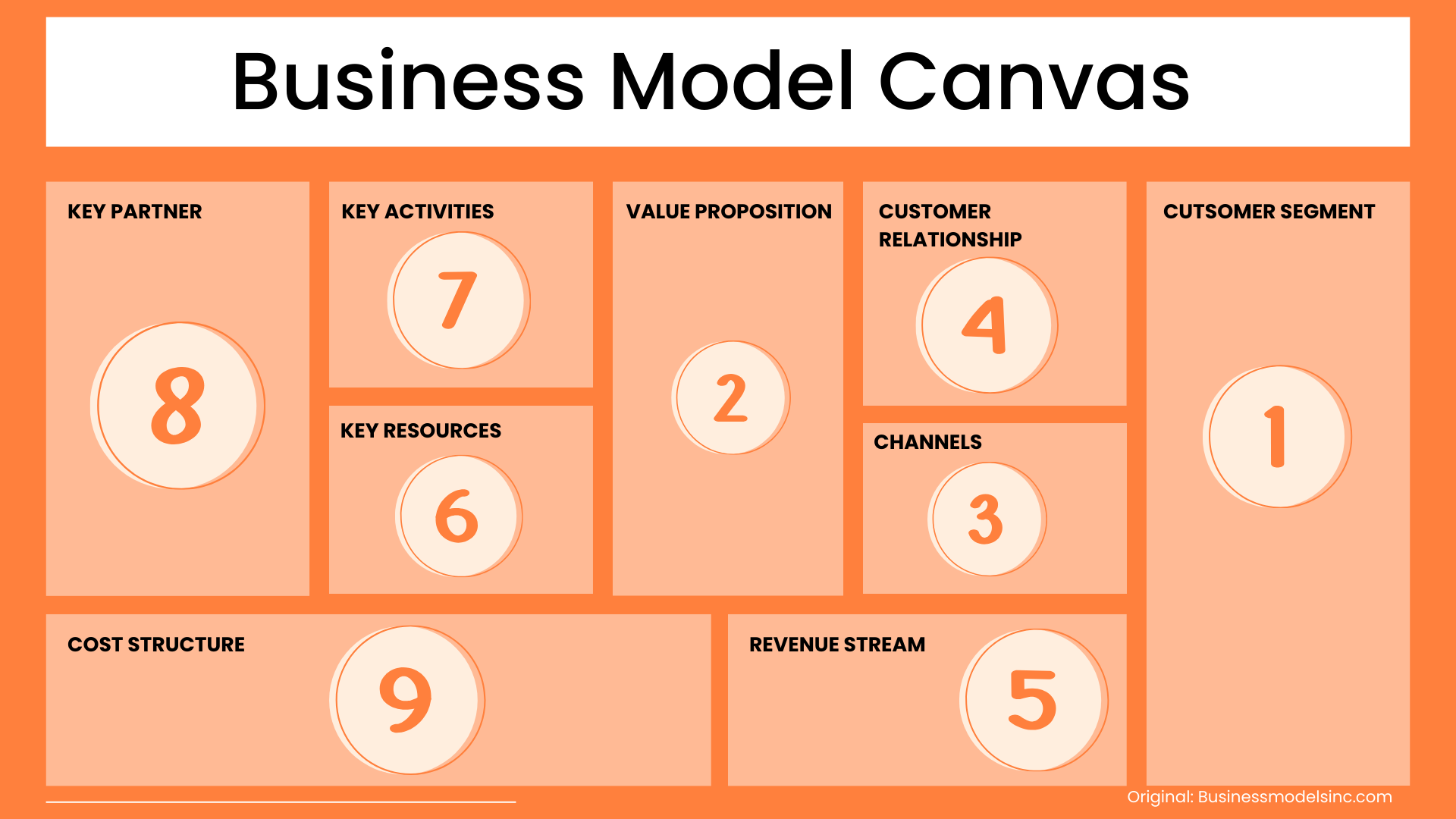
The Business Model Canvas is a popular visual tool that helps businesses map out their business model on a single page. Created by Alexander Osterwalder and Yves Pigneur in 2010, it breaks down a business model into nine key components that work together.
Important
This canvas acts like a roadmap, showing all the essential elements involved in running a successful business. It's particularly useful for startups and existing businesses looking to understand or redesign how they operate.
Functions of business models
Business models serve several important purposes that are essential for business success:
Identify the target market: A strong business model helps companies understand exactly who their customers are, what their needs are, and how to connect with them effectively.
Define the problem: It helps clarify what specific customer problem or need the business exists to solve.
Understand the solution: The model explains clearly how the product or service solves the customer's problem and why customers should choose this business over competitors.
Generate revenue: Business models must include a clear strategy for making money, with costs carefully analysed to ensure a profitable pricing strategy can be chosen.
Risk management: Good business models consider potential risks and include plans for testing ideas, conducting market research, and developing prototypes to minimise losses.
Key components of a business model
The Business Model Canvas organises business planning into nine interconnected building blocks:
Customer focused components
Customer Segments: This identifies the different groups of people or organisations the business aims to serve. Companies need to consider demographics, preferences, and motivations when defining their target market.
Value Proposition: This describes what makes the company's product or service unique and valuable to customers. It explains why customers should choose this business over competitors.
Customer Relationships: This outlines how the business will interact with different customer segments, including how it will acquire new customers, retain existing ones, and grow revenue from them.
Channels: These are the ways the business will reach and communicate with customers, including how products or services will be distributed and delivered.
Note
Customer-focused components work together to ensure the business understands its market and can effectively reach and serve its customers.
Operational components
Key Activities: The most important activities the company must perform to make its business model work and deliver its value proposition successfully.
Key Resources: The essential assets needed to operate the business, including physical, financial, intellectual, and human resources.
Key Partnerships: Relationships with other companies and suppliers that help the business reduce risk, access resources, or achieve economies of scale.
Financial components
Cost Structure: All the major costs involved in operating the business model, including both fixed costs (like rent) and variable costs (like materials).
Revenue Streams: The different ways the business will generate income from its customer segments, such as direct sales, subscriptions, or advertising.
Note
Financial components ensure the business model is economically viable by clearly outlining how money flows in and out of the business.
Common types of business models
There are several established business models that companies commonly use:
1. Retailer model

The retailer model is the most straightforward business approach. Retailers buy products from wholesalers or manufacturers and sell them directly to consumers, either in physical shops or online stores.
The retailer adds a mark-up to the wholesale price to cover their expenses and generate profit. Success depends on factors like location, product quality, competitive pricing, and effective marketing campaigns.
Example
Retailer Model Example:
A stationery shop buys pens from a wholesaler at €0.50 each and sells them to customers for €1.00 each.
- Wholesale cost: €0.50 per pen
- Retail price: €1.00 per pen
- Mark-up: €0.50 (100% mark-up)
- Profit margin: Used to cover shop rent, staff wages, and business profit
This model involves significant competition since many retailers often sell similar products, so businesses must differentiate themselves through service, price, or unique product selection.
2. Manufacturing model

Manufacturing businesses create products from raw materials and sell them to distributors, retailers, or sometimes directly to consumers. Companies like Apple and Samsung use this model.
The key to success is being able to generate revenue and maintain profit margins while managing production costs. Manufacturing businesses often choose to either assemble products to order, make products in advance to stock, or allow customers to make custom orders.
Important
This model requires significant investment in equipment, facilities, and skilled workers, but can be highly profitable when managed effectively.
3. Subscription model
The subscription model provides ongoing access to products or services for a regular recurring payment (weekly, monthly, or annually). Companies like Netflix and Spotify have made this model very popular.
Customers benefit from predictable costs and continuous access, while businesses benefit from steady, predictable revenue streams. This model works particularly well for digital services, entertainment, and consumable products.
The challenge is maintaining customer satisfaction to prevent them from cancelling their subscriptions, so businesses must continuously provide value and update their offerings.
4. Franchise model
Franchising allows successful businesses to expand by licensing their brand, business model, and operational systems to other entrepreneurs (franchisees). McDonald's is a famous example of successful franchising.
Franchisees pay initial fees and ongoing royalties to use the established brand name and proven business concept. They benefit from a tested business model, recognised brand, and ongoing support.
Example
Franchise Model Example:
A McDonald's franchisee pays:
- Initial franchise fee: €45,000
- Ongoing royalty: 4% of monthly sales
- Marketing fee: 4% of monthly sales
In return, they receive:
- Rights to use the McDonald's brand and menu
- Operational training and support
- Marketing and advertising support
The franchisor benefits from rapid expansion without having to invest their own capital in new locations, while maintaining control over brand standards and operations.
5. Freemium model
The freemium model offers a basic version of a product or service for free, then charges for premium features or enhanced services. This approach is commonly used by software companies, mobile apps, and online platforms.
Examples include Spotify (free with ads vs premium without ads), Canva (free design tools vs advanced features), and many online games that offer additional features for payment.
The goal is to attract a large user base with the free offering, then convert a percentage of users to paying customers for the enhanced premium experience.
6. Affiliate model
Affiliate marketing involves promoting other companies' products or services and earning a commission when someone makes a purchase through your referral. Social media influencers and content creators often use this model.
Affiliates benefit from not having to create their own products, flexible working arrangements, and the potential for high income if they build a large, engaged audience. Companies benefit from expanded marketing reach without upfront advertising costs.
Success depends on building trust with an audience and choosing products that align with their interests and needs.
Digital transformation and business models
Digital technology is revolutionising how businesses operate and compete. Companies are adopting digital tools for various reasons:
Efficiency improvements: Digital systems help businesses complete tasks faster and with greater accuracy, reducing the scope for human error and operational costs.
Enhanced customer value: Technology enables businesses to offer better, more personalised experiences to their customers.
Competitive advantage: Companies that embrace digital innovation can often stay ahead of competitors in today's fast-changing market.
New opportunities: Digital platforms allow businesses to reach new markets, collaborate virtually, and develop innovative products and services.
Note
Many traditional businesses are adapting their models to include digital elements, while completely new digital-first business models continue to emerge. The key is understanding how technology can enhance value creation and delivery for customers.
Remember!
Summary
Key Points to Remember:
-
Business models explain how companies create value and generate revenue - they're the foundation for any successful business plan
-
The Business Model Canvas provides a visual framework with 9 key components that work together to map out how a business operates
-
Different business models suit different situations - retailers buy and resell, manufacturers create products, subscriptions provide ongoing access, franchises license proven concepts, freemium offers basic services free with premium upgrades, and affiliates earn commissions promoting others' products
-
Digital transformation is changing traditional business models by improving efficiency, enhancing customer experiences, and creating new opportunities for innovation
-
Successful business models must clearly identify target customers, solve real problems, and include sustainable strategies for generating profit while managing costs effectively