HCM & the Organisational Environment (Leaving Cert Business): Revision Notes
📚Revision Notes
HCM & the Organisational Environment
What is human capital management?
Human capital refers to the abilities, skills and knowledge that people possess. These are developed and invested in to help employees become more productive and reach their full potential in the workplace.
Human capital management (HCM) is the strategic process that organisations use to attract, develop and reward their workforce. The goal is to ensure employees contribute as effectively as possible to achieving the organisation's objectives.
HCM focuses on maximising the value that a company's human resources can provide. This involves creating systems and processes that help employees perform their jobs to the best of their ability whilst building a strong organisational culture.
Note
The key distinction is that human capital refers to the people and their capabilities, while HCM refers to the strategic management processes used to develop and utilise those capabilities effectively.
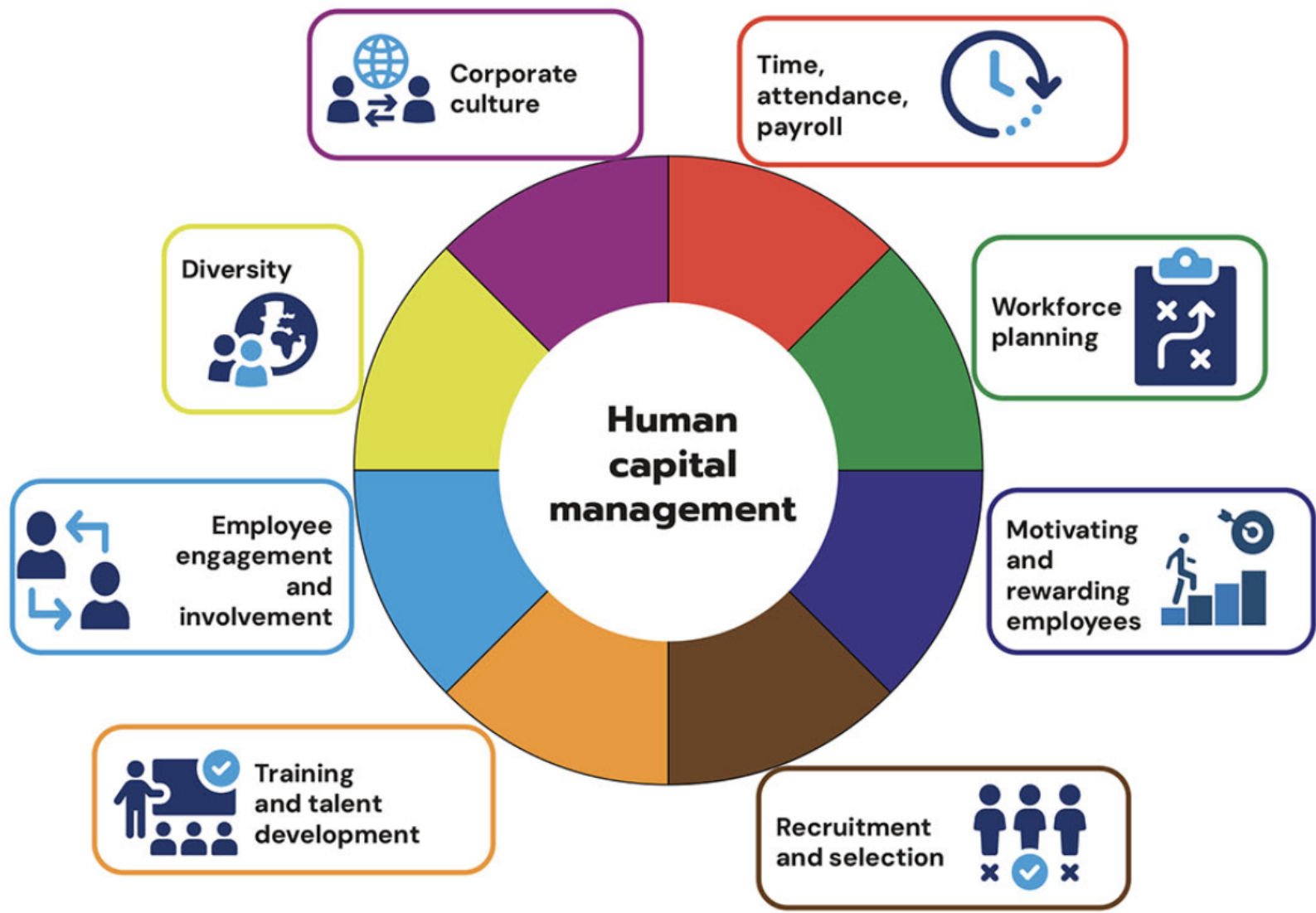
Key components of HCM
Effective HCM involves eight interconnected areas that work together to manage an organisation's workforce:
Important
All eight components must work together as an integrated system. Focusing on just one or two areas while neglecting others will limit the overall effectiveness of your HCM strategy.
1. Corporate culture
This involves ensuring that company values and ethics are embedded in all business activities. It starts with recruitment policies that attract candidates who fit the company culture, followed by comprehensive induction and training programmes.
2. Workforce planning
Organisations must monitor staff retention and labour turnover rates. This includes conducting skills audits, analysing recruitment targets, and ensuring that staffing levels align with company goals and strategic plans.
3. Recruitment and selection
This process involves attracting and hiring the right employees through effective sourcing of candidates, developing robust selection procedures, and evaluating applicants to identify the best fit for new roles.
4. Training and talent development
Companies invest in employee training to develop and improve skills. This creates opportunities for internal recruitment and career progression whilst measuring training effectiveness against industry benchmarks.
5. Motivating and rewarding employees
Effective HCM ensures employees feel motivated through fair compensation that matches their experience and qualifications. This includes developing comprehensive remuneration packages and non-financial rewards.
6. Employee engagement and involvement
This involves surveying employee satisfaction, conducting regular performance appraisals, and encouraging staff participation in decision-making processes to collect feedback and set targets.
7. Diversity
Organisations work to ensure diverse representation across all levels, including senior management. This involves gender equality reporting and compliance with employment legislation whilst running diversity programmes.
8. Time, attendance and payroll
Some companies use HCM systems to monitor working hours and attendance, ensuring accurate payroll processing and appropriate deductions where necessary.

Benefits of effective HCM
When implemented properly, HCM delivers several key advantages to organisations:
Adequate staffing levels
Companies maintain enough staff with the right skills at all times. Each employee can focus on their specific role, utilising their unique talents and strengths to ensure optimal performance.
Motivated workforce
An effective HCM approach creates motivated and hardworking employees. Staff feel valued and empowered, leading to higher job satisfaction and better performance outcomes.
Improved productivity and efficiency
Regular performance monitoring ensures employees meet targets and continuously develop their skills. This enables them to perform their roles more efficiently and contribute more effectively to organisational success.
Note
Measuring HCM Success
The benefits of effective HCM can be measured through key performance indicators such as employee retention rates, productivity metrics, employee satisfaction scores, and the achievement of organisational objectives.
Understanding the organisational environment
The organisational environment consists of all the forces and institutions that surround a business and affect its performance, operations and resources. These influences can be either internal (within the company's control) or external (outside the company's direct control).
Understanding these environmental factors is crucial for effective HCM because they directly impact how a company manages its human capital and makes strategic workforce decisions.
Important
Environmental factors are constantly changing. Successful organisations regularly assess their environment and adapt their HCM strategies accordingly to remain competitive and effective.
Three levels of organisational environment
Note
Internal Environment - Direct Control
This is the innermost level, representing factors within the organisation's direct control:
- Owners - provide capital and strategic direction
- Board of directors - responsible for governance and major decisions
- Employees - the workforce at all levels
- Culture - the shared values, beliefs and practices within the organisation
Note
Task Environment - Direct Interaction
The middle level includes external stakeholders that directly interact with the organisation:
- Customers - those who purchase the company's products or services
- Suppliers - provide materials, services or resources needed for operations
- Competitors - other businesses operating in the same market
- Strategic partners - organisations with formal collaborative relationships
- Regulators - government bodies and agencies that oversee business activities
Note
General Environment - Broader Forces
The outermost level encompasses broader societal forces that affect all organisations:
- Economic dimension - interest rates, inflation, unemployment levels
- Technological dimension - advances in technology and digital transformation
- Socio-cultural dimension - demographic trends, cultural values, lifestyle changes
- Political-legal dimension - laws, regulations, government policies
- International dimension - global economic conditions, trade relationships
How the organisational environment affects HCM
The elements of the organisational environment significantly impact how companies manage their human capital:
- Internal factors influence business decisions and activities, including employee behaviour, organisational structure and leadership approaches
- External factors create opportunities and challenges that require adaptive HCM strategies
- Companies must consider all environmental levels when making decisions about recruitment, training, compensation and workforce planning
Example
Practical Application: Environmental Impact on HCM
Economic Environment Impact:
- During economic recession → Reduce hiring, focus on retention of key talent
- During economic growth → Expand recruitment, increase training investments
Technological Environment Impact:
- New software systems introduced → Implement comprehensive training programmes
- Automation trends → Reskill employees for higher-value tasks
Socio-cultural Environment Impact:
- Changing work-life balance expectations → Develop flexible working policies
- Increased diversity awareness → Enhance diversity and inclusion programmes
For example, changes in the economic environment might require adjustments to hiring plans, whilst technological advances could necessitate new training programmes to keep employees' skills current.
Summary
Key Points to Remember:
- HCM is a strategic approach - It's not just about hiring people, but about maximising the value of human resources to achieve organisational goals
- Eight key components work together - Corporate culture, workforce planning, recruitment, training, motivation, engagement, diversity, and payroll management all interconnect
- Environment shapes HCM decisions - Internal, task, and general environmental factors all influence how organisations manage their workforce
- Benefits are measurable - Good HCM leads to adequate staffing, motivated employees, and improved productivity
- Understanding environment is essential - Companies must consider all three environmental levels when making human capital decisions