Scientific Ideas and Science as a Global Enterprise (LC 2027) (Leaving Cert Chemistry): Revision Notes
📚Revision Notes
Scientific Ideas and Science as a Global Enterprise
Introduction to scientific knowledge
Scientific knowledge is constantly evolving and changing as new discoveries are made. What scientists believed to be true in the past may be modified or completely replaced when better evidence becomes available. This process of continuous improvement is one of the key strengths of science.
How scientific ideas change over time
Scientific understanding develops and improves as researchers make new observations and gather fresh evidence. A perfect example of this is our understanding of atomic structure, which has changed dramatically over the centuries.
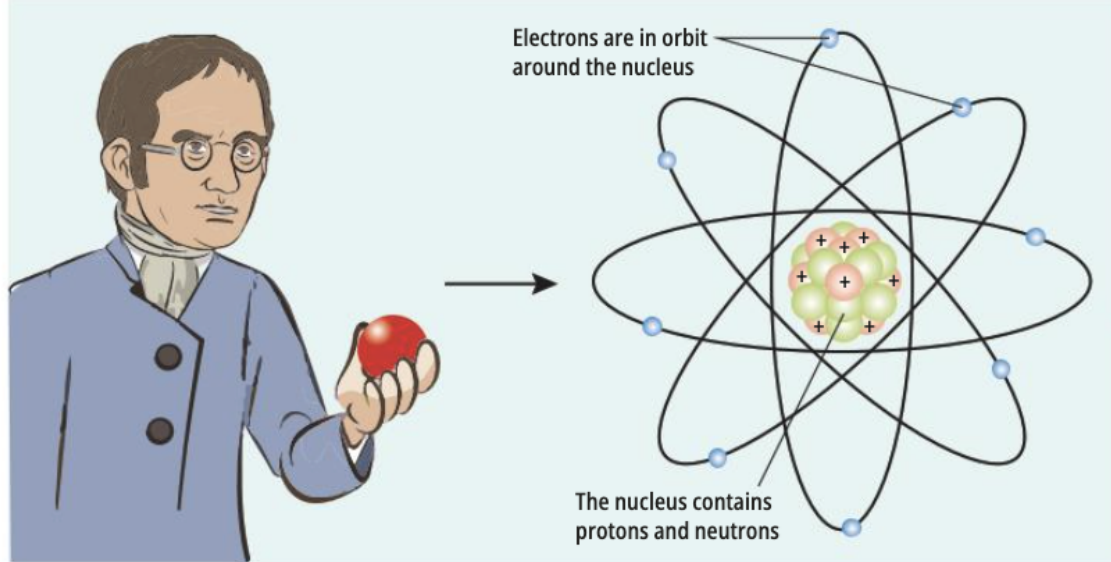
In the early 1800s, John Dalton proposed that atoms were like tiny, solid balls that could not be broken down further. However, as scientific techniques improved and new experiments were conducted, scientists discovered that atoms actually contain even smaller particles called electrons, protons, and neutrons. This led to our modern understanding of atomic structure, where electrons orbit around a central nucleus.
Note
This example shows how scientific theories evolve when new evidence is discovered. Scientists must be willing to change their ideas when better explanations become available.
Understanding scientific theories and laws
It's important to distinguish between scientific theories and scientific laws, as these terms have specific meanings in science:
Important
Understanding the Key Difference:
Scientific theories explain why something happens. They are comprehensive explanations based on observations, hypotheses, and established facts. For example, atomic theory explains why matter behaves the way it does by describing the structure and behaviour of atoms.
Scientific laws describe what happens in nature. They summarise observed patterns or relationships but don't necessarily explain why these patterns occur. For instance, the Law of Conservation of Mass describes what happens to mass during chemical reactions but doesn't explain the underlying atomic processes.
Remember: Laws describe, Theories explain
Both theories and laws can change if new evidence contradicts them, but theories are more likely to be modified as they involve more complex explanations.
Science as a global enterprise
Modern science operates as a worldwide collaborative effort rather than isolated work in individual countries or laboratories. Scientists from different nations work together, sharing their knowledge, skills, and resources to solve common problems.
This global approach to science has several important benefits:
- Shared standards: Scientists around the world follow the same rules and conventions, making it easier to compare and combine research from different countries
- Collaborative problem-solving: Complex challenges like climate change, disease treatment, and environmental protection require expertise from multiple countries
- Resource sharing: Expensive equipment and facilities can be shared between international research teams
- Faster progress: When scientists work together globally, discoveries and breakthroughs happen more quickly
Key principles of scientific practice
Science operates according to several fundamental principles that ensure the reliability and quality of scientific knowledge:
Evidence-based approach
All scientific ideas must be supported by solid evidence gathered through careful observations and experiments. Scientists cannot simply make claims without backing them up with data. This evidence-based approach helps ensure that scientific knowledge is reliable and trustworthy.
Clear communication
Scientists must be able to explain their ideas and discoveries clearly so that other researchers around the world can understand and build upon their work. This includes using standardised symbols, terminology, and methods. For example, chemists worldwide use the same symbols for chemical elements and follow similar procedures for writing chemical equations.
International conventions
Scientists follow agreed international standards and conventions. In chemistry, organisations like the International Union of Pure and Applied Chemistry (IUPAC) establish rules for naming elements and compounds, ensuring consistency across all countries. The SI system of units is another example of international standardisation that allows scientists to communicate measurements precisely.
The peer review process
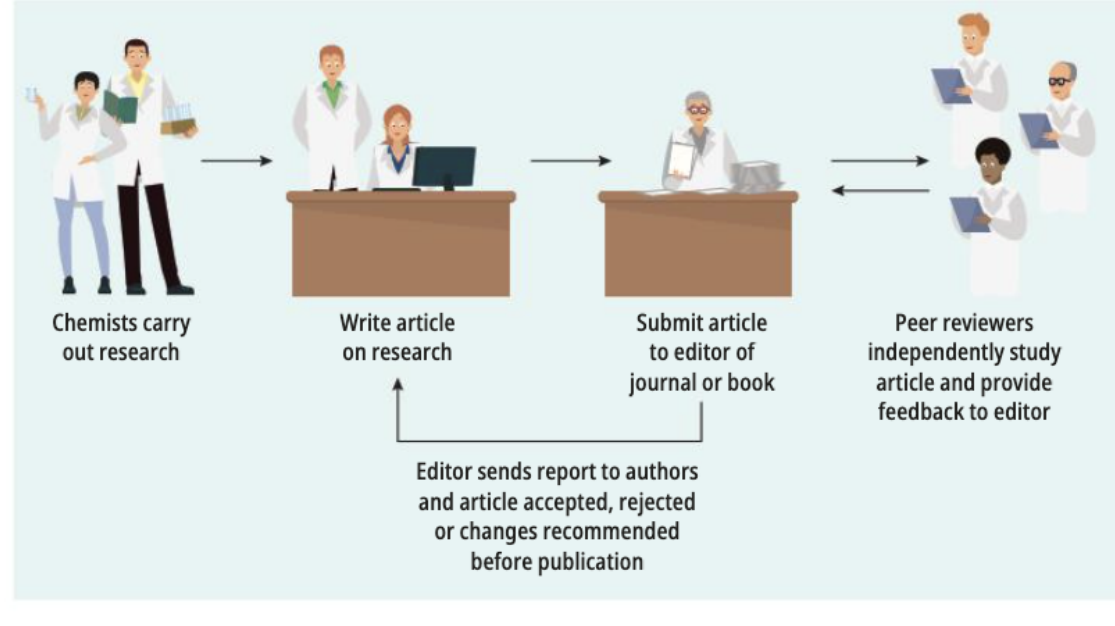
Before scientific research is published and shared with the wider scientific community, it must undergo a rigorous checking process called peer review. This system helps ensure that published research is of high quality and reliability.
Example
The Peer Review Process in Action:
- Research phase: Scientists conduct experiments and gather data
- Writing: Researchers write up their findings in a detailed article
- Submission: The article is submitted to a scientific journal or book editor
- Review: Independent experts (peers) in the same field carefully examine the research
- Feedback: Reviewers provide detailed comments and recommendations to the editor
- Decision: The editor decides whether to accept, reject, or request changes to the article
- Publication: Only after this process can the research be published and shared
This system helps catch errors, ensures proper methodology was used, and verifies that conclusions are supported by the evidence presented.
Repeatability and reproducibility
Two crucial concepts in scientific research are repeatability and reproducibility, which help establish the reliability of scientific findings:
Important
Critical Concepts for Scientific Reliability:
Repeatability means that when the same scientist repeats their experiment using exactly the same method and conditions, they should obtain the same results. If results cannot be repeated, the original findings may be unreliable or incorrect.
Reproducibility goes a step further - it means that different scientists working in different laboratories should be able to follow the published method and obtain similar results. This is particularly important in areas like drug development, where new medicines must be thoroughly tested by multiple research teams before being approved for use.
Both repeatability and reproducibility are essential for building confidence in scientific discoveries and ensuring that research findings are genuine rather than the result of experimental errors or chance.
Summary
Key Points to Remember:
-
Scientific ideas evolve: Our understanding of natural phenomena changes as new evidence is discovered and better explanations are developed
-
Theories explain, laws describe: Scientific theories explain why things happen, while scientific laws describe what happens in nature
-
Science is global: Modern scientific research involves collaboration between scientists from many different countries, following shared standards and conventions
-
Evidence is essential: All scientific claims must be supported by solid evidence gathered through careful observation and experimentation
-
Peer review ensures quality: Before scientific research is published, it must be carefully reviewed by independent experts to check its reliability and accuracy