Allotropes (Leaving Cert Chemistry): Revision Notes
📚Revision Notes
Allotropes
What are allotropes?
Carbon is one of the most important elements in the periodic table, playing a key role in a wide range of chemical reactions and in our everyday lives. What makes carbon so special is its ability to form four covalent bonds, allowing it to create a wide variety of compounds and structures.
Note
Allotropes are different physical forms of the same element. This means that the same carbon atoms can be arranged in completely different ways, creating materials with vastly different properties. The word 'allotrope' comes from Greek, meaning 'other' and 'form'.
Carbon has four main allotropes that you need to know:
- Diamond
- Graphite
- Graphene
- Fullerenes
Each of these has unique structures and properties, even though they're all made entirely of carbon atoms.
Diamond
Diamond consists entirely of carbon atoms arranged in a giant, interlocking three-dimensional network. Each carbon atom is joined to four other carbon atoms by single covalent bonds, forming a tetrahedral structure.
The whole structure forms one enormous molecule, which is why we use the term macromolecular to describe this type of structure.
Important
The three-dimensional covalent network structure of diamond is the key to understanding all of its properties. Every property can be explained by this arrangement of atoms.
Key properties of diamond
Hardness: Diamond is the hardest naturally occurring substance known to us. This extreme hardness comes from the strong covalent bonding throughout the entire three-dimensional structure. This makes diamond perfect for use in drill bits and cutting tools.
Melting point: Diamond has a very high melting point () because all the covalent bonds must be broken to melt the diamond.
Appearance: Diamond is a transparent, shiny, crystalline material, which is why it's highly valued in jewellery.

Electrical conductivity: Diamond does not conduct electricity because there are no free electrons available to carry an electric current. All outer electrons are involved in bonding.
Thermal conductivity: Heat energy can be efficiently transferred through diamond by atomic vibrations, making diamond an excellent conductor of heat.
Solubility: Diamond is insoluble in water and organic solvents. There's no polarity in the molecule, and no intermolecular forces can overcome the strong network of covalent bonds.
Graphite
Graphite has a very different structure from diamond. It consists entirely of carbon atoms arranged in flat sheets, with each carbon atom joined to three other carbon atoms by single covalent bonds. The structure forms layers of carbon atoms arranged in rings of six carbon atoms (hexagons).
There are strong covalent bonds within each layer, but only weak London dispersion forces (van der Waals forces) between the layers. This is crucial for understanding graphite's properties.
Note
The key to understanding graphite is the two different types of bonding: strong covalent bonds within layers and weak intermolecular forces between layers. This creates a structure with very different properties in different directions.
Key properties of graphite
Bonding and structure: Each carbon atom in graphite is joined to three others by covalent bonds, leaving one electron free to move around the molecule. This delocalised electron can move freely within the layers.
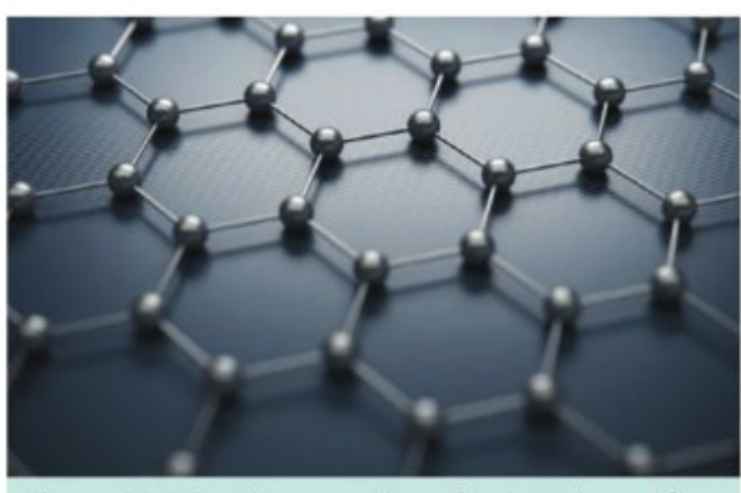
Hardness: Graphite is soft and slippery because the weak London dispersion forces between the layers allow the layers to slide over each other easily. This is why graphite is used in pencils - layers rub off onto paper.
Melting point: Graphite has a very high melting point () due to the strong covalent bonding within the layers.
Appearance: Graphite is a crystalline black solid.
Electrical conductivity: Graphite is an excellent conductor of electricity because the delocalised electrons can move freely through the layers and carry an electric current. This makes graphite useful in batteries and electrodes.
Thermal conductivity: Heat energy can be efficiently transferred through graphite's layers by atomic vibrations, making it a good conductor of heat.
Solubility: Graphite is insoluble in water and in organic solvents. There's no polarity in the molecule, and no intermolecular forces can overcome the strong covalent bonds in the layers.
Graphene
Graphene was discovered in 2004 and represents an exciting development in materials science. Put simply, graphene is a single layer of graphite - imagine peeling off just one layer of carbon atoms from graphite.
Note
Graphene's discovery was so significant that the scientists who first isolated it, Andre Geim and Konstantin Novoselov, won the Nobel Prize in Physics in 2010. They initially used sticky tape to peel layers from graphite!
Key properties of graphene
Bonding and structure: Graphene consists entirely of carbon atoms, with each carbon atom joined to three other carbon atoms by single covalent bonds. The structure consists of a single layer of graphite - one layer of carbon atoms arranged in rings of six carbon atoms (hexagons).
Melting point: The melting point of graphene (over ) is very high due to the strong covalent bonding across the entire sheet.
Appearance: Graphene is a transparent material and, to the naked eye, is almost invisible.
Electrical conductivity: Graphene is a very good conductor of electricity. Like graphite, delocalised electrons can move freely across the sheet and carry an electric current. Since graphene consists of just a single layer of carbon atoms, it's incredibly useful in nanotechnology applications.
Flexibility: Despite its strength, graphene is flexible and can be used in bendable electronic devices.
Applications: Graphene is used in transistors for very fast computers and in wearable technology that can stick to the skin. It has rapid charge/discharge capabilities due to its large surface area and is used in manufacturing lithium-ion batteries.
Fullerenes
Fullerenes represent a fascinating family of carbon structures. Like diamond, graphite and graphene, fullerenes are allotropes of carbon, but they have a completely different arrangement - they form hollow structures.
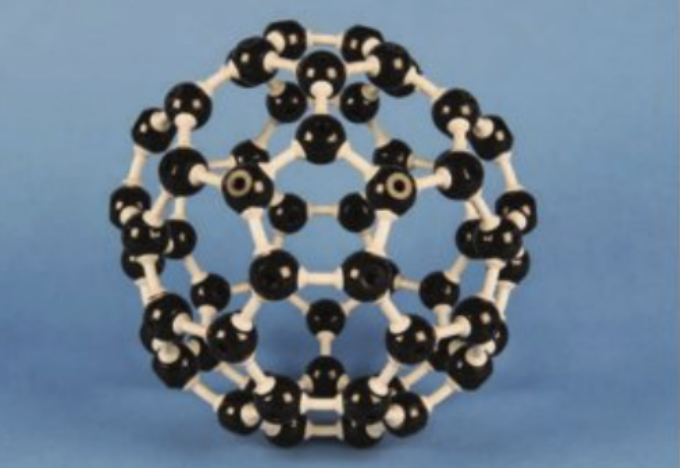
The most famous fullerene is buckminsterfullerene, which contains 60 carbon atoms arranged in the shape of a football (or soccer ball). It was discovered in 1985 and named after the architect Buckminster Fuller, who designed similar dome structures.
Example
Structure Example: Buckminsterfullerene
Buckminsterfullerene (C₆₀) has a unique structure:
- Contains exactly 60 carbon atoms
- Shaped like a football with pentagons and hexagons
- Each carbon atom bonds to exactly 3 others
- Forms a hollow cage that could theoretically hold other atoms inside
Key properties of fullerenes
Bonding and structure: A molecule of buckminsterfullerene contains 60 carbon atoms arranged in hexagons and pentagons in the form of a football. Each carbon atom is joined to three other carbon atoms by covalent bonds.
Crystal structure: Some fullerenes exist as individual molecules, while others can form macromolecular structures.
Hardness: Buckminsterfullerene is soft because there are only weak London dispersion forces between the molecules, allowing them to slide over each other.
Melting point: The melting point of buckminsterfullerene is fairly low at because not much energy is required to overcome the weak London dispersion forces between the molecules.
Appearance: Buckminsterfullerene is a black solid crystalline material.
Electrical conductivity: Buckminsterfullerene is a poor electrical conductor. Although delocalised electrons exist in each molecule, the electrons are confined within the molecule and do not move freely between molecules.
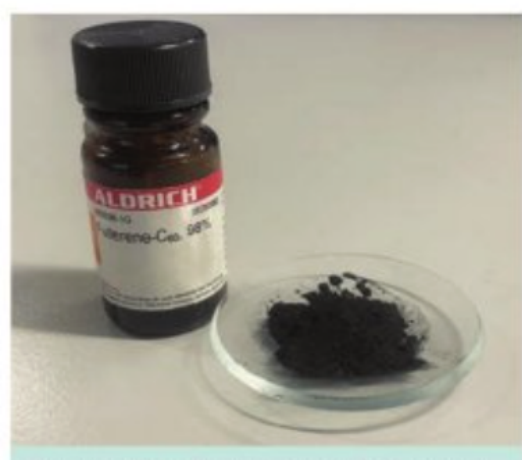
Solubility: Buckminsterfullerene is insoluble in water but soluble in organic solvents such as benzene and methylbenzene.
Carbon nanotubes
A special type of fullerene is the carbon nanotube. These are essentially tubes of graphene - imagine rolling up a sheet of graphene into a cylinder.
Note
Carbon Nanotube Key Features:
- They're not discrete molecules like buckminsterfullerene, but giant covalent structures
- They have extremely high tensile strength - they resist being stretched
- They conduct electricity because they have delocalised electrons
- They're used in nanotechnology applications such as drug delivery and as lubricants
Summary comparison
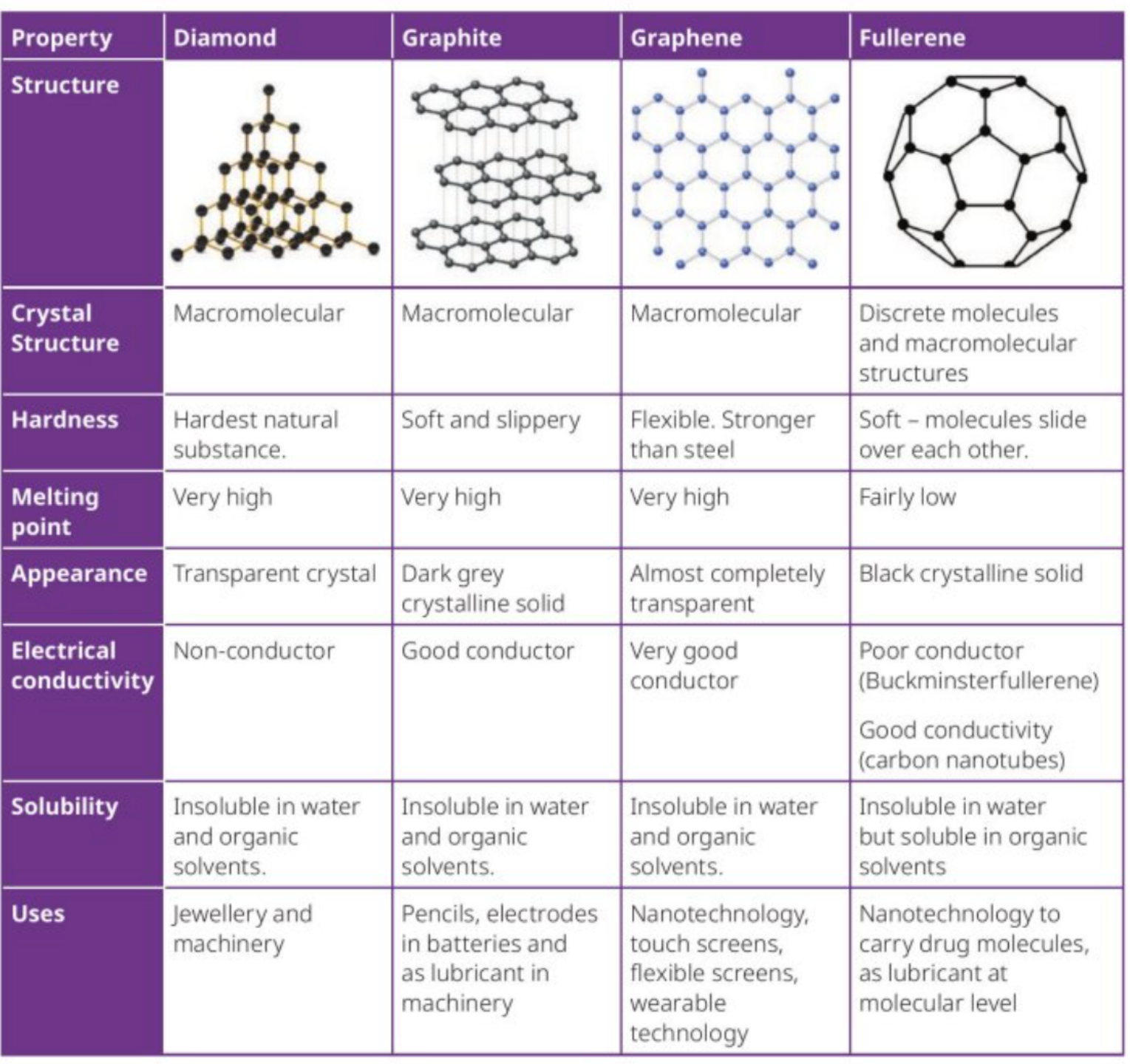
The table below summarises the key differences between the four carbon allotropes:
Important
Exam tip: Remember that all four allotropes contain only carbon atoms, but their different arrangements lead to completely different properties. Focus on understanding how structure affects properties - this is a key concept that frequently appears in exam questions.
Summary
Key Points to Remember:
- Allotropes are different physical forms of the same element - carbon atoms arranged in different ways
- Diamond has a 3D network structure making it extremely hard and suitable for cutting tools
- Graphite has a layered structure with delocalised electrons, making it soft but electrically conductive
- Graphene is a single layer of graphite with exceptional strength and electrical properties
- Fullerenes are hollow cage-like structures including football-shaped buckyballs and cylindrical nanotubes
- The key to understanding any allotrope is to link its structure to its properties