Organic Chemistry and Hydrocarbons (Leaving Cert Chemistry): Revision Notes
📚Revision Notes
Organic Chemistry and Hydrocarbons
What is organic chemistry?
Organic chemistry is the study of carbon compounds. This might seem like a narrow field, but carbon is truly special among all the elements. Carbon has the unique ability to form stable chains and rings with itself, as well as bond with many other elements. This means carbon can create millions of different compounds, with thousands of new ones being discovered and synthesised every year.
Almost all organic compounds are covalent compounds because carbon forms covalent bonds with itself and other elements. While most compounds containing carbon are classified as organic, there are a few exceptions - simple compounds like carbon dioxide, carbon monoxide and carbonate salts are considered inorganic.
Important
While most carbon-containing compounds are organic, remember the key exceptions: carbon dioxide (CO₂), carbon monoxide (CO), and carbonate salts are classified as inorganic compounds despite containing carbon.
Organic chemistry is essential to modern life. It's the chemistry behind pharmaceuticals, detergents, synthetic fibres, dyes, paints, fuels, explosives and adhesives.
Note
Many of the world's top pharmaceutical companies have significant operations in Ireland, making organic chemistry particularly important to our economy. This includes major companies involved in drug manufacturing and research.
Even though there are millions of organic compounds, studying organic chemistry doesn't mean learning about each one individually. Instead, organic compounds can be organised into families or groups with similar properties, making the subject much more manageable and systematic.
Introduction to hydrocarbons
We start our study of organic chemistry by looking at the most fundamental group of organic compounds - the hydrocarbons.
A hydrocarbon is a compound that contains carbon and hydrogen only.
Note
Hydrocarbons are incredibly important because they serve as the building blocks for more complex organic molecules, and they're our primary source of energy through fossil fuels.
Sources of hydrocarbons
The main sources of hydrocarbons are:
- Natural gas (mainly methane)
- Petroleum (crude oil)
- Coal
These hydrocarbons formed in the Earth over millions of years from the remains of plants and animals that lived long ago. This is why they're commonly called fossil fuels.
Note
The formation of fossil fuels is a process that takes millions of years. The organic matter from ancient plants and animals was buried under layers of sediment and subjected to heat and pressure, eventually transforming into the hydrocarbons we use today.
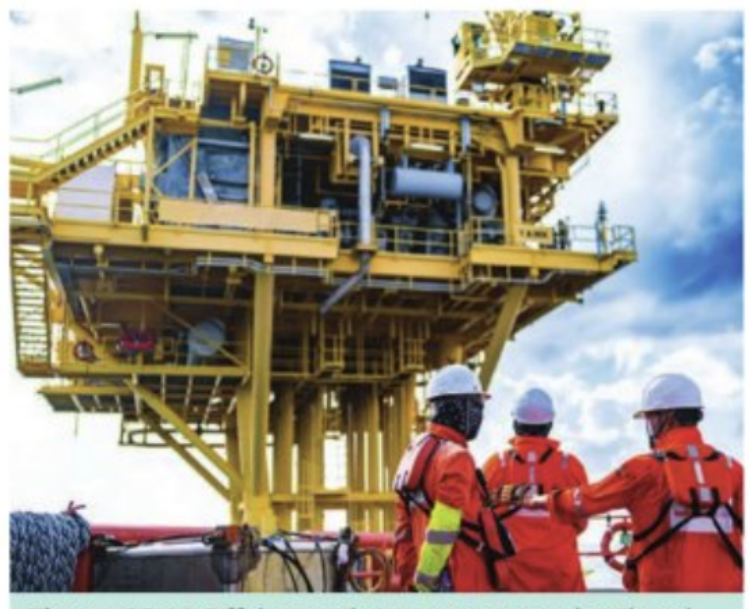
The crude oil extracted by offshore oil rigs is transported to refineries, where it's separated and processed into fuels such as petrol and diesel, as well as raw materials for making plastics, fertilisers and other products.
Natural gas, which is often found alongside crude oil, provides an alternative energy source for domestic heating and cooking. It's also used as a raw material in manufacturing, such as in the Haber process for making fertilisers.
Combustion of hydrocarbons
When hydrocarbons burn, the type of combustion depends on the oxygen supply available.
Complete combustion
When there's plenty of oxygen available, hydrocarbons undergo complete combustion. They burn to form carbon dioxide and water only.
Example
Worked Example: Complete Combustion of Methane
When methane burns completely in plenty of oxygen:
Products: carbon dioxide and water only
Complete combustion produces a clean blue flame, similar to what you see on a Bunsen burner when the air hole is fully open. This type of combustion releases the maximum amount of energy from the fuel.
Incomplete combustion
When there's insufficient oxygen present, incomplete combustion occurs. This produces soot (carbon), carbon monoxide and water.
Example
Worked Example: Incomplete Combustion of Methane
When methane burns in limited oxygen supply:
Products: carbon (soot), carbon monoxide, and water
Incomplete combustion produces a sooty, yellow flame - like a Bunsen burner when the air hole is closed. Less energy is released compared to complete combustion.
Important
The carbon monoxide (CO) produced during incomplete combustion is a dangerous, poisonous gas. It's colourless and odourless, making it particularly hazardous as it can't be easily detected without proper equipment.
Formation of methane
Methane forms naturally from materials of plant or animal origin. For example, farmers sometimes allow manure to decay under anaerobic conditions (without air) in large tanks. Anaerobic bacteria feed on the manure, causing it to decay and produce methane. This methane can be collected and burned to provide heating for the farm, while the solid waste remaining makes an excellent fertiliser.
The same process occurs naturally in places like:
- Slurry pits and coal mines (where methane can form explosive mixtures with air)
- Marshes and paddy fields
- The digestive systems of animals like cows and sheep
Important
Methane can form explosive mixtures with air in enclosed spaces like coal mines and slurry pits. Additionally, methane is one of the significant greenhouse gases contributing to global warming, making its management an important environmental concern.
Classification of hydrocarbons
Hydrocarbons are classified into three main groups based on the types of carbon-carbon bonds they contain:
- Alkanes - contain only single carbon-carbon bonds
- Alkenes - contain at least one double carbon-carbon bond
- Alkynes - contain at least one triple carbon-carbon bond
Note
This classification system helps us predict the properties and reactions of different hydrocarbons, making organic chemistry much more systematic to study. Each group has characteristic properties and undergoes specific types of reactions.
Summary
Key Points to Remember:
- Organic chemistry is the study of carbon compounds - carbon's ability to form chains and rings makes millions of compounds possible
- Hydrocarbons contain only carbon and hydrogen atoms and are found in fossil fuels (natural gas, petroleum, coal)
- Complete combustion (plenty of oxygen) produces CO₂ + H₂O and a blue flame
- Incomplete combustion (limited oxygen) produces carbon, CO and H₂O with a yellow, sooty flame
- Methane forms naturally from decaying organic matter under anaerobic conditions and is a greenhouse gas
- Three main hydrocarbon groups: alkanes (single bonds), alkenes (double bonds), alkynes (triple bonds)