The Lithium-Ion Cell (Leaving Cert Chemistry): Revision Notes
📚Revision Notes
The Lithium-Ion Cell
What is a lithium-ion cell?
A lithium-ion cell is a type of rechargeable battery that stores and releases electrical energy through the movement of lithium ions between two electrodes. These cells are found everywhere - from your mobile phone to electric cars and cordless tools. Understanding how they work is essential for modern chemistry students.
Note
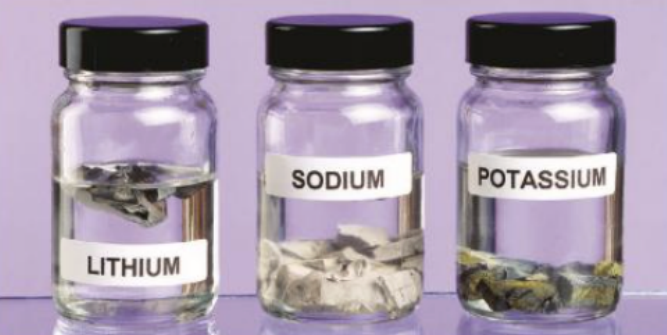
The key to lithium-ion technology lies in lithium's position as the most reactive metal in Group 1 of the periodic table. This reactivity, combined with lithium's small size and light weight, makes it perfect for energy storage applications.
Basic structure and components
The carbon electrode (anode during discharge)
The carbon electrode uses a special form of carbon called graphite. Graphite has a unique layered structure that allows lithium ions to slide between the carbon layers - a process called intercalation. Think of it like inserting extra pages into a book without breaking the binding.
Important
During normal operation, this electrode:
- Stores lithium ions between graphite layers
- Acts as the negative terminal when the battery supplies power
- Releases electrons into the external circuit
The cobalt oxide electrode (cathode during discharge)
The cobalt oxide electrode contains cobalt dioxide () as its active material. This electrode has several critical functions that make the battery work effectively.
Important
This electrode:
- Receives lithium ions during discharge
- Acts as the positive terminal when supplying power
- Accepts electrons from the external circuit
- Has a crystalline structure that can accommodate lithium ions
The electrolyte and separator
The electrolyte is a liquid or gel containing dissolved lithium salts in an organic solvent. It serves as the "highway" for lithium ions to travel between electrodes, but crucially, it does not allow electrons to pass through.
Note
The separator is a thin plastic barrier that:
- Prevents the electrodes from touching (which would cause a short circuit)
- Allows lithium ions to pass through
- Blocks electron flow, forcing electrons to travel through the external circuit
How discharge works (powering your device)
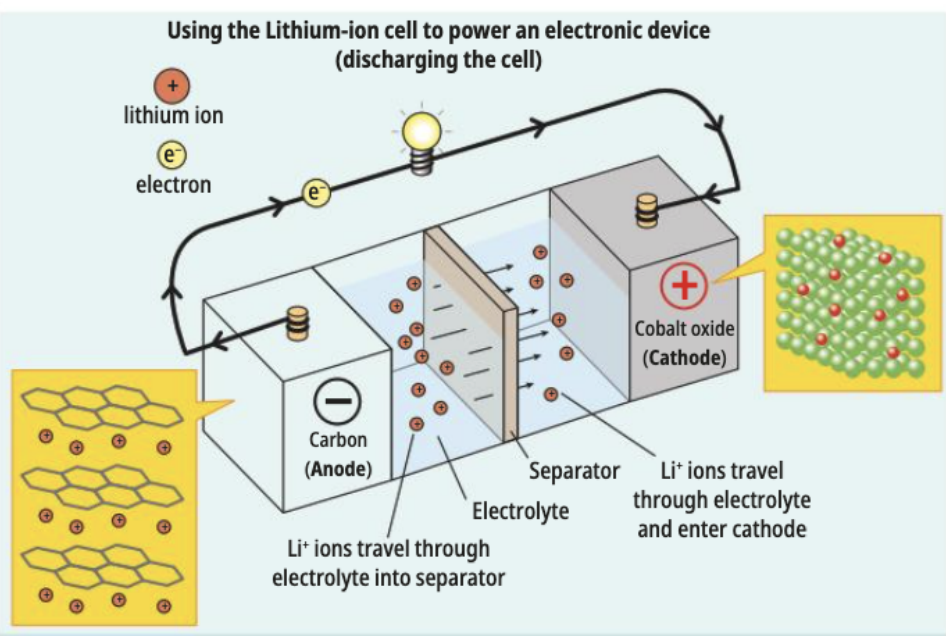
When you use your phone or laptop, the lithium-ion cell acts as a galvanic cell - it spontaneously produces electrical energy. Let's follow this process step by step:
Stage 1: Electron release at the carbon electrode
At the carbon electrode (anode), lithium atoms that were previously intercalated between graphite layers undergo oxidation:
Example
Understanding the Oxidation Process:
This reaction demonstrates several key concepts:
- Releases lithium ions () into the electrolyte
- Produces free electrons that flow through the external circuit
- Leaves behind the graphite structure ready to accept new lithium ions later
Stage 2: Lithium ion migration
The ions travel through the electrolyte from the carbon electrode towards the cobalt oxide electrode. This movement is driven by the electrical potential difference between the electrodes.
Stage 3: Electron consumption at cobalt oxide electrode
At the cobalt oxide electrode (cathode), a reduction reaction occurs:
Example
Understanding the Reduction Process:
Here's what happens at the molecular level:
- Lithium ions from the electrolyte combine with electrons from the external circuit
- The electrons have travelled through your device, powering it along the way
- Lithium cobalt oxide () forms
Overall discharge process
The complete reaction can be written as:
This tells us that lithium transfers from the carbon electrode to the cobalt oxide electrode, releasing electrical energy in the process.
How charging works (restoring energy)
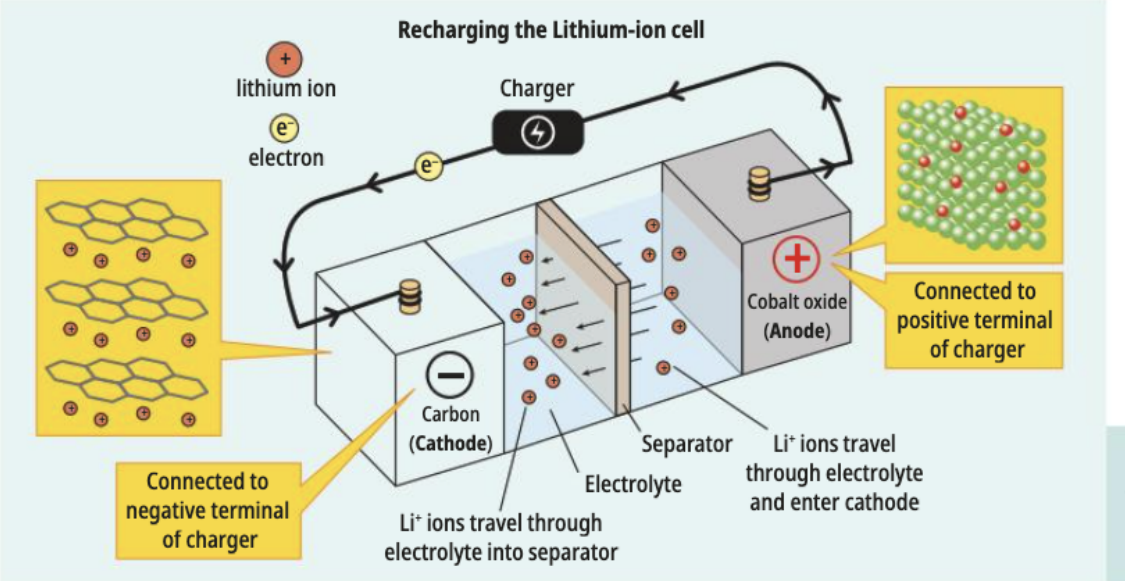
When you plug your device into a charger, the lithium-ion cell becomes an electrolytic cell - external electrical energy forces the discharge reactions to reverse.
The charging process
Important
During charging, the external charger forces electrons to flow in the opposite direction:
- At the cobalt oxide electrode: (oxidation)
- At the carbon electrode: (reduction)
- Lithium ions migrate back through the electrolyte to the carbon electrode
The overall charging reaction is:
Notice this is exactly the reverse of the discharge reaction.
Comparing discharge and charging
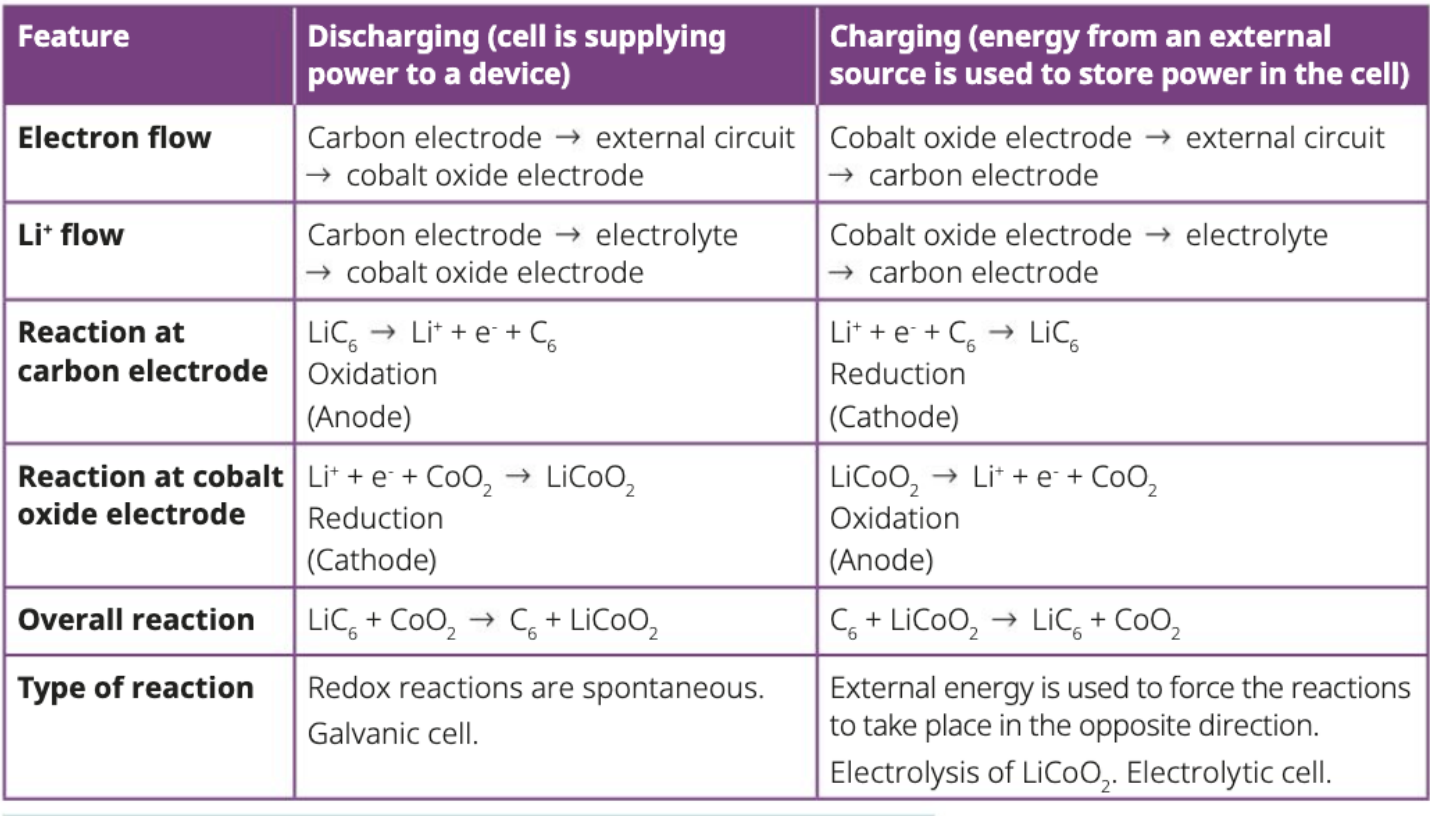
The key differences between these processes help us understand how the battery functions in both modes:
| Process | Type of cell | Electron flow | Li⁺ ion flow | Energy |
|---|---|---|---|---|
| Discharge | Galvanic | Carbon → external circuit → cobalt oxide | Carbon electrode → cobalt oxide electrode | Released |
| Charging | Electrolytic | Cobalt oxide → external circuit → carbon | Cobalt oxide electrode → carbon electrode | Required |
Real-world applications
Lithium-ion technology powers many devices you use daily, demonstrating the versatility and reliability of this energy storage solution.
Consumer electronics
Note
Everyday Devices Powered by Lithium-Ion:
- Mobile phones and tablets
- Laptops and portable computers
- Wireless headphones and smart watches
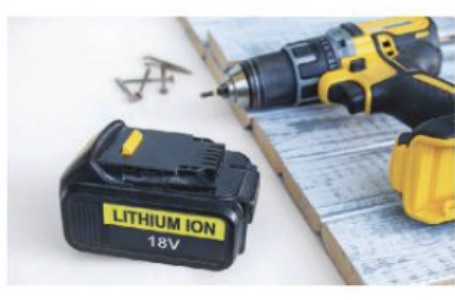
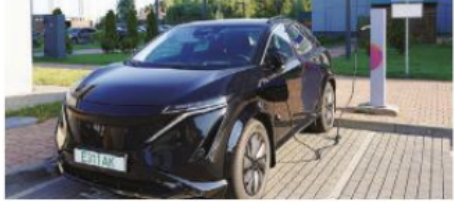
Electric vehicles and tools
The high energy density of lithium-ion cells makes them ideal for transportation applications where weight and space are critical factors.
Note
Transportation and Power Tools:
- Electric cars, scooters, and e-bikes
- Cordless power tools and drills
- Electric lawn equipment
Energy storage systems
Large-scale applications demonstrate how lithium-ion technology is revolutionising energy storage beyond portable devices.
Note
Grid and Home Energy Storage:
- Home battery systems paired with solar panels
- Backup power supplies
- Grid-scale energy storage
Environmental considerations
Understanding the environmental impact of lithium-ion batteries is crucial for sustainable technology development.
Mining and production
Note
Lithium extraction typically occurs in two ways:
- Brine extraction: Pumping salty underground water into evaporation ponds
- Rock mining: Extracting lithium-containing minerals from underground
The brine method is more environmentally friendly and produces battery-grade lithium chloride after evaporation and processing.
Disposal challenges
Important
Critical Environmental Risks:
Improper disposal of lithium-ion batteries creates several serious problems:
- Fire hazards: Damaged batteries can overheat and ignite due to flammable electrolyte solvents
- Toxic metal leaching: Cobalt and copper can contaminate soil and water
- Resource waste: Valuable metals are lost when batteries end up in landfill
Recycling opportunities
Battery recycling presents both challenges and opportunities for environmental sustainability.
Note
Why Recycling Matters:
- Lithium-ion batteries contain valuable metals (lithium, cobalt, copper)
- Manual disassembly is slow and potentially dangerous
- Only 5-10% of lithium-ion batteries are currently recycled
- New automated systems are being developed to improve recycling rates
Manufacturers are also designing batteries that are easier to disassemble for recycling.
Remember!
Summary
Key Points to Remember:
-
Lithium-ion cells work by moving Li⁺ ions between carbon and cobalt oxide electrodes through an electrolyte
-
During discharge: Carbon electrode releases Li⁺ and electrons → Li⁺ travels to cobalt oxide electrode → Electrons power your device
-
During charging: External energy reverses this process, restoring the battery's chemical energy
-
The separator allows ions through but blocks electrons, forcing them to travel through the external circuit
-
Environmental responsibility matters - proper disposal and recycling help recover valuable materials and prevent pollution