Catalysts (Leaving Cert Chemistry): Revision Notes
📚Revision Notes
Catalysts
What are catalysts?
A catalyst is a substance that speeds up the rate of a chemical reaction without being permanently changed or consumed in the process. Think of a catalyst as a helpful friend who makes things happen faster but doesn't get worn out in the process.
Note
Catalysts are incredibly important in both industrial processes and biological systems. They allow reactions to occur more quickly and often under milder conditions than would otherwise be possible, making them essential for everything from manufacturing to life itself.
General properties of catalysts
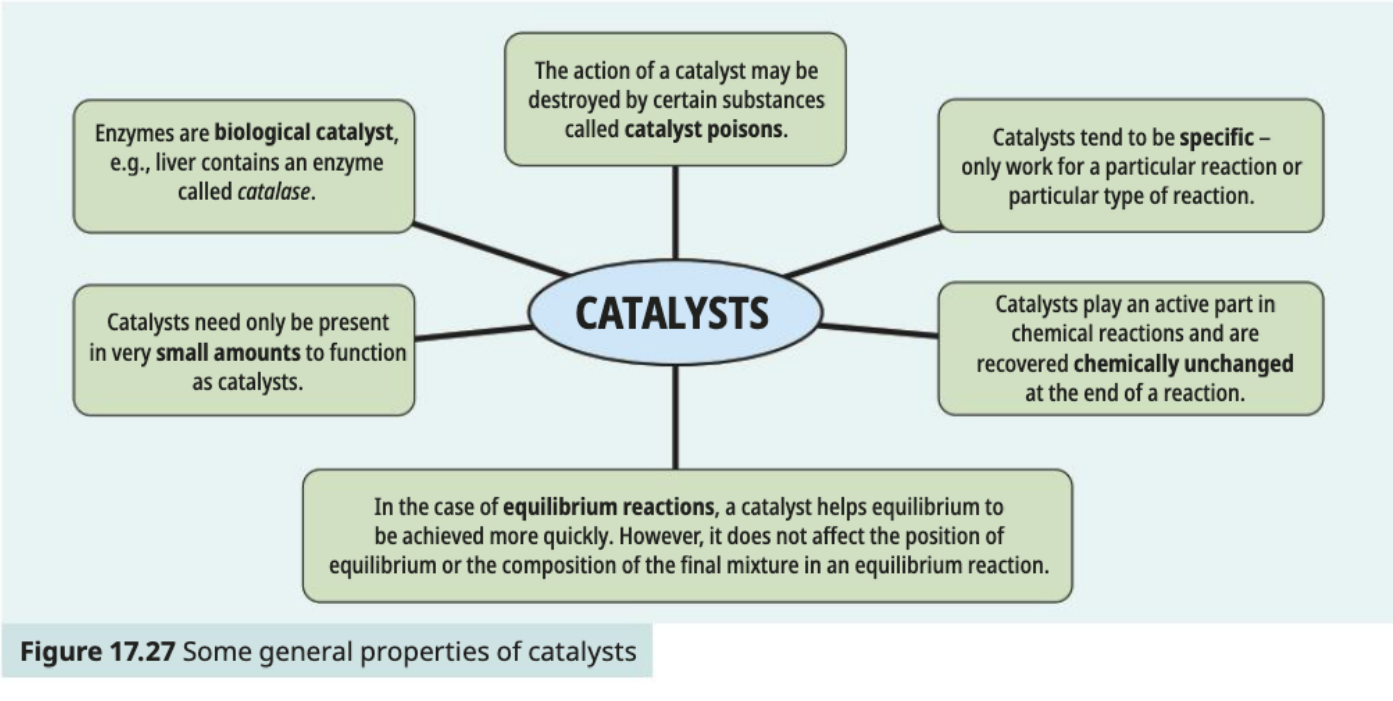
Catalysts share several key characteristics that make them so useful in chemistry:
Active participation with recovery
Catalysts take an active role in chemical reactions by providing alternative reaction pathways. However, they emerge from the reaction completely unchanged in their chemical composition. This means the same catalyst molecule can be used over and over again to speed up many reaction cycles.
Specificity
Catalysts are highly selective - they typically work for one particular reaction or a small group of very similar reactions. For example, the enzyme catalase found in liver cells specifically catalyses the breakdown of hydrogen peroxide into water and oxygen, but won't catalyse other types of reactions.
Small amounts needed
Only tiny quantities of catalyst are required to have a significant effect on reaction rates. This makes catalysts very economical to use in industrial processes.
Biological catalysts (enzymes)
Living organisms use special protein catalysts called enzymes. These biological catalysts are extremely specific and efficient. The enzyme catalase is so effective that it can break down hydrogen peroxide faster than almost any other known catalyst.
Important
Critical Concept: Catalysts play an active part in chemical reactions and are recovered chemically unchanged at the end of a reaction. They tend to be specific and only small amounts are needed to be effective.
Types of catalysis
Chemists have identified three main types of catalysis based on the physical states of the reactants and catalyst.
Homogeneous catalysis
Homogeneous catalysis occurs when the catalyst and all reactants exist in the same phase (usually liquid or gas). The word "homogeneous" means "same throughout" - like how milk looks the same throughout after being mixed.
In homogeneous catalysis, there's no physical boundary between the catalyst and reactants since they're all mixed together uniformly.
Example
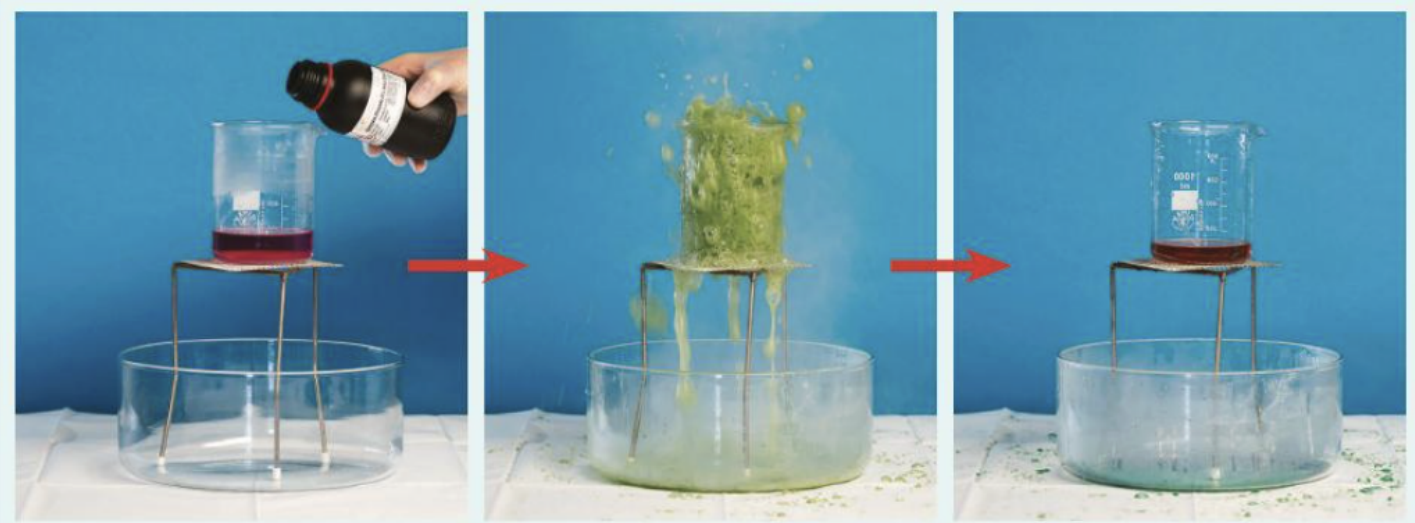
Example: Iodine-catalysed decomposition of hydrogen peroxide
- Both hydrogen peroxide (liquid) and iodine catalyst are in the same liquid phase
- The reaction produces water and oxygen gas:
- The iodine remains in solution throughout the reaction
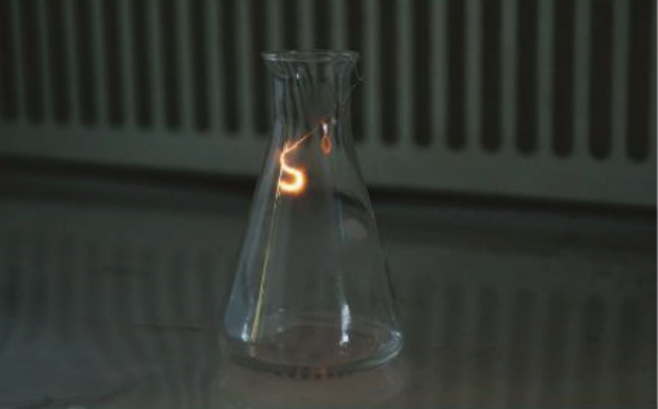
Heterogeneous catalysis
Heterogeneous catalysis happens when the catalyst exists in a different physical phase from the reactants. This type of catalysis involves a clear boundary between the catalyst surface and the reactants.
Key features of heterogeneous catalysis:
- The catalyst is usually a solid
- Reactants are typically gases or liquids
- Reactions occur at the catalyst surface
- Active sites on the catalyst surface are where reactions take place
Example
Example: Platinum-catalysed reactions
- Solid platinum catalyst with gaseous reactants (hydrogen and oxygen)
- Reactions occur on the platinum surface at specific active sites
- Example reaction:
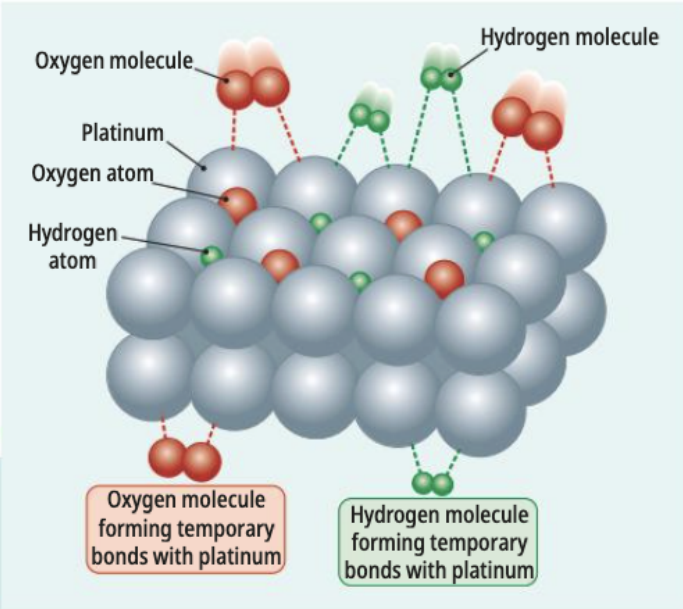
Mechanisms of catalysis
Scientists have developed two main theories to explain how catalysts actually work at the molecular level.
The intermediate formation theory
This theory suggests that catalysts work by forming temporary intermediate compounds with the reactants. The process happens in steps:
Example
Worked Example: Intermediate Formation Mechanism
Step 1: One reactant combines with the catalyst to form an intermediate compound
- Example: (intermediate)
Step 2: The intermediate then reacts with another reactant to form products and regenerate the catalyst
- The catalyst is released unchanged and ready to catalyse another reaction cycle
- Example:
This theory works well for explaining homogeneous catalysis where molecules can mix freely and form these temporary intermediate compounds.
The surface adsorption theory
This theory explains heterogeneous catalysis by describing what happens at the catalyst surface:
Example
Worked Example: Surface Adsorption Mechanism
Step 1: Adsorption stage
- Reactant molecules approach the catalyst surface
- Gas molecules become adsorbed (attached) to active sites on the solid catalyst surface
- The adsorbed molecules are held by temporary weak bonds
Step 2: Reaction on surface
- Adsorbed molecules are brought close together on the catalyst surface
- This makes it much more likely they'll collide and react
- New bonds form between reactants while they're attached to the surface
Step 3: Desorption stage
- Product molecules leave the catalyst surface (desorption)
- The active sites become available for new reactant molecules
- The catalyst surface is regenerated for the next reaction cycle
The finely divided catalyst provides a large surface area with many active sites, making the process very efficient.
Autocatalysis
Autocatalysis is a special type of catalysis where one of the products of the reaction acts as a catalyst for the same reaction. It's like a reaction that gets faster as it progresses because it creates its own catalyst.
Note
Characteristics of autocatalysis:
- The reaction starts slowly because there's no catalyst present initially
- As products form, they speed up the reaction rate
- The reaction rate increases dramatically as more catalyst product is produced
This creates a distinctive reaction curve that starts slowly and then accelerates rapidly.
Catalyst poisoning
Unfortunately, catalysts can lose their effectiveness through a process called catalyst poisoning. This occurs when unwanted substances bind strongly to the catalyst's active sites, preventing the intended reaction from taking place.
Important
How catalyst poisoning works:
- Catalyst poisons are substances that bind more strongly to active sites than the intended reactants
- Once poisoned, the catalyst can no longer function effectively
- The poison blocks access to active sites where reactions normally occur
Common catalyst poisons:
- Sulphur compounds: Can poison many metal catalysts
- Lead compounds: Historically poisoned catalysts in car engines
- Phosphorus compounds: Can poison catalysts in combustion engines
- Silicon compounds: From certain sealants can poison catalysts
Effects of poisoning
- Reduced catalyst efficiency
- Higher operating costs
- Need for catalyst replacement
- Environmental pollution if catalysts fail
Real-world applications: catalytic converters
One of the most important applications of heterogeneous catalysis is the catalytic converter found in vehicle exhaust systems.

Structure and function
Catalytic converters contain a ceramic honeycomb structure coated with precious metals including platinum, palladium, and rhodium. These metals serve as catalysts to convert harmful exhaust gases into less toxic substances.
Note
The honeycomb design provides an enormous surface area for maximum contact between exhaust gases and catalyst sites, making the conversion process highly efficient.

Environmental benefits
Catalytic converters perform several crucial pollution control reactions:
Carbon monoxide conversion:
- Converts poisonous carbon monoxide to carbon dioxide
Nitrogen oxide reduction:
- Converts toxic nitrogen oxides to harmless nitrogen gas
Hydrocarbon oxidation:
- Converts smog-producing hydrocarbons to carbon dioxide and water
Catalyst maintenance
Catalytic converters require proper fuel quality to function effectively. Lead-free petrol is essential because lead compounds would poison the catalyst. Modern converters can last over 100,000 kilometres when properly maintained.
Exam tips
Note
Key Study Points:
- Remember the key difference: Homogeneous = same phase, Heterogeneous = different phases
- Active sites: Only relevant for heterogeneous catalysis on solid surfaces
- Catalyst recovery: Always emphasise that catalysts are recovered unchanged
- Real examples: Know at least one example of each type of catalysis
- Environmental importance: Understand how catalysts help reduce pollution
Summary
Key Points to Remember:
-
Catalysts speed up reactions without being permanently changed - they can be used repeatedly in reaction cycles
-
Two main types exist: homogeneous (same phase) and heterogeneous (different phases), with different mechanisms explaining how they work
-
Small amounts have big effects - only tiny quantities of catalyst are needed to dramatically increase reaction rates
-
Specificity matters - each catalyst typically works for one specific reaction or group of similar reactions
-
Real-world importance - catalytic converters in cars demonstrate how catalysts solve major environmental problems by converting toxic exhaust gases into harmless substances