Physical and Chemical Changes (Leaving Cert Chemistry): Revision Notes
📚Revision Notes
Physical and Chemical Changes
Understanding the difference between physical and chemical changes is fundamental to chemistry. These two types of changes occur all around us every day, and recognising which type is happening helps us understand how matter behaves.
What are physical changes?
A physical change occurs when a substance changes its appearance or physical properties without forming any new substances. Think of it this way - the material remains chemically the same, but looks or feels different.
During a physical change, you can observe differences in properties like shape, size, texture, or state (solid, liquid, gas) without the substance becoming something entirely different. The key point is that no new chemical substances are created.
Note
Physical changes only affect how a substance looks or feels, never what it actually is at the chemical level. The molecules themselves remain unchanged.
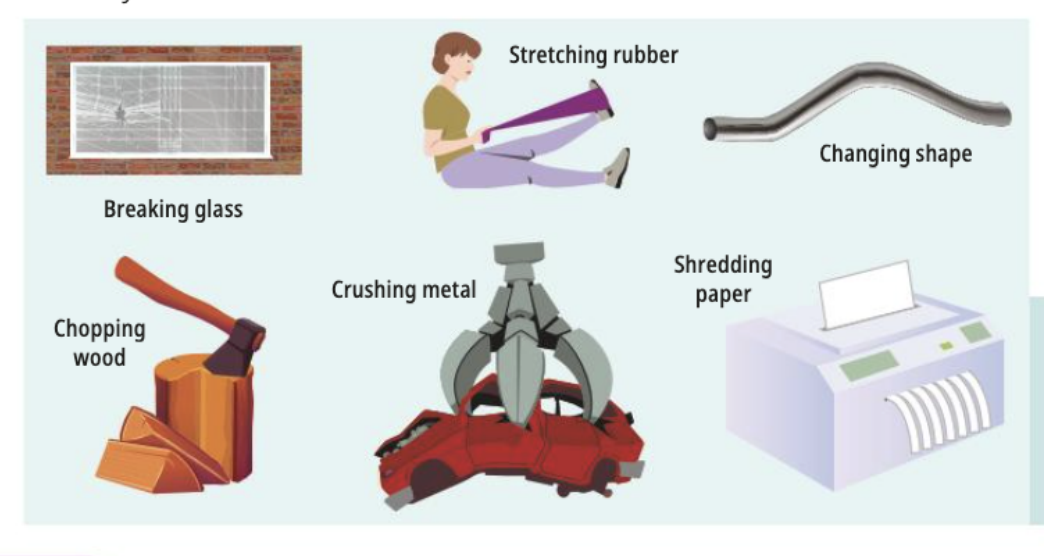
Common examples of physical changes include:
- Ice melting - solid water becomes liquid water (still )
- Water boiling - liquid water becomes steam (still )
- Breaking glass - the glass fragments are still glass
- Stretching rubber - the rubber band remains rubber
- Chopping wood - the wood pieces are still wood
- Crushing metal - the compressed metal is still the same metal
- Shredding paper - the paper strips are still paper
What are chemical changes?
A chemical change results in the formation of one or more completely new substances. During these changes, the original materials undergo chemical reactions to produce different compounds with new properties.
You can often identify chemical changes by observing signs such as colour changes, gas production (bubbles or fizzing), heat or light being given off, or the formation of precipitates.
Important
Look for these key signs of chemical changes: colour changes, gas bubbles, heat/light production, or solid precipitates forming. These are your clues that new substances are being created!
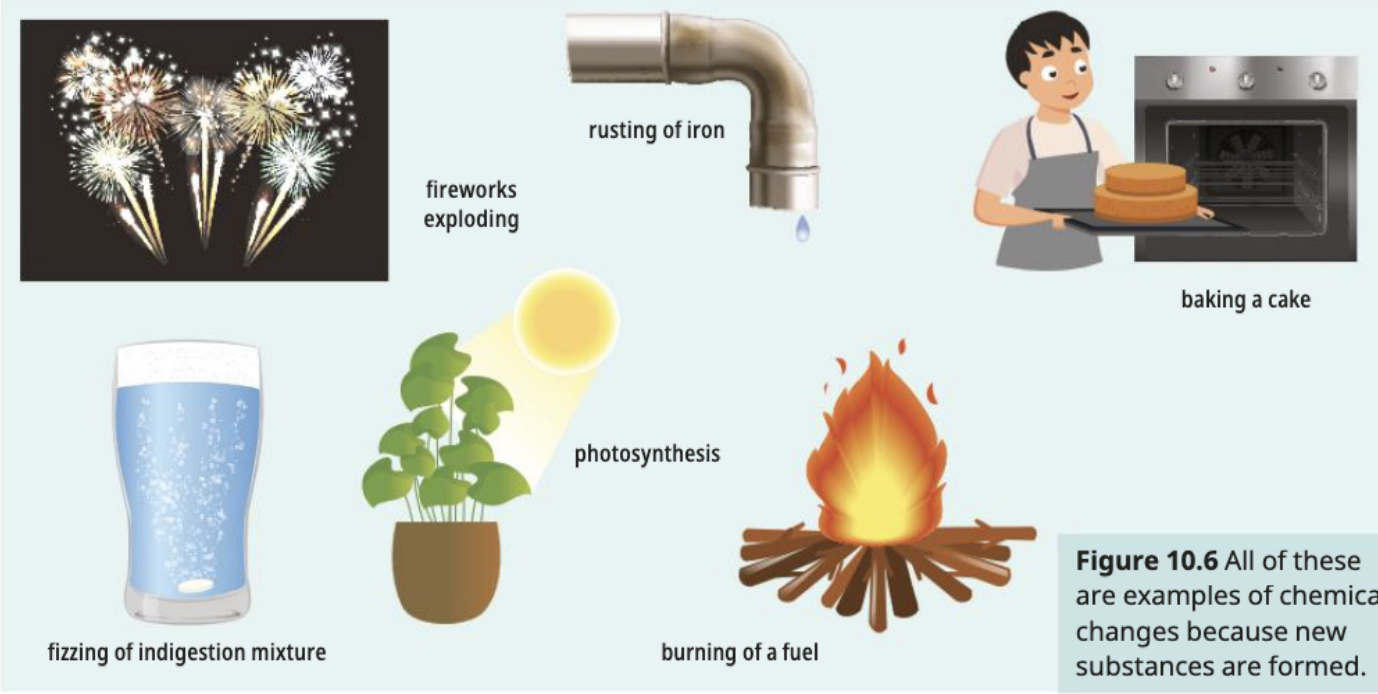
Examples of chemical changes include:
- Fireworks exploding - chemicals react to produce light, heat, and new compounds
- Rusting of iron - iron combines with oxygen to form iron oxide (rust)
- Baking a cake - flour, eggs, and other ingredients react to form new compounds
- Fizzing of indigestion mixture - acid and base react to produce gas
- Photosynthesis - plants convert carbon dioxide and water into glucose and oxygen
- Burning fuel - wood or other materials combine with oxygen to produce ash and gases
Key differences between physical and chemical changes
Understanding the main differences helps you classify changes correctly:
Physical changes:
- No new substances are formed - the material remains chemically identical
- Usually no energy changes take place (though some energy may be needed, like heating ice)
- Easy to reverse - you can often get back to the original state
Note
Think of physical changes as "costume changes" - the substance looks different but is still the same "actor" underneath.
Chemical changes:
- New substances are formed - completely different materials are created
- Energy changes occur - heat, light, or sound are often produced
- Difficult to reverse - it's hard or impossible to get back the original materials
Important
Chemical changes are like "transformations" - the original substance becomes something completely different, and you usually can't easily change it back!
Identifying changes in everyday life
When you encounter a change, ask yourself these questions:
Note
Quick Identification Questions:
- Has a completely new substance been formed?
- Can I easily reverse this change?
- Are there signs of energy being released (heat, light, sound)?
- Has the chemical composition changed?
If you answer "yes" to these questions, you're likely observing a chemical change. If the answers are mostly "no", it's probably a physical change.
Exam tips
- Learn the key characteristics: Physical changes don't create new substances; chemical changes do
- Practice with examples: Make lists of physical and chemical changes you observe daily
- Look for clues: Gas production, colour changes, and energy release often indicate chemical changes
- Remember reversibility: Physical changes are usually easy to undo; chemical changes are not
Example
Worked Example: Identifying Change Types
Scenario 1: Ice cube melting in your drink
- New substance formed? No, still
- Easy to reverse? Yes, refreeze it
- Answer: Physical change
Scenario 2: Toast burning in the toaster
- New substance formed? Yes, carbon compounds form
- Easy to reverse? No, can't "unburn" toast
- Energy released? Yes, heat and smoke
- Answer: Chemical change
Remember!
Summary
Key Points to Remember:
- Physical changes preserve the original substance - only appearance or state changes
- Chemical changes create entirely new substances through reactions
- Energy changes (heat, light, sound) often signal chemical reactions occurring
- Reversibility is a key test - physical changes are usually easy to reverse, chemical changes are difficult
- Daily examples help you recognise these changes - from melting ice cubes to burning toast