Characters (Leaving Cert Classical Studies): Revision Notes
📚Revision Notes
Characters
Understanding the characters in Oedipus Rex is essential for grasping the play's central themes and dramatic impact. Each character serves a specific purpose in Sophocles' exploration of fate, knowledge, and human nature.
Oedipus - the tragic hero
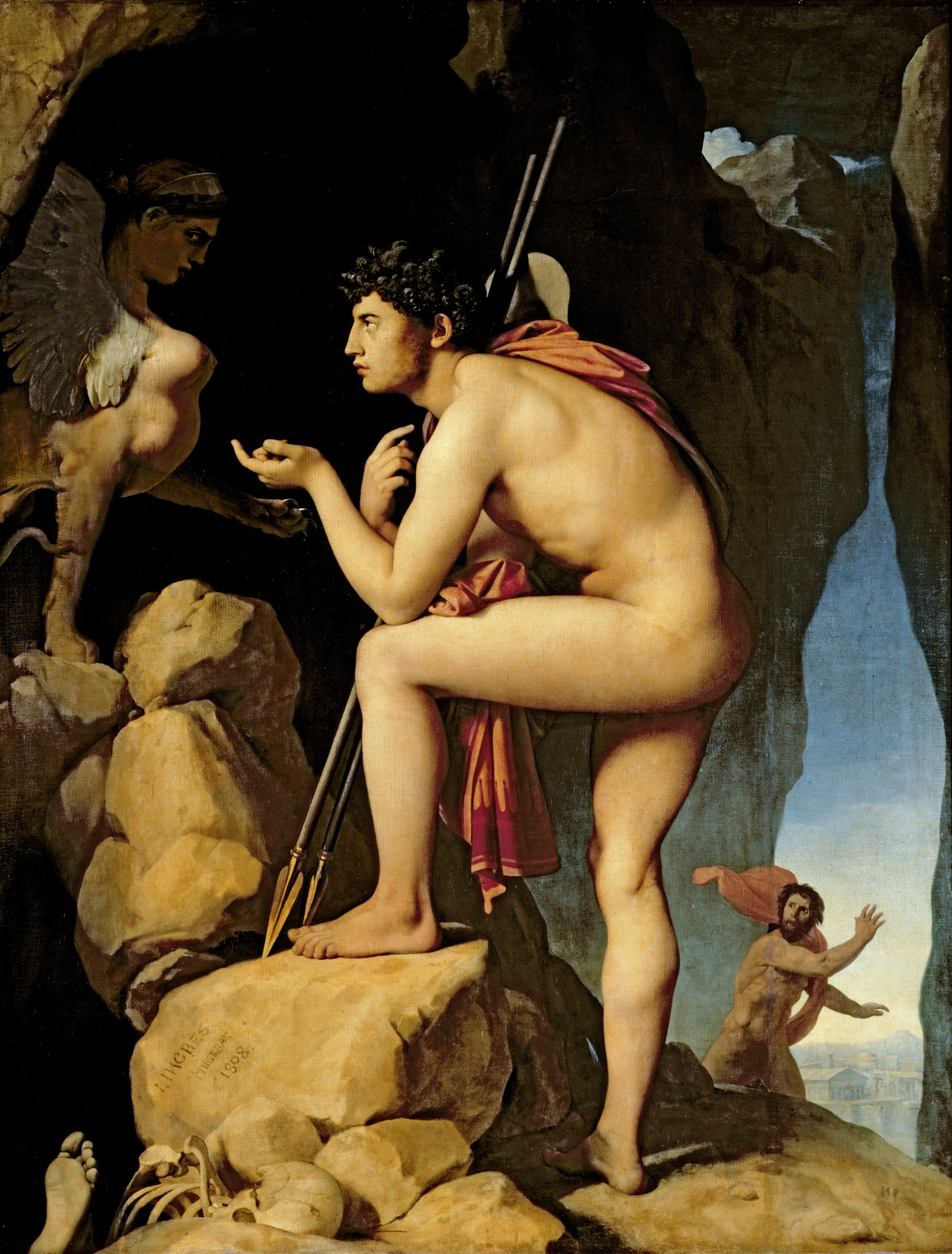
Oedipus stands as the protagonist of the play, serving as King of Thebes who gained his throne by solving the famous Sphinx's riddle. His character embodies the classical Greek concept of a tragic hero - a noble figure whose own qualities lead to his destruction.
Key characteristics:
- Shows remarkable intelligence and determination as a ruler
- Demonstrates genuine care and compassion for his people
- Possesses dangerous impulsiveness and quick temper
- Displays hubris - excessive pride that blinds him to his limitations
- Refuses to accept the bounds of human knowledge and understanding
Oedipus' tragic journey: His tragic flaw lies in his overwhelming confidence in human reasoning and his stubborn refusal to acknowledge what he cannot know or control. This very determination to uncover Laius' murderer - driven by his sense of duty and justice - ultimately leads him to discover the horrifying truth about his own identity.
Note
The transformation Oedipus undergoes is complete and devastating. He begins as a proud, successful king beloved by his people, but ends as a blind, exiled outcast who has lost everything. This dramatic reversal demonstrates the power of fate and the dangers of human pride.
Essential quotes:
- "I must bring what is dark to light" - reveals his sense of duty and ironic blindness to his own situation
- "It was Apollo, friends, Apollo that brought this bitter bitterness" - shows his eventual acceptance of divine will and fate
Jocasta - voice of scepticism
Jocasta serves as both Queen of Thebes and, unknowingly, both wife and mother to Oedipus. Her character represents a rational, sceptical approach to divine prophecy and fate.
Her role in the drama: Initially, Jocasta appears as a calming influence on Oedipus, attempting to moderate his anger and suspicions. She actively encourages him not to trust oracles and prophecies blindly, representing a more practical, earthly wisdom that questions divine intervention.
Important
However, Jocasta's rationalism becomes tragic when she realises the truth before Oedipus does. Her scepticism of divine prophecy proves ironically wrong, as the very prophecies she dismissed come true in the most terrible way. When the full horror of her situation becomes clear, she chooses suicide as her only escape, becoming a powerful symbol of despair and the limits of human understanding.
Key quotes:
- "Why should a man fear? Chance rules our lives, and the future is all unknown" - demonstrates her sceptical philosophy
- "Unhappy man! May you never find out who you are!" - reveals her growing desperation as truth approaches
Creon - the voice of reason
Creon, Jocasta's brother, represents stability, loyalty, and pragmatic leadership throughout the play. As a trusted statesman, he serves as a foil to Oedipus' more volatile nature.
His character traits: Creon embodies reason, calmness, and practical wisdom. When Oedipus sends him to consult Apollo's oracle at Delphi, he faithfully carries out his duty and reports back honestly. His measured approach to leadership contrasts sharply with Oedipus' emotional and impulsive responses.
Note
Conflict with Oedipus: Despite his loyalty, Creon becomes the target of Oedipus' paranoid suspicions. Oedipus unjustly accuses him of conspiracy and plotting to steal the throne, which demonstrates how Oedipus' pride and fear cloud his judgement. Creon's dignified defence of himself shows his integrity and honour.
By the play's end, Creon assumes control of Thebes, representing the restoration of stable, rational leadership after the chaos caused by Oedipus' downfall.
Important quotes:
- "You do wrong when you take good men for bad" - his defence against Oedipus' unfair accusations
- "Do not seek to be master in everything, for the things you mastered did not follow you to the end" - a warning about the dangers of excessive pride
Tiresias - sight versus blindness
Tiresias, the blind prophet of Apollo, embodies one of the play's most important themes: the contrast between physical sight and spiritual insight.
Important
His symbolic role: Though physically blind, Tiresias perceives the truth more clearly than anyone else in the play. This creates a powerful irony: the blind man sees while the sighted king remains ignorant. His presence highlights the theme of sight versus blindness that runs throughout the drama.
His interaction with Oedipus: Initially reluctant to reveal what he knows about Oedipus' guilt, Tiresias only speaks when provoked by the king's anger and accusations. His eventual revelation of the truth serves as the catalyst for the play's tragic climax.
Tiresias represents divine wisdom and the limits of human knowledge. His blindness becomes a symbol of spiritual insight that transcends physical limitations.
Crucial quotes:
- "You are the murderer you seek" - the direct revelation that begins Oedipus' downfall
- "It is not your fate to fall at my hands... Apollo is enough" - acknowledges that divine will, not human action, controls Oedipus' destiny
The chorus - collective wisdom
The Chorus, composed of Theban elders, represents the voice of the common people and serves multiple important functions in the play.
Their role and function: The Chorus acts as moral and religious commentators, reflecting on the events they witness and drawing broader lessons about human existence. They remain loyal to Oedipus as their king while simultaneously expressing proper fear and reverence for the gods.
Note
Through their songs and speeches, the Chorus reflects on universal themes of human suffering, fate, and the limits of knowledge. They serve as a bridge between the dramatic action and the audience, helping viewers understand the deeper meanings of the tragedy.
Their philosophical outlook: The Chorus embodies traditional Greek religious values, emphasising the importance of piety, moderation, and respect for divine will. They warn against excessive pride and remind audiences of human mortality and the unpredictability of fortune.
Memorable quotes:
- "May I live with reverence towards Justice and the gods' commands" - expresses their commitment to religious duty
- "Count no man happy until he is dead" - the famous concluding moral that emphasises life's uncertainty and the danger of premature judgement
Supporting characters
Note
Several secondary characters play crucial roles in advancing the plot and revealing key information:
- Priest of Zeus: Opens the play by presenting the suffering of Thebes during the plague, establishing the crisis that drives the action
- Messenger from Corinth: Brings news of Polybus' death but inadvertently reveals information about Oedipus' adoption, advancing the discovery of truth
- Shepherd: Though reluctant to speak, he ultimately confirms the prophecy and reveals the complete truth about Oedipus' origins
Summary
Key Points to Remember:
- Oedipus exemplifies the tragic hero - his intelligence, pride, and determination lead directly to his downfall, demonstrating how positive qualities can become destructive
- The sight/blindness theme is central - Tiresias (blind) sees truth clearly while Oedipus (sighted) remains ignorant until it's too late
- Characters represent different responses to fate - Jocasta shows scepticism, Creon displays pragmatic acceptance, and the Chorus emphasises religious reverence
- Greek values permeate character development - concepts of leadership, piety, family loyalty, and respect for fate drive character motivations and conflicts
- Each character serves the play's exploration of knowledge and its limits - showing how human reason, while valuable, cannot overcome divine will or change predetermined fate