Prometheus Bound (Leaving Cert Classical Studies): Revision Notes
📚Revision Notes
Literary Techniques
Understanding the literary techniques used in Aeschylus' Prometheus Bound is essential for analysing how the playwright creates dramatic effect and conveys meaning. Unlike action-driven tragedies, this play relies heavily on speeches, symbolism, and static dramatic techniques to engage the audience.
Tragic conventions
Aeschylus follows several classical Greek dramatic traditions while also adapting them for this unique play.
Unity of place is strictly maintained throughout the drama, with all events occurring at the remote rock where Prometheus is bound. This single setting creates an intense, claustrophobic atmosphere that focuses attention entirely on Prometheus's suffering and the conversations that develop around him.
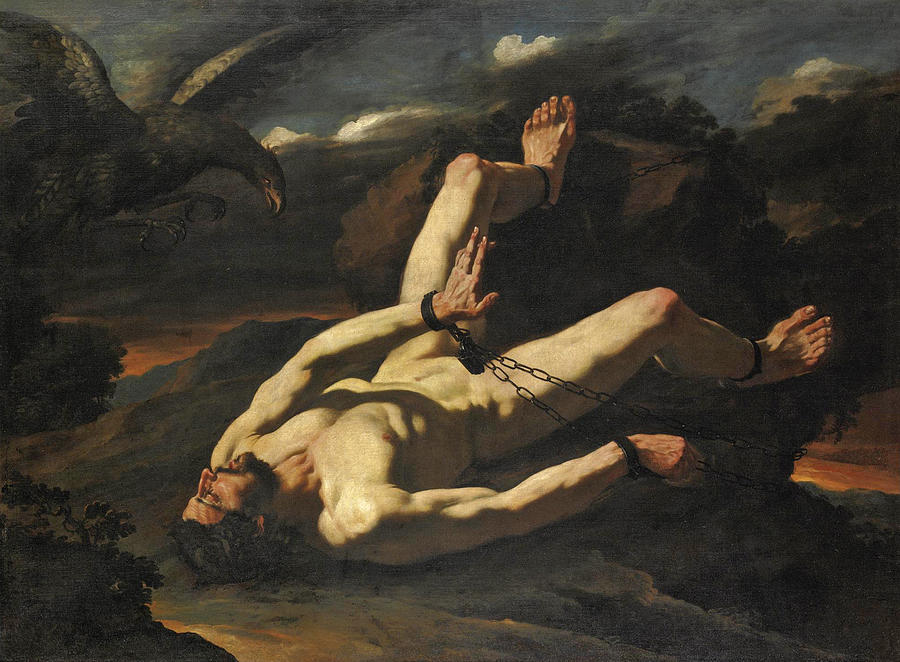
Static staging represents one of the play's most distinctive features. Rather than relying on physical movement and action, Prometheus remains chained in the same position from beginning to end. This creates dramatic tension through powerful dialogue and extended speeches rather than visual spectacle.
Note
The static staging technique was revolutionary for Greek theatre, which typically relied on physical action and movement to create dramatic tension.
The messenger figure appears through Io's arrival, which functions like a traditional messenger scene. She recounts the suffering that Zeus has caused her, providing the audience with information about events happening elsewhere whilst reinforcing the theme of divine cruelty.
Aeschylus uses deus ex machina in reverse - instead of a god appearing to rescue the hero, Zeus's overwhelming power looms as an ever-present threat of further punishment, creating dread rather than resolution.
Imagery and symbolism
The play uses powerful symbolic imagery to convey deeper meanings about knowledge, power, and suffering.
Fire serves as the central symbol representing knowledge, progress, and civilisation. Prometheus's gift of fire to humanity symbolises all the arts and sciences that allow human society to flourish. This connects to the broader theme of enlightenment versus ignorance.
Chains and bonds symbolise oppression and punishment, but paradoxically also represent Prometheus's endurance and unbreakable spirit. Despite being physically restrained, his mind and will remain free.
Sky, earth, and elements are frequently invoked to demonstrate the cosmic scale of the conflict between Prometheus and Zeus. These references emphasise that this is not merely a personal dispute but a fundamental clash about how the universe should be governed.
Io's gadfly symbolises divine cruelty and the torment of innocence. Her constant wandering, driven by the stinging gadfly sent by Hera, represents mindless persecution and suffering.
Example
Key Symbolic Quotes:
- Prometheus: "All human arts are from Prometheus" (emphasising his role as civiliser)
- Io: "I wander, driven by a gadfly, tormented by gods" (highlighting divine persecution)
Rhetoric and speeches
The drama unfolds primarily through extended speeches rather than action. Characters deliver lengthy monologues that serve to develop themes, reveal character, and advance the plot through revelation rather than physical events.
Prometheus's rhetorical power dominates the play. He argues like a philosopher or political leader, using logic and moral arguments to justify his actions and condemn Zeus's tyranny. His speeches demonstrate intellectual superiority even whilst he remains physically powerless.
Different characters embody contrasting positions through their speeches. Prometheus represents defiant resistance, Oceanus offers pragmatic compromise, Io embodies innocent suffering, and Hermes delivers tyrannical demands. These opposing viewpoints create dramatic tension through ideological conflict.
Example
Rhetorical Demonstration:
When Prometheus explains his gifts to humanity - writing, agriculture, medicine, and navigation - he demonstrates how his rebellion benefits civilisation, using this as moral justification for his defiance.
Irony
Several forms of irony create dramatic tension and highlight the play's central themes.
Divine irony emerges from the fact that Zeus, supposedly the most powerful god, actually depends on Prometheus's secret knowledge about his future downfall. This creates a fascinating power reversal where the chained victim holds crucial power over his oppressor.
Important
The ironic power relationship between Zeus and Prometheus is central to the play's meaning - physical power versus intellectual/moral authority creates the fundamental dramatic tension.
Physical versus intellectual power provides another ironic contrast. Prometheus is completely helpless physically, chained and tortured, yet he wields significant power over Zeus through his prophetic knowledge and moral authority.
Audience irony operates because viewers familiar with Greek mythology know that Prometheus will eventually be freed by Heracles (Zeus's son), making his current defiance both admirable and ultimately vindicated.
Use of the chorus (oceanids)
The Chorus of Oceanids serves several important dramatic functions throughout the play.
They express pity and compassion, guiding the audience's emotional response to Prometheus's suffering. Their lyrical passages provide moments of beauty that contrast with the harsh confrontations.
The Chorus offers lyrical contrast to Prometheus's intellectual defiance. Where he argues logically, they respond emotionally, providing a more human perspective on the cosmic conflict.
Their presence softens the stark confrontation between Prometheus and Zeus's representatives, preventing the drama from becoming simply a battle of wills between opposing forces.
Example
Choral Function Demonstrated:
"We see your suffering, Prometheus, and our hearts are troubled" - showing how the Chorus voices the audience's emotional response.
Symbolic characters
Rather than developing realistic psychological portraits, Aeschylus creates characters who represent abstract concepts and positions.
Kratos and Bia (Power and Force) function as allegorical figures embodying Zeus's brute authority. They have no individual personalities but simply represent the violent enforcement of divine will.
Hephaestus is torn between pity for Prometheus and obedience to Zeus, showing the conflict between compassion and duty that many face under tyrannical rule.
Hermes serves as an arrogant messenger who symbolises the oppressive enforcement of Zeus's rule. His dismissive attitude towards Prometheus represents the contempt of established power for principled resistance.
Note
Each character reinforces the play's themes through their symbolic role rather than through realistic psychological development, making this more of a philosophical drama than a character study.
Foreshadowing and prophecy
Prophetic elements create suspense and dramatic irony throughout the play.
Prometheus constantly hints at Zeus's future downfall but withholds crucial details, creating tension as the audience wonders when and how this prophecy will be fulfilled.
His knowledge of fate creates dramatic suspense because the audience knows the prophecy will eventually come true, making Prometheus's current suffering seem temporary rather than permanent.
Io's suffering foreshadows her descendants' future role in freeing Prometheus, connecting her present torment to the play's ultimate resolution.
Example
Prophetic Declaration:
Prometheus declares: "Fate is stronger than Zeus," establishing that even divine power has limits.
Pathos and emotional power
Despite the play's intellectual focus, Aeschylus creates strong emotional effects through vivid descriptions of suffering.
Audience pity is evoked through detailed descriptions of Prometheus's torture and Io's wandering madness. These passages balance the play's philosophical content with human emotion.
The offstage punishment (the eagle devouring Prometheus's liver) is foreshadowed by Hermes, creating anticipation of even greater suffering to come.
Static suffering emphasises psychological tension rather than physical action, making the audience focus on the emotional and mental aspects of torture rather than mere spectacle.
Example
Emotional Resilience:
Prometheus states: "Suffering is my fate, but I will not bow to Zeus," showing how his emotional resilience becomes a form of resistance.
Summary
Key Points to Remember:
- Unity of place and static staging create intense focus on dialogue and character rather than physical action
- Fire symbolises knowledge and civilisation, while chains represent both oppression and endurance
- Extended speeches drive the plot forwards through revelation and argument rather than action
- Dramatic irony operates on multiple levels, especially regarding power relationships between Zeus and Prometheus
- The Chorus provides emotional response and lyrical beauty that balances intellectual confrontation