Summary (Leaving Cert Classical Studies): Revision Notes
📚Revision Notes
Summary
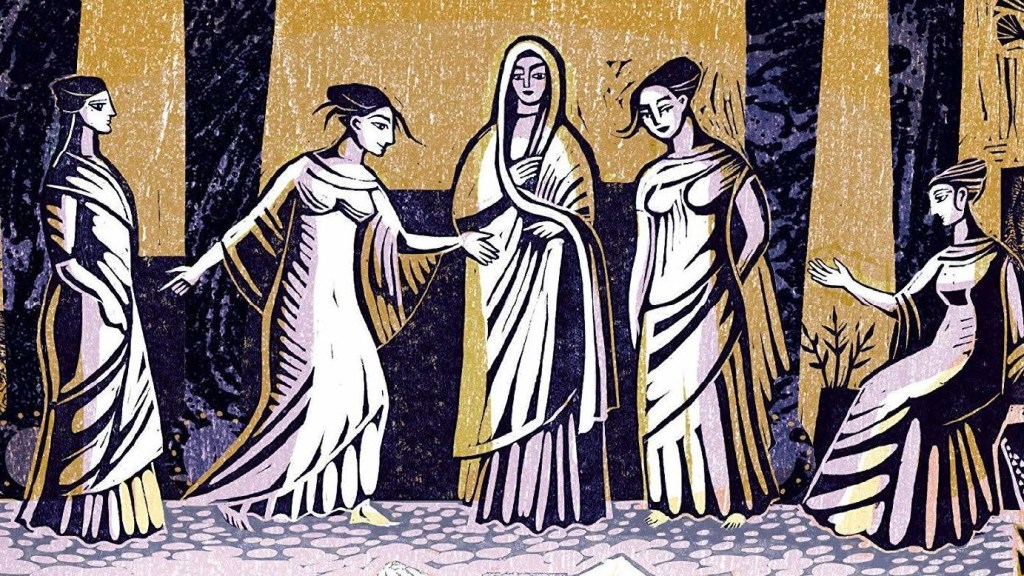
Euripides' Trojan Women presents a powerful exploration of war's aftermath through the experiences of the defeated Trojan women. Rather than celebrating Greek victory, the play focuses on the human cost of conflict, particularly its impact on women and children. The drama unfolds through a series of episodes that showcase different aspects of grief, loss, and the brutality that follows conquest.
The structure and progression of the play
Prologue - divine framework and capriciousness
The play opens with the gods Poseidon and Athena discussing Troy's fate. Poseidon mourns the destruction of his beloved city, while Athena, despite helping the Greeks achieve victory, now plots their destruction as punishment for their impiety. This divine conversation establishes several crucial elements:
- The gods' unpredictable and self-serving nature
- The cyclical nature of divine vengeance
- The broader cosmic context of human suffering
Note
Key quote from Poseidon: "I am leaving this famous city of Troy; the Greek army has destroyed it."
This opening emphasises that even divine favour is temporary and that the gods themselves are capable of cruelty and sudden changes of allegiance.
Parodos - collective mourning
The Chorus of Trojan Women enters, establishing the emotional foundation of the entire play. Their collective grief serves multiple dramatic functions:
- Creates the emotional atmosphere that permeates the tragedy
- Represents the broader suffering of all Trojan women
- Provides a voice for the ordinary victims of war
Important
Key quote from the Chorus: "There is no end to tears, no end to grief."
This entry immediately signals that the play will focus on lamentation and loss rather than heroic achievement.
First episode - announcement of fates
Hecuba, the former Queen of Troy now reduced to slavery, encounters Talthybius, the Greek herald. This scene serves as a crucial turning point where individual destinies are revealed:
- Cassandra is assigned to Agamemnon as his concubine
- Andromache will serve Neoptolemus, son of Achilles
- Hecuba herself becomes the property of Odysseus
Each announcement deepens the women's despair and illustrates how war reduces people to property. Hecuba's question, "What wretched slavery awaits me?" captures the horror of their new reality.
Second episode - prophetic irony and futility
Cassandra enters in a state of prophetic frenzy, creating one of the play's most dramatically complex scenes. Although she will become Agamemnon's slave, she prophetically celebrates because she foresees his death at Clytemnestra's hands. This episode demonstrates:
- The ironic reversal that awaits the seemingly victorious Greeks
- The futility of conquest when victory brings future destruction
- Cassandra's unique ability to see beyond immediate circumstances
Note
Key quote from Cassandra: "I will destroy him who destroys me."
Her prophetic joy provides a bitter counterpoint to the surrounding grief whilst revealing that the Greeks' triumph will be short-lived.
Third episode - ultimate brutality against innocence
The appearance of Andromache with her young son Astyanax represents the play's emotional climax. When Talthybius announces that the child must be killed by being thrown from Troy's walls, the scene exposes war's most horrific aspect - its impact on the innocent.
Important
Andromache's desperate plea, "My child, they are killing you, and I cannot save you," illustrates the complete powerlessness of the defeated. This episode shows how war's logic extends to eliminating even potential future threats, demonstrating the thoroughness of conquest's brutality.
Fourth episode - guilt and responsibility
The confrontation between Helen and Hecuba before Menelaus creates a dramatic trial scene. Helen attempts to absolve herself by blaming the gods, particularly Aphrodite, claiming she had no choice in causing the war.
Hecuba fiercely rejects this defence, arguing that Helen was complicit and manipulative. The exchange between them highlights different perspectives on responsibility:
Example
The Debate on Responsibility
Helen's defence: "Do not blame me, blame the gods." Hecuba's accusation: "You are the cause of all our sufferings."
This exchange demonstrates the central tension between divine influence and human agency.
This debate raises questions about divine influence versus human agency, while Menelaus's promise to execute Helen (though the audience knows she survives) adds dramatic irony.
Exodus - final destruction and departure
The play concludes with Talthybius returning with Astyanax's body, leading to a funeral ritual that uses Hector's shield as a makeshift bier. As the women prepare the child's burial, Troy burns in the background, creating a powerful visual symbol.
The final image shows the women being led away into slavery while their city is consumed by flames. This ending emphasises:
- The complete destruction of their former life
- The loss of future hope (symbolised by Astyanax's death)
- The beginning of a new existence defined by servitude
Note
Final quote from the Chorus: "Our city burns; we are dragged away."
Key themes and exam insights
The play's structure follows a clear progression from divine machination through individual suffering to final destruction. Each episode intensifies the tragedy whilst revealing different aspects of war's impact:
- Focus on consequences rather than glory - Euripides deliberately avoids heroic narratives
- Women and children as primary victims - Traditional epic focuses on male warriors
- Divine capriciousness - Gods change allegiances based on personal slights
- Cyclical nature of vengeance - Victory contains the seeds of future defeat
Important
Critical Analysis Points:
- Trojan Women subverts traditional epic poetry by focusing on defeat rather than victory
- The play functions as anti-war literature, critiquing imperialism through emotional impact
- Euripides uses the episodic structure to build cumulative emotional power
- Each woman represents a different aspect of war's devastating consequences
Summary
Key Points to Remember:
- Trojan Women examines war's aftermath, not its glory - this distinguishes it from traditional heroic literature
- Each episode focuses on a different woman's story, creating a comprehensive picture of defeat's impact
- The play critiques both war and imperialism by showing the human cost of conquest
- Divine characters frame the action but prove as unreliable and cruel as humans
- The progression moves from general suffering (Chorus) through individual tragedies to final destruction, creating a complete tragic arc