Comparison: The Odyssey and The Aeneid (Leaving Cert Classical Studies): Revision Notes
📚Revision Notes
Comparison: The Odyssey and The Aeneid
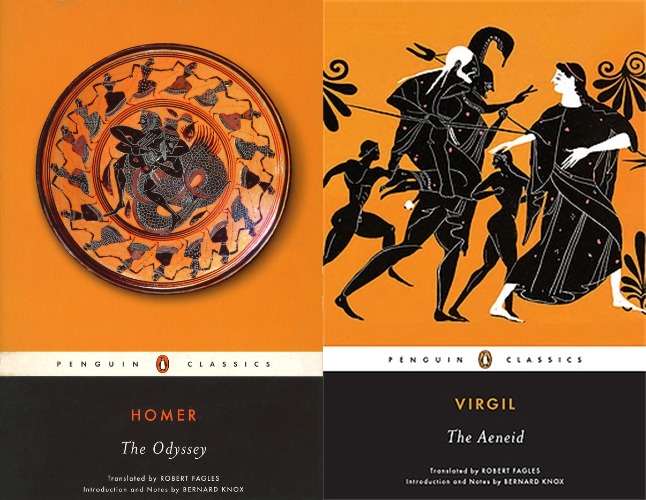
Purpose of the epic
Homer and Virgil wrote their epic poems for very different reasons, reflecting the distinct periods and cultures in which they lived.
Homer's Odyssey was created primarily for entertainment and to preserve the rich oral storytelling tradition of ancient Greece. Homer explored universal human experiences that people could relate to across time - struggles with identity, the importance of loyalty, and the deep longing for home. The epic speaks to fundamental human emotions and challenges that remain relevant today.
Virgil's Aeneid served a more political purpose alongside its literary merit. Virgil deliberately crafted his epic to celebrate Rome's destiny and to glorify the rule of Emperor Augustus. The poem was designed to legitimise Roman imperial power and connect contemporary Rome to its mythological foundations.
Note
Understanding the different historical contexts is crucial: Homer wrote during the archaic period of Greece (8th century BCE) when oral tradition was paramount, while Virgil wrote during the height of the Roman Empire (1st century BCE) when literature served imperial propaganda.
Example
Textual Evidence: Opening Lines
Homer opens his epic with the invocation: "Sing to me of the man, Muse, the man of twists and turns" - focusing on the individual hero's journey
Virgil begins with a political declaration: "Arms and the man I sing..." - immediately connecting his hero's story to warfare and the founding of an empire
Heroic ideal
The two epics present fundamentally different models of what makes a hero admirable and worthy of emulation.
Odysseus embodies the Greek heroic ideal, which centres on cleverness, endurance, and the pursuit of individual glory known as kleos. Greek heroes were expected to win fame through their own wit and achievements, securing their reputation for posterity through memorable deeds.
Aeneas represents the Roman heroic ideal, defined by pietas (duty), personal sacrifice, and dedication to founding Rome's future. Roman heroes were expected to put the needs of their people and destiny above personal desires, even when this meant great personal cost.
Important
The contrast between kleos (individual glory) and pietas (duty to family, gods, and state) represents one of the most fundamental differences between Greek and Roman values. This distinction shapes every aspect of how the heroes behave and make decisions throughout their respective epics.
Example
Character Comparison: Hero Motivations
Odysseus demonstrates his cleverness by tricking the Cyclops Polyphemus, calling himself "Nobody" to escape detection (Book 9) - seeking personal glory and survival
Aeneas shows his sense of duty when leaving Dido, stating: "I sail for Italy not of my own free will" (Book 4) - he sacrifices personal happiness to fulfil his divine mission
Themes
The thematic focus of each epic reflects the values and concerns of their respective cultures.
The Odyssey explores themes of homecoming (nostos), loyalty, hospitality (xenia), and the relationship between humans and the divine. The poem celebrates the bonds of family and community, showing how these relationships sustain people through hardship.
The Aeneid examines themes of duty versus passion, fate, empire-building, sacrifice, and the tension between war and peace. Virgil's epic grapples with the moral complexities of building an empire and the personal costs of political greatness.
Note
The Greek concept of xenia (hospitality) was fundamental to their society and appears repeatedly throughout the Odyssey. Violations of hospitality, such as the suitors' behaviour, are presented as serious moral failures that justify punishment.
Example
Thematic Outcomes
Odysseus is ultimately rewarded for his loyalty to his home and family, achieving a joyful reunion with Penelope
Aeneas repeatedly sacrifices his personal happiness (particularly his relationship with Dido) to fulfil his destiny of founding Rome
Role of the gods
The divine characters in each epic function very differently, reflecting distinct theological and political perspectives.
Homer's gods behave like emotional, quarrelsome humans with supernatural powers. They have personal preferences, hold grudges, and actively interfere in human affairs based on their feelings. Athena helps Odysseus because she admires his cleverness, while Poseidon hinders him due to anger over the Cyclops incident.
Virgil's gods serve as symbols of larger political and cosmic forces rather than individual personalities. Juno represents resistance to change, Venus symbolises protection, and Jupiter embodies destiny and divine will. Their actions reflect broader themes about Rome's place in history.
Important
This difference in divine characterisation reflects a key evolution in ancient thought: Homer's gods represent the unpredictable, personal nature of divine intervention, while Virgil's gods embody the Roman belief in fate and cosmic order governing historical destiny.
Example
Divine Intervention Styles
Athena disguises herself to personally guide Telemachus in his search for his father (Odyssey Book 1) - personal, emotional involvement
Jupiter tells Venus that Rome's destiny cannot be stopped, representing the inexorable force of historical necessity (Aeneid Book 1) - cosmic, impersonal force
Literary techniques
The stylistic differences between the two epics reflect their origins and purposes.
Homer's techniques derive from oral storytelling traditions. He uses formulaic epithets (repeated descriptive phrases), Homeric similes drawn from everyday life and nature, and a style designed to be memorable when spoken aloud. These techniques helped ancient bards remember and perform the lengthy epic.
Virgil's techniques showcase sophisticated written artistry. He crafts polished similes using Roman imagery related to politics and civic life, employs complex symbolism (such as Aeneas's shield), and creates intricate literary structures designed for readers rather than listeners.
Note
The transition from oral to written tradition represents a major shift in how literature was created and consumed. Homer's repetitive epithets and formulaic phrases served as memory aids for oral performance, while Virgil could create more complex literary devices knowing readers could revisit difficult passages.
Example
Technical Comparison
Homer repeatedly uses the epithet "Rosy-fingered dawn" to mark the passage of time - formulaic and memorable for oral recitation
Virgil describes Dido's passion metaphorically as "a wound feeding on her blood" (Book 4), using vivid imagery to convey emotional intensity - sophisticated written metaphor
Emotional tone
The overall mood and emotional register of each epic serves different purposes and appeals to different sensibilities.
The Odyssey maintains a generally optimistic tone focused on family relationships, loyalty, cleverness, and even humour. The famous episode with Polyphemus combines danger with wit and trickery, showing Odysseus's resourcefulness in entertaining ways.
The Aeneid adopts a more tragic and solemn tone that emphasises sacrifice and the heavy costs of empire-building. Virgil consistently reminds readers that great achievements require great losses, creating a more melancholy atmosphere.
Example
Contrasting Endings
The Odyssey concludes with the joyful reunion of Odysseus and Penelope, celebrating the restoration of family and home (Book 23)
The Aeneid is marked by tragic episodes like the deaths of Dido and Turnus, highlighting the destructive consequences of destiny (Books 4 & 12)
Cultural values reflected
Each epic embodies and promotes the distinctive values of its civilisation.
Greek values emphasised individual achievement, hospitality, loyalty, cleverness, and personal honour (kleos). Greek culture celebrated those who could distinguish themselves through their own abilities and win lasting fame through memorable deeds.
Roman values prioritised duty (pietas), discipline, empire-building, and sacrifice for the greater good. Roman culture valued those who could subordinate personal desires to serve their people and contribute to Rome's expansion and stability.
Important
When analysing these epics, always connect character actions to their underlying cultural values. A hero's choices reveal what their society considered most admirable and worthy of emulation.
Example
Values in Action
Odysseus consistently seeks to preserve his personal name and glory, reflecting Greek emphasis on individual reputation
Aeneas repeatedly sacrifices his love for Dido to obey the gods and found Rome, demonstrating Roman ideals of duty over personal happiness
Exam tips
When comparing these two epics in your exam responses, remember these key strategies:
Note
Essential Exam Strategies
-
Always compare directly rather than discussing each epic separately. For example: "While Odysseus seeks individual glory, Aeneas sacrifices personal glory for duty to his people."
-
Use short, relevant quotes from both texts to support your comparisons and demonstrate detailed knowledge of the source material.
-
Link characters to cultural values to show deeper understanding. Connect Odysseus to Greek ideals of cleverness and individual achievement, and Aeneas to Roman concepts of duty and sacrifice.
-
Contrast the endings to highlight different worldviews. The Odyssey resolves happily with reunion and peace, while the Aeneid ends abruptly with violence, reflecting Rome's harsh military destiny.
-
Be able to discuss how Virgil imitates Homer but adapts the epic form to suit Roman culture and Augustus's political agenda, showing your understanding of literary influence and cultural adaptation.
Summary
Key Points to Remember:
- Homer wrote for entertainment and oral tradition, while Virgil wrote for political purposes and literary artistry
- Odysseus represents Greek kleos (individual glory), while Aeneus embodies Roman pietas (duty)
- The Odyssey focuses on homecoming and family, while the Aeneid explores empire-building and sacrifice
- Homer's gods act like emotional humans, while Virgil's gods symbolise cosmic and political forces
- The Odyssey ends joyfully with reunion, while the Aeneid concludes tragically with the costs of destiny