Gods and Humans (Leaving Cert Classical Studies): Revision Notes
📚Revision Notes
Gods and Humans
Understanding divine-mortal relationships in Homer and Virgil
The relationship between gods and humans forms a central theme in both Homer's Odyssey and Virgil's Aeneid. However, these two epic poets present very different approaches to how divine beings interact with mortals, reflecting the distinct cultural values of their respective societies.
Note
Understanding these contrasting approaches to divine-mortal relationships is essential for appreciating how each epic reflects its own cultural context - Greek individualism versus Roman imperialism.
Key differences in divine-mortal relationships
Homer's approach in the Odyssey
In Homer's world, the gods behave in remarkably human-like ways. They are anthropomorphic, meaning they display human characteristics such as jealousy, helpfulness, and vengefulness. The deities in the Odyssey regularly interact directly with mortals, often appearing in disguise to test or assist them.
What makes Homer's gods particularly interesting is that mortals can sometimes outsmart or anger them. This creates a more balanced relationship where humans have some agency, even though they ultimately depend on divine favour for survival.

Example
Key examples from the Odyssey:
- Athena's guidance: Athena actively guides both Telemachus and Odysseus throughout their journeys (Books 1 and 13), showing divine support for worthy mortals
- Poseidon's vendetta: Poseidon pursues a personal vendetta against Odysseus for blinding his son Polyphemus (Book 9), demonstrating how personal divine emotions drive the plot
- Zeus' intervention: Zeus intervenes to enforce divine justice when Odysseus' men slaughter Helios' sacred cattle (Book 12), showing divine punishment for violations of sacred law
The famous line "It was Poseidon... who made Odysseus' journey so long and hard" (Book 1) perfectly captures how personal divine emotions can shape mortal destinies in Homer's world.
Virgil's approach in the Aeneid
Virgil presents a very different divine-mortal dynamic. His gods are less personal and more symbolic of abstract forces like destiny, politics, and morality. Rather than acting on personal whims, divine intervention in the Aeneid consistently aligns with Rome's destined greatness.
In Virgil's universe, humans serve more as instruments of fate rather than equals in a cosmic struggle. The gods' actions always reinforce Roman values such as pietas (duty), sacrifice, and empire-building.
Example
Key examples from the Aeneid:
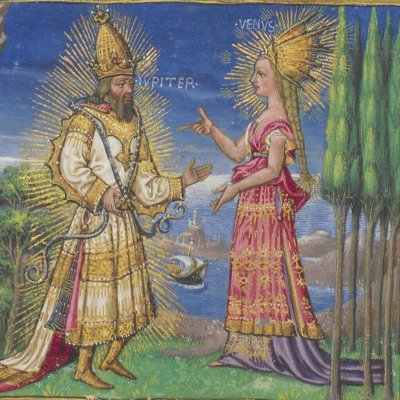
- Venus' protection: Venus protects Aeneas as his divine mother, symbolising Rome's divine protection (Book 1)
- Juno's opposition: Juno's opposition to Aeneas represents the forces that resist Rome's rise, but cannot ultimately prevent it (Books 1 and 7)
- Jupiter's prophecies: Jupiter's prophecies guarantee Rome's imperial destiny, showing divine will cannot be thwarted (Books 1 and 6)
The prophecy "You will see Lavinium's walls and bear great-hearted Aeneas aloft to the stars of heaven" (Book 1) demonstrates how Virgil's gods serve Rome's political destiny.
The significance of divine intervention
Reflecting cultural values through divine action
Both poets use divine intervention to reinforce their societies' core values, but these values differ significantly.
Important
Understanding Cultural Context:
The way gods intervene in each epic directly reflects the cultural priorities of ancient Greece versus imperial Rome. Greek gods uphold individual honour and social customs, while Roman gods enforce duty to state and empire.
Homer and Greek values: Divine interventions in the Odyssey typically uphold Greek concepts of xenia (hospitality), loyalty, and respect for the gods. When mortals violate these principles, divine punishment follows. The gods actively participate in maintaining social order through their interventions.
For instance, Athena extends daylight so Odysseus and Penelope can reunite properly (Book 23), showing divine support for marital loyalty and the restoration of proper social order.
Virgil and Roman values: In the Aeneid, divine interventions always align with fate and support Roman imperial values. The gods reinforce concepts of pietas (duty to gods, family, and state), sacrifice for the greater good, and Rome's civilising mission.
Mercury's reminder to Aeneas to leave Dido for his destiny (Book 4) exemplifies how divine intervention supports duty over personal desire.
Gods as protectors of moral order
Greek divine justice
Homer's gods function as guarantors of traditional Greek values:
- Xenia (hospitality): Zeus Xenios specifically punishes those who abuse guests, as seen with the suitors and Polyphemus
- Loyalty and honour: Athena rewards Odysseus' persistence while Poseidon punishes his hubris
- Divine justice: Wrongdoing inevitably leads to suffering, as demonstrated when the crew's slaughter of Helios' cattle results in their destruction
Note
The wise words "All strangers and beggars come from Zeus" (Eumaeus, Book 14) remind us that the gods watch over society's most vulnerable members, reinforcing the sacred nature of hospitality in Greek culture.
Roman divine order
Virgil's gods embody Roman imperial values:
- Pietas: Aeneas must obey divine commands even when it means personal loss and heartbreak
- Fate and empire: Jupiter guarantees Rome's imperial destiny cannot be avoided
- Order versus chaos: Juno's opposition represents irrational resistance to divine order, while Jupiter restores cosmic balance
Anchises' prophecy encapsulates Roman divine mission: "Your task, Roman, is to rule the nations with your power... to crown peace with law, to spare the humbled, and to crush the proud" (Book 6).
Contrasting views of divine power
Divine limitations and mortal agency
The two epics present different balances of power between gods and humans:
Important
Critical Distinction:
Homer's gods have limitations and can be outwitted, creating suspense about whether mortals will succeed. Virgil's gods represent unstoppable cosmic forces, creating moral drama about whether mortals will accept their destiny.
In the Odyssey: Gods are powerful but not omnipotent. Mortals can sometimes trick or escape divine punishment through cleverness. Odysseus' cunning frequently helps him evade consequences, and even Athena sometimes appears in disguise, suggesting gods have limitations.
In the Aeneid: Gods embody abstract forces like fate and destiny that mortals cannot ultimately resist. While humans can delay their destiny (as Aeneas does in Carthage), they cannot escape it. Divine will is ultimately irresistible.
Practical implications
These different approaches create distinct narrative tensions:
- Odysseus' cleverness creates suspense about whether he can outwit divine opposition
- Aeneas must choose between personal happiness and divine duty, creating moral rather than tactical conflicts
Exam tips for success
When analysing gods and humans in your exam, always demonstrate understanding of the key contrasts:
Note
Homer's gods are:
- Personal and emotional in their motivations
- Interactive and involved in daily mortal affairs
- Capable of being tricked or appeased through human cleverness
Virgil's gods are:
- Cosmic forces representing fate and political propaganda
- Aligned with Rome's imperial destiny
- Ultimately irresistible in their will
Essential episodes to remember
- From the Odyssey: Poseidon versus Athena's conflict over Odysseus, the Helios cattle incident, and the reunion scene with Penelope
- From the Aeneid: Dido's abandonment, Anchises' prophecy of Roman greatness, and Turnus' death
Using textual evidence effectively
Support your arguments with brief, memorable quotes:
- "Sing to me of the man, Muse" shows Homer's focus on individual heroism
- "Arms and the man I sing" demonstrates Virgil's emphasis on warfare and imperial mission
Summary
Key Points to Remember:
-
Homer's gods are anthropomorphic - they display human emotions and can be outsmarted by clever mortals like Odysseus
-
Virgil's gods represent abstract forces - they embody fate, destiny, and Roman political values that mortals cannot ultimately resist
-
Divine intervention serves different cultural purposes - Greek gods uphold xenia and personal honour, while Roman gods support pietas and imperial destiny
-
The power balance differs significantly - Homer allows more mortal agency, while Virgil emphasises divine inevitability
-
Both use gods to reinforce social values - but Greek values focus on individual honour and hospitality, while Roman values emphasise duty to state and empire