Characters (Leaving Cert Classical Studies): Revision Notes
📚Revision Notes
Characters
The Aeneid features a rich cast of characters who each serve important symbolic and narrative purposes in Virgil's epic. Understanding these characters and what they represent is crucial for your Leaving Cert Classical Studies exam.
Aeneas (the dutiful hero)
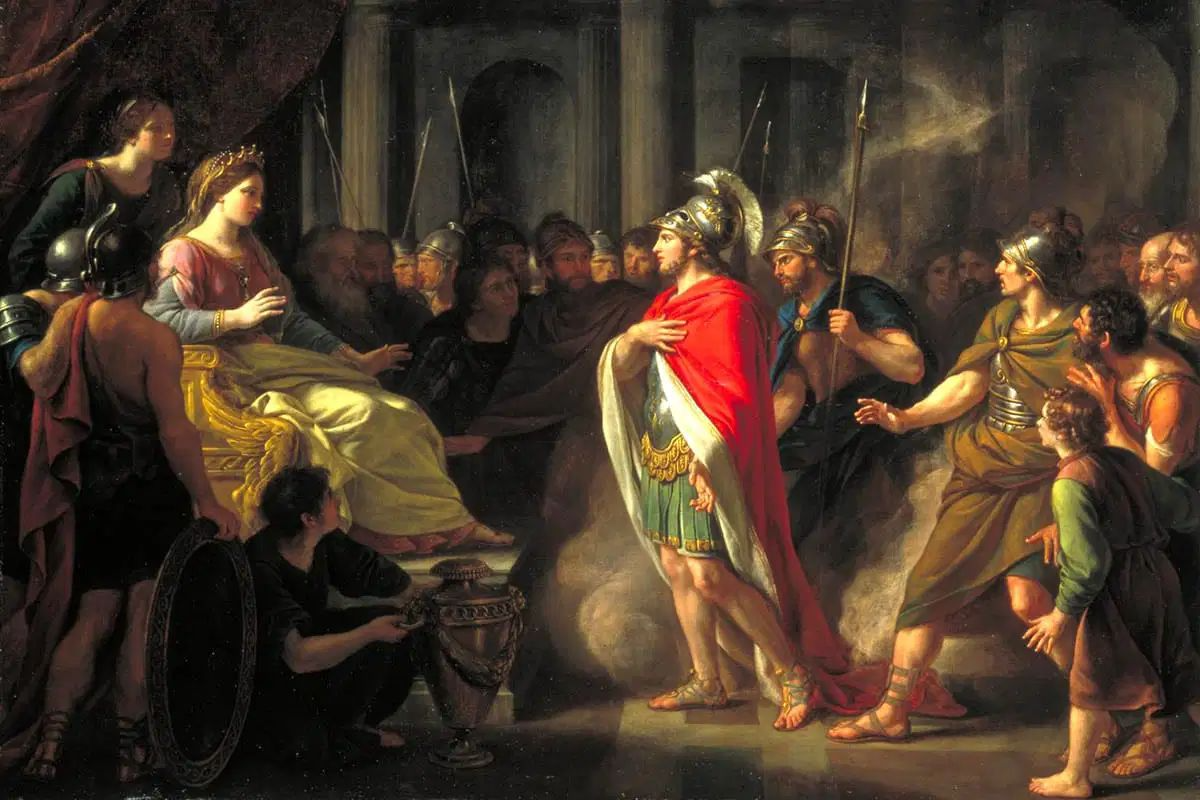
Aeneas serves as the main character of the epic and represents the ideal Roman leader. As a Trojan prince, he is the son of Anchises and the goddess Venus, which gives him both mortal and divine heritage.
What makes Aeneas special is how he embodies pietas - the Roman concept of duty to the gods, family, and destiny. This sets him apart from Greek heroes like Achilles, who focused more on personal glory. Aeneas prioritises collective responsibility over individual desires.
Throughout the poem, Aeneas faces a constant internal struggle between his personal wishes (especially his love for Dido) and his destiny to found Rome. This conflict makes him a complex and relatable character.
Note
The concept of pietas is fundamental to understanding Aeneas's character. Unlike Greek heroes who sought personal glory and honour, Aeneas consistently puts duty to the gods, family, and his people above his own desires. This makes him the perfect model for Roman virtues.
Key examples of Aeneas's character:
- He carries his father Anchises on his shoulders whilst escaping from Troy, leading his son Ascanius to safety (Book 2)
- He leaves Dido when Jupiter commands him to continue his journey to Italy (Book 4)
- In Book 12, he kills Turnus after being torn between showing mercy and seeking vengerance
Important
Important quote: "I sail for Italy not of my own free will" (Book 4) - This shows how Aeneas follows divine command rather than personal choice, demonstrating his commitment to fate over personal desire.
Dido (queen of Carthage)
Dido represents one of the most powerful and tragic female characters in ancient literature. She is portrayed as an intelligent, capable, and respected ruler who has successfully established the city of Carthage.
Her downfall comes when she falls in love with Aeneas - a love that Venus and Cupid engineer for political reasons. Dido symbolises the eternal conflict between personal passion and duty to destiny that runs throughout the epic.
As a tragic figure, Dido is abandoned by Aeneas when he follows Jupiter's command to leave. In her despair, she commits suicide and curses both Rome and Carthage to eternal enmity - a prophecy that foreshadows the Punic Wars.
Important
Dido's curse is historically significant - it foreshadows the centuries of conflict between Rome and Carthage, including the devastating Punic Wars. Her personal tragedy becomes a national prophecy.
Key examples:
- She welcomes Aeneas and his men, offering them shelter when they first arrive (Book 1)
- She confronts Aeneas about his departure, asking "Was it my death you meant when you said you loved me?" (Book 4)
- Her dying curse ensures that Rome and Carthage will remain enemies
Memorable quote: "So let there be war between our peoples and between our sons forever" (Book 4)
Turnus (the warrior opponent)
Turnus serves as Aeneas's primary human antagonist and represents everything that opposes Rome's destined rise to power. As prince of the Rutulians, he embodies the local resistance to Trojan settlement in Italy.
Turnus is brave and heroic in the traditional sense - he's an excellent warrior who fights courageously for his people. However, he's also rash and hot-headed, which ultimately leads to his downfall.
His character represents the cost of Roman expansion - the brave peoples and leaders who must fall for Rome's destiny to be fulfilled. His death at Aeneas's hands secures Rome's future in Italy.
Note
Turnus is not portrayed as evil or villainous. Instead, he represents honourable opposition to Roman expansion. His tragedy lies in being on the wrong side of destiny - he fights bravely for legitimate causes but must fall for Rome's greater purpose to be achieved.
Key examples:
- He rallies the Latin peoples to resist the Trojan invasion (Books 7-12)
- He nearly kills Aeneas in single combat during their final duel (Book 12)
- When defeated, he begs for mercy, but Aeneas kills him after seeing Pallas's belt
Significant quote: "Aeneas, I deserve it. Do not grudge me my life" (Book 12) - His final plea before death
Anchises (the father figure)
Anchises represents family loyalty, tradition, and continuity between past and future. As Aeneas's father, he symbolises the importance of respecting one's ancestors and maintaining family bonds.
Though Anchises dies in Sicily, he continues to guide his son from the afterlife. His reappearance in the Underworld (Book 6) is crucial, as he reveals Rome's destiny to Aeneas and shows him the souls of future Roman heroes.
Key examples:
- Aeneas carries him from burning Troy, demonstrating filial piety (Book 2)
- He appears to Aeneas in the Underworld, showing him Augustus and other future Roman leaders (Book 6)
Important
Important quote: "Your task, Roman, is to rule the nations with your power" (Book 6) - Anchises explains Rome's imperial destiny and the divine mandate for Roman rule.
Augustus (symbolic presence)
Augustus never appears directly in the poem, but his presence looms over the entire epic through prophecy and foreshadowing. Both Anchises and Jupiter predict Rome's greatness under Augustus's rule.
Augustus represents the climax of Roman destiny - the ultimate goal towards which all of Aeneas's struggles are directed. Virgil wrote the Aeneid to celebrate Augustus's achievements and legitimate his rule.
Note
The entire Aeneid serves as sophisticated propaganda for Augustus. By connecting him to Aeneas and divine destiny, Virgil legitimises Augustus's position as Rome's ruler and presents his reign as the fulfilment of divine will established centuries earlier.
Key examples:
- Anchises shows Aeneas the soul of Augustus in the Underworld parade of heroes (Book 6)
- The shield that Venus gives to Aeneas depicts Augustus's victory at the Battle of Actium (Book 8)
Prophetic quote: "Here is Caesar, and all the line of Iulus destined to come beneath the sky's great arch" (Book 6)
The gods
The gods play crucial roles in shaping the epic's events and represent different forces affecting Aeneas's journey.
Jupiter serves as king of the gods and ensures that fate is ultimately fulfilled. He maintains cosmic order and guarantees Rome's destiny.
Juno acts as Aeneas's primary divine enemy. She represents resistance to Rome's rise, largely because of her love for Carthage and her anger over the Trojan War.
Venus protects and supports her son Aeneas throughout his journey. She represents maternal care and divine favour for Rome.
Mercury serves as Jupiter's messenger and frequently reminds Aeneas of his duty when he becomes distracted.
Example
Divine Intervention Example: Juno stirs up storms and creates obstacles for Aeneas, whilst Venus intervenes to protect him from danger. This divine conflict mirrors the human struggles in the epic and shows how personal desires (Juno's hatred) must ultimately yield to fate (Jupiter's will).
Divine promise: Jupiter reassures Venus: "You will see the city of Lavinium and the walls of mighty Rome" (Book 1)
Study tips for exam success
When analysing characters in The Aeneid, understanding their symbolic roles and relationships is essential for exam success. Each character serves multiple purposes in Virgil's complex narrative structure.
Note
Focus on character contrasts:
- Compare Aeneas's sense of duty with Dido's passionate nature
- Contrast Aeneas's controlled behaviour with Turnus's impulsive actions
Important
Remember symbolic meanings:
- Aeneas represents duty and destiny
- Dido symbolises passion and tragedy
- Turnus embodies resistance to Roman order
Example
Using Specific Examples in Essays: Reference key episodes like the escape from Troy (Book 2), Aeneas's departure from Carthage (Book 4), the prophecy in the Underworld (Book 6), and the final duel (Book 12). Always explain how these episodes reveal character and advance Virgil's themes.
Connect to Augustan propaganda: Always link character analysis back to how they demonstrate Rome's destiny and the costs of building an empire.
Learn key quotes: Memorise short, precise quotations that capture each character's essential nature.
Summary
Key Points to Remember:
- Aeneas embodies pietas - the Roman virtue of duty to gods, family, and destiny, making him different from Greek heroes who sought personal glory
- Dido represents the tragic cost of Rome's rise - her love affair with Aeneas and subsequent suicide foreshadow centuries of conflict between Rome and Carthage
- Turnus symbolises noble resistance to Roman expansion - his death secures Rome's future but shows the price of empire-building
- The gods actively shape events - Jupiter ensures fate is fulfilled, Juno creates obstacles, Venus protects Aeneas, and Mercury provides guidance
- All characters serve Virgil's propaganda purpose - they demonstrate Rome's destined greatness under Augustus whilst acknowledging the human cost of imperial expansion