Literary Techniques (Leaving Cert Classical Studies): Revision Notes
📚Revision Notes
Literary Techniques
Virgil masterfully employs various literary techniques throughout The Aeneid to create a powerful epic that honours Homer while serving Roman political and cultural purposes. Understanding these techniques is essential for appreciating how Virgil crafts his narrative and conveys deeper meanings about Roman values and destiny.
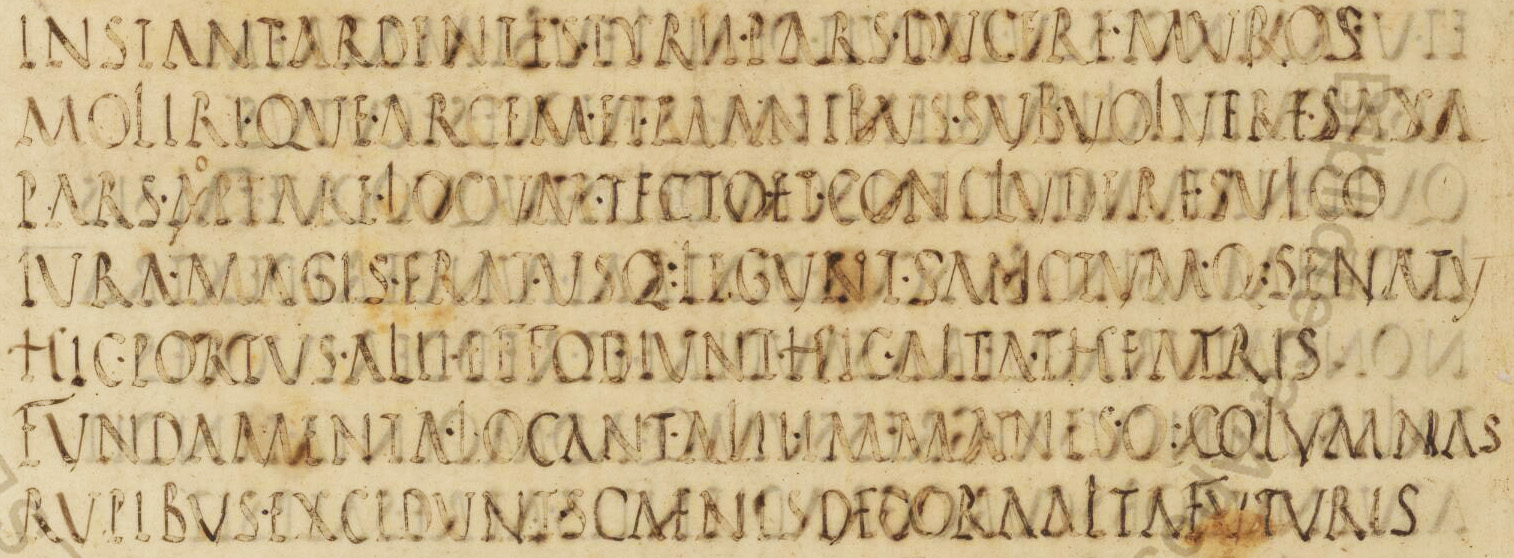
Epic conventions
Virgil follows traditional epic patterns established by Homer, but adapts them for Roman audiences. These conventions immediately signal to readers that they are experiencing a work of epic literature on par with the great Greek epics.
The poem is composed in dactylic hexameter, the same metre used in Homer's Iliad and Odyssey. This creates a rhythmic, elevated style that suits the grand subject matter and connects the work to its prestigious predecessors.
Note
The choice of dactylic hexameter was not merely traditional - it created immediate associations with Homer's epics in the minds of educated Roman readers, establishing Virgil's work as a worthy successor to the greatest Greek literature.
Virgil begins in medias res (in the middle of things), plunging readers directly into Aeneas's journey rather than starting from the beginning. This technique creates immediate dramatic tension and mirrors the structure of Homer's epics.
The invocation of the Muse establishes the poem's divine authority and sets a serious, reverent tone. This convention shows that the poet is merely a vessel for divine inspiration, lending greater credibility to the narrative.
"Arms and the man I sing..." (Book 1)
This opening line deliberately echoes Homer's Iliad and Odyssey, establishing Virgil's work as their worthy successor whilst introducing distinctly Roman themes.
Similes and metaphors
Virgil employs Homeric similes - extended comparisons that elaborate on actions or emotions - but cleverly incorporates Roman imagery related to farming, politics, and civic life. This technique makes the heroic world accessible to Roman readers by connecting epic events to familiar experiences.
These similes serve to link the heroic actions of the epic to everyday Roman life, demonstrating how Roman values like duty, order, and civic responsibility apply at all levels of society.
Example
Worked Example: Political Simile Analysis
In Book 1, Virgil compares Neptune calming the storm to a respected statesman addressing a crowd:
"Just as when rioting breaks out among the people and the common mob goes mad with rage... if they chance to see a man weighty with merit and service, they fall silent and stand with attentive ears."
This simile connects the divine intervention to Roman political experience, showing how strong leadership brings order from chaos.
Key examples include:
- Storm at sea compared to political unrest (Book 1) - reflecting Roman concerns about civil war and the need for strong leadership
- Dido's passion compared to a wound or fire (Book 4) - showing how destructive emotions can consume individuals and threaten social order
- Turnus described like a bull preparing for battle (Book 12) - emphasising his rage and the animalistic nature of uncontrolled passion
"Her love is a wound, feeding on her blood." (Book 4)
This metaphor captures the destructive nature of Dido's love whilst creating sympathy for her suffering.
Imagery
Virgil uses vivid, sensory descriptions to heighten emotional impact and create a sense of grandeur appropriate to epic poetry. His imagery serves both artistic and political purposes, making abstract concepts concrete and memorable.
Natural and violent imagery dominates war scenes, emphasising both the glory and horror of conflict. This reflects Roman attitudes towards warfare as both necessary for empire-building and devastating for individuals.
Important
Virgil's imagery never serves purely decorative purposes - every vivid description reinforces themes about Roman destiny, the cost of empire, or the tension between personal desires and civic duty.
Significant examples include:
- Fall of Troy described with images of fire and destruction (Book 2) - creating visceral horror that justifies Aeneas's quest for a new homeland
- Shield of Aeneas (Book 8) richly depicts Roman history and Augustus's triumph - transforming military equipment into a celebration of Roman destiny
"All around, the city falls in flames." (Book 2)
This imagery captures the total devastation of Troy whilst creating urgency for Aeneas's escape.
Symbolism
Virgil uses symbolic objects and actions to convey deeper meanings about Roman values, destiny, and the relationship between individual desires and civic duty.
Key symbols include:
- Aeneas carrying Anchises - symbolising duty to family and Roman traditions
- The Shield of Aeneas - representing Rome's destiny and Augustus's victory, connecting past, present, and future
- Pallas's belt - symbolising memory of friendship but also justification for revenge, showing the complexity of honour
Note
Symbols in The Aeneid operate on multiple levels simultaneously - they advance the plot, develop character, and reinforce political themes about Roman imperial destiny.
"On it he saw the story of Italy, the triumphs of Rome." (Book 8)
This quote about the shield demonstrates how objects can carry profound symbolic weight, connecting individual characters to larger historical forces.
Prophecy and foreshadowing
Prophecies structure the epic by reinforcing the inevitability of fate whilst building authority for Rome's destiny and Augustus's rule. These predictions create dramatic irony, as readers know outcomes that characters do not.
This technique adds divine authority to Rome's imperial mission, suggesting that Augustus's reign fulfils ancient prophecy rather than mere human ambition.
Notable examples include:
- Anchises's vision in the Underworld (Book 6) - revealing the future greatness of Rome and connecting Aeneas's struggles to their ultimate purpose
- Shield of Aeneas foreshadows Actium - linking the epic's events to contemporary Roman politics
Important
The frequent use of prophecy serves a crucial political function - it presents Augustus's rule not as recent political success, but as the inevitable fulfilment of ancient divine will.
"Here is Caesar Augustus, son of the deified..." (Book 6)
This prophecy explicitly connects the epic's mythical past to Augustus's present rule, legitimising imperial power.
Pathos (emotional power)
Virgil employs tragedy and emotional depth to humanise his epic, creating sympathy for characters even when they oppose Aeneas. This technique makes the poem more emotionally engaging whilst highlighting the personal cost of historical necessity.
Pathos helps readers understand that Roman greatness comes at significant human cost, making the epic more psychologically complex than simple propaganda.
Powerful examples include:
- Dido's tragic love and death (Book 4) - showing how individual desires conflict with destiny
- Turnus's plea for mercy (Book 12) - creating sympathy even for Rome's enemies
- Aeneas's grief at losing Creusa (Book 2) - demonstrating the personal sacrifices required for duty
"Unhappy Dido!" (Book 4)
The narrator's direct expression of sympathy shows how Virgil encourages emotional engagement with characters' suffering.
Characterisation and contrast
Virgil contrasts characters to highlight Roman values, using personality differences to explore themes of duty versus passion, reason versus emotion, and civic responsibility versus personal desire.
Key contrasts include:
- Aeneas (pietas/duty) vs Dido (passion) - showing the tension between personal happiness and civic responsibility
- Aeneas (duty) vs Turnus (rage) - contrasting controlled leadership with destructive emotion
- Gods mirror human emotions (Juno representing anger, Venus representing love) - suggesting that even divine beings struggle with these fundamental conflicts
Example
Worked Example: Character Contrast Analysis
The final confrontation between Aeneas and Turnus demonstrates Virgil's technique perfectly:
Turnus - driven by rage, acts impulsively, represents uncontrolled passion Aeneas - hesitates, weighs mercy against duty, represents reasoned leadership
Even in victory, Aeneas struggles with competing values, showing the psychological complexity of Roman ideals.
The epic's climax demonstrates this technique powerfully: Aeneas hesitates before killing Turnus, showing internal conflict between mercy and vengeance, before ultimately choosing duty over personal inclination.
"Aeneas stood, fierce, with death in his grasp... then, blazing with rage, he struck." (Book 12)
This quote captures the tension between competing values that drives much of the epic's psychological complexity.
Summary
Key Points to Remember:
- Epic conventions connect The Aeneid to Homer whilst establishing Roman themes and values
- Similes and imagery make heroic events relatable to Roman audiences through familiar references
- Symbolism and prophecy reinforce themes of destiny and imperial authority
- Pathos and characterisation create emotional depth and explore the human cost of historical necessity
- Always link literary techniques to Roman themes - Virgil uses these tools to serve political and cultural purposes, not merely for artistic effect