Summary (Leaving Cert Classical Studies): Revision Notes
📚Revision Notes
Summary
The Aeneid is Virgil's epic poem that tells the story of Aeneas, a Trojan hero who journeys to Italy to found what will become the Roman Empire. This 12-book epic is structured in two main halves and covers Aeneas's transformation from wandering refugee to founding father of Rome.
Note
Understanding the Epic's Structure
The Aeneid's careful organisation reflects Virgil's literary genius - he deliberately structured his work to echo and rival Homer's great epics, creating a uniquely Roman masterpiece that celebrates both heroic adventure and imperial destiny.
Structure of the Aeneid
The epic is divided into two distinct halves that mirror Homer's great works:
- Books 1-6: The "Odyssean half" - focuses on Aeneas's journey and wanderings
- Books 7-12: The "Iliadic half" - focuses on warfare and conflict in Italy
Fall of Troy (Books 1-2)
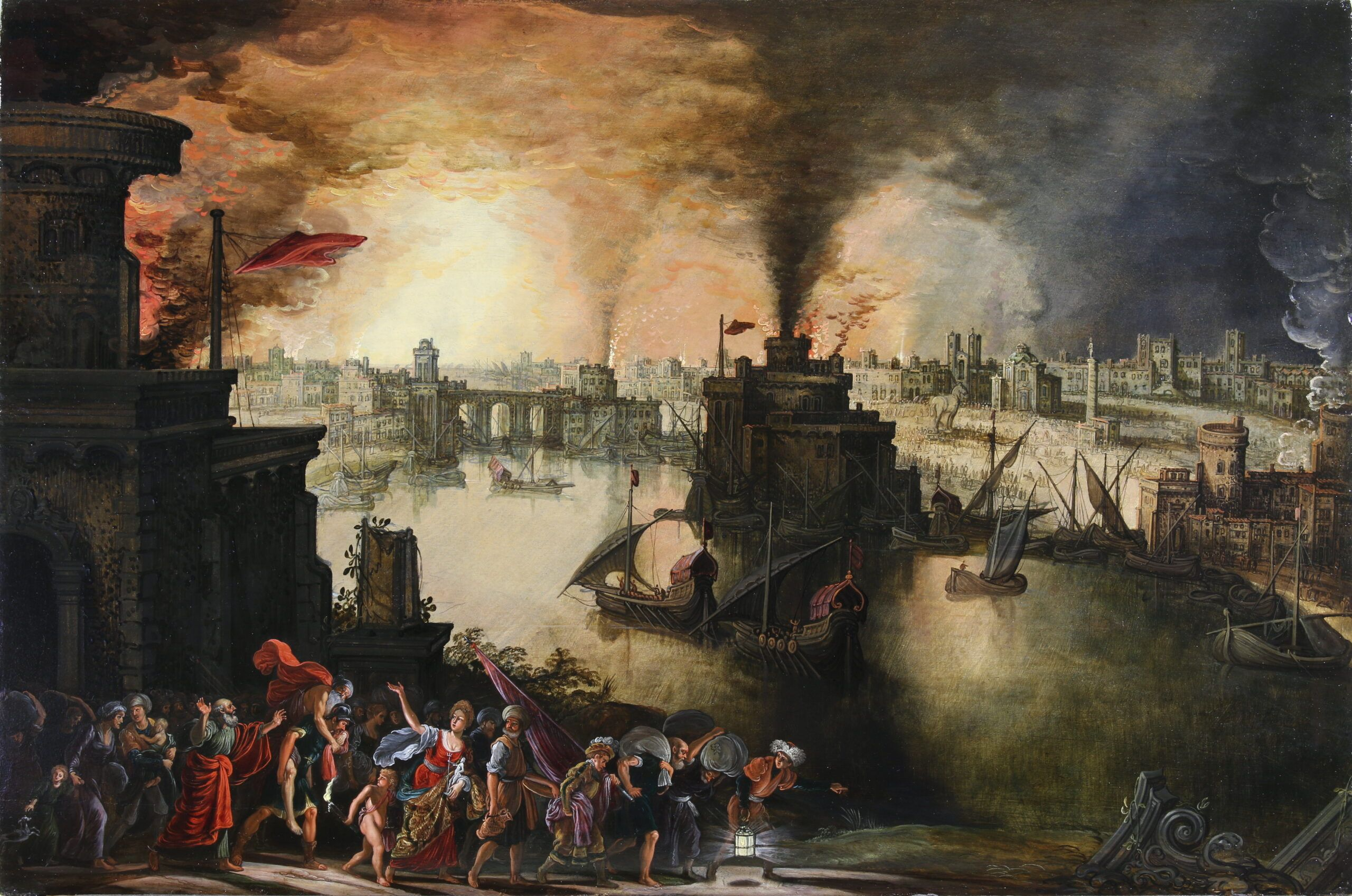
The poem begins in medias res (in the middle of things), with Aeneas already fleeing from the destroyed city of Troy. When his ship is wrecked near Carthage, he meets Queen Dido, who asks him to recount the fall of his homeland.
Aeneas describes how Troy was destroyed through the clever Wooden Horse trick devised by the Greeks. During the chaos of Troy's final night, Aeneas manages to escape the burning city, carrying his elderly father Anchises on his shoulders and leading his young son Ascanius to safety. Tragically, his wife Creusa becomes separated from them and dies during their escape.
Example
Key Quote Analysis - Demonstrating Pietas
"I lifted him high on my shoulders... my burden was sweet." (Book 2)
This quote shows Aeneas's pietas (dutiful devotion) to his father, establishing one of the epic's central themes - the Roman virtue of duty to family and gods.
Wanderings and arrival in Carthage (Books 3-4)
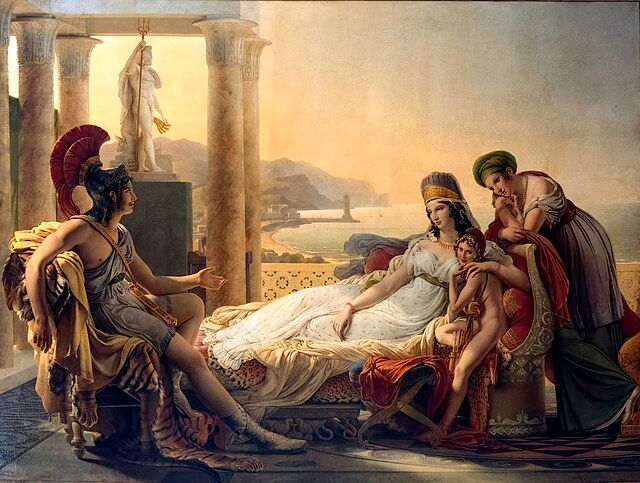
After escaping Troy, Aeneas embarks on a long series of wanderings across the Mediterranean, visiting places like Thrace, Crete, Sicily, and the land of the Cyclops. These travels eventually bring him to Carthage, where Queen Dido welcomes him warmly.
The goddess Venus (Aeneas's divine mother) causes Dido to fall deeply in love with Aeneas, and the two begin a passionate affair. However, their happiness is short-lived. Mercury, the messenger god, reminds Aeneas of his destined mission to found Rome in Italy. Despite his feelings for Dido, Aeneas abandons her to continue his journey.
Important
The Dido Episode - Duty vs. Personal Desire
Dido's response to his departure is devastating. She curses Aeneas and commits suicide, declaring eternal enmity between their peoples. This tragic episode highlights the central tension between personal desire and duty to fate that runs throughout the epic.
Example
Key Quotes - The Carthage Tragedy
Aeneas: "I sail for Italy not of my own free will." (Book 4)
- Shows Aeneas bound by divine duty over personal choice
Dido: "So let there be war between our peoples... forever." (Book 4)
- Foreshadows the historical Punic Wars between Rome and Carthage
Journey to Italy and the underworld (Books 5-6)
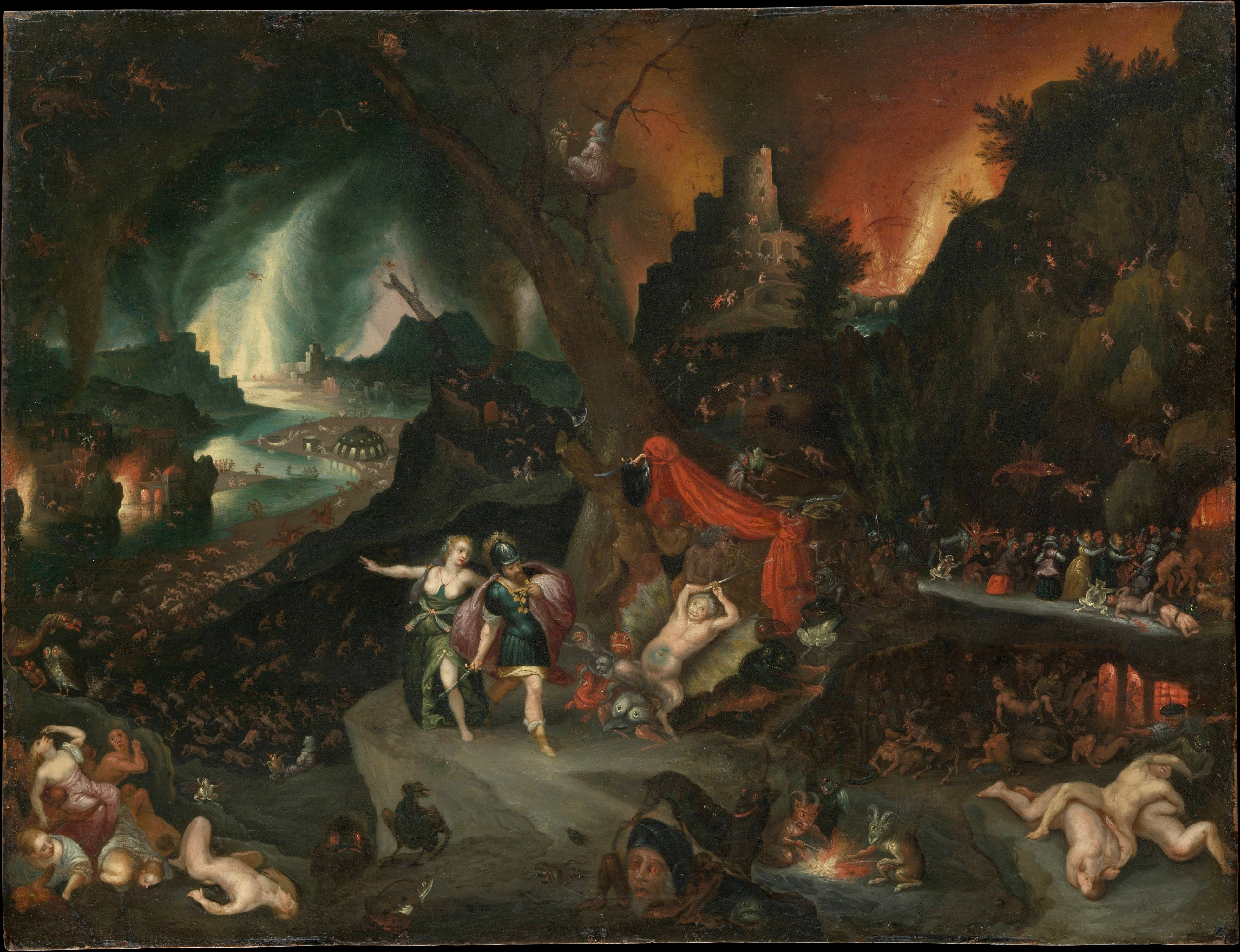
Aeneas continues his journey to Italy, first stopping in Sicily to hold funeral games for his father Anchises, who has died during their travels. The most significant event in this section occurs in Book 6, when Aeneas descends to the underworld.
In the underworld, Aeneas encounters the spirit of his father Anchises, who reveals Rome's glorious future to him. He sees a parade of heroes who will make Rome great, including Augustus Caesar (the Roman emperor during Virgil's time). This vision strengthens Aeneas's resolve and clarifies his mission.
Example
Key Quote - Rome's Imperial Destiny
Anchises: "Your task, Roman, is to rule the nations with your power... to spare the humbled, and to crush the proud." (Book 6)
This quote encapsulates Rome's imperial destiny and justifies Roman conquest as a civilising mission.
War in Italy (Books 7-10)
When Aeneas finally reaches Italy, he is initially welcomed by King Latinus, who offers him his daughter Lavinia in marriage. However, Juno (the goddess who opposes Aeneas throughout the epic) stirs up Turnus, the prince of the Rutulians, to oppose the Trojan settlement.
War breaks out between the Trojans and the Italian tribes. Aeneas forms an alliance with the Etruscans, while Turnus leads the opposition. The conflict reaches a tragic climax when Pallas, a young warrior who has become like a son to Aeneas, is killed by Turnus in battle.
Important
Aeneas's Transformation
Pallas's death transforms Aeneas, filling him with rage and a burning desire for revenge. This marks a crucial turning point in his character development - he evolves from the dutiful, sometimes hesitant leader into a fierce warrior driven by personal vendetta.
Example
Key Quote - The Turning Point
"Then came grief bitter and deep, and Aeneas burned with rage." (Book 10)
This moment shows how personal loss finally unleashes Aeneas's warrior nature, setting up the epic's violent conclusion.
Final duel and resolution (Books 11-12)
The epic reaches its climax when attempts at peace negotiations fail, and Aeneas and Turnus agree to settle their conflict through single combat. This final duel will determine the fate of both peoples.
During the battle, Aeneas wounds Turnus, who falls and begs for mercy. For a moment, Aeneas hesitates and considers sparing his enemy's life. However, when he sees that Turnus is wearing Pallas's belt as a trophy, his fury returns. In a moment of passionate vengeance, Aeneas kills Turnus, and the epic ends abruptly.

Example
Key Quotes - The Epic's Controversial Ending
Turnus: "I have earned this. Spare me, or if you must, kill me." (Book 12)
- Shows Turnus accepting defeat with dignity
Narrator: "Aeneas, blazing with rage, buried his sword deep in Turnus' chest."
- The epic ends with this violent act, leaving readers to debate whether Aeneas acted justly or gave in to uncontrolled anger
Exam preparation tips
When preparing for your Leaving Cert exam, understanding how to approach the Aeneid systematically will help you demonstrate comprehensive knowledge and analytical skills.
Important
Essential Exam Strategies
- Structure your answers around the epic's two halves: the Odyssean journey (Books 1-6) and the Iliadic war (Books 7-12)
- Learn key quotes from each major section, particularly Book 2 (Anchises), Book 4 (Dido), Book 6 (Anchises' prophecy), and Book 12 (Turnus)
- Compare with Homer: Be prepared to discuss parallels between Aeneas and Odysseus (the wanderer) as well as Aeneas and Achilles (the warrior)
- Connect events to themes: Link major plot points to themes like pietas (duty), fate versus free will, the conflict between passion and duty, and war versus peace
- Remember Virgil's purpose: The epic was written to glorify Rome and foreshadow Augustus's reign
Summary
Key Points to Remember
- The Aeneid follows Aeneas from the fall of Troy to the founding of what will become Rome
- The epic is split into two halves: journey (Books 1-6) and warfare (Books 7-12)
- Key relationships include Aeneas and his father Anchises (showing pietas), his tragic love affair with Dido, and his final confrontation with Turnus
- Major themes include duty versus desire, fate, and Rome's imperial destiny
- Virgil wrote this epic to celebrate Roman values and Augustus's rule