Context (Leaving Cert Classical Studies): Revision Notes
📚Revision Notes
Context
The author and oral tradition
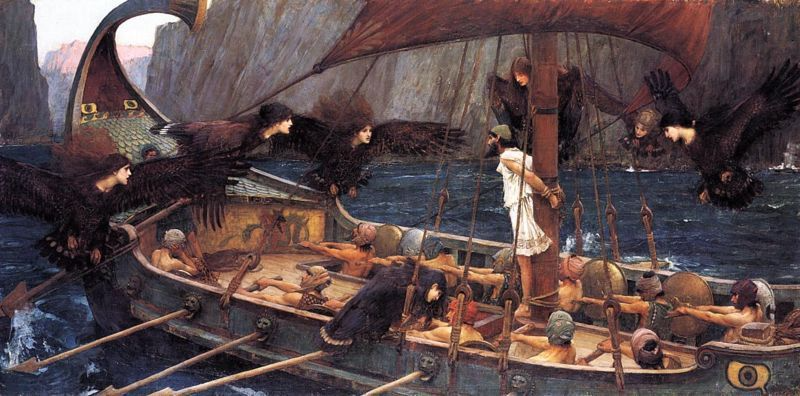
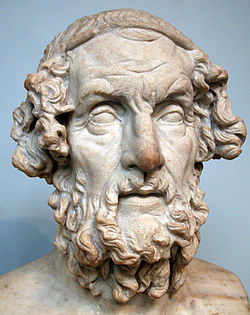
The Odyssey is traditionally attributed to Homer, a poet believed to have lived during the 8th century BC. However, understanding the poem requires appreciating its origins in ancient Greece's oral storytelling culture.
The epic emerged from a rich oral tradition where poems were performed aloud by professional storytellers called rhapsodes at festivals and gatherings. These bards didn't simply memorise entire texts word-for-word. Instead, they used special techniques to help them remember and perform these lengthy stories.
Note
Formulaic phrases played a crucial role in this oral tradition. Repeated descriptive phrases like "rosy-fingered dawn" and "swift-footed Achilles" served as memory aids for performers. These formulaic expressions also explain why we see so much repetition throughout the poem, including repeated introductions when characters give speeches.
Example
Example of Oral Tradition in The Odyssey
In Book 8, the bard Demodocus sings about the Trojan War, demonstrating how these epic tales were actually performed and shared in ancient Greek society. This scene shows us exactly how the oral storytelling culture functioned in practice.
Epic poetry characteristics
The Odyssey belongs to the genre of epic poetry, written in a specific metre called dactylic hexameter. Epic poems focus on grand themes involving heroes, gods, epic journeys, and fundamental human struggles that define what it means to be human.
This particular epic forms part of the Epic Cycle, following on from the events of The Iliad. While The Iliad concentrates on the Trojan War itself, The Odyssey explores the aftermath and the challenging journey home.
Several major themes run throughout the poem:
Note
Key Themes in The Odyssey
- Heroism appears in Odysseus's courage when facing the Cyclops Polyphemus, despite the enormous danger
- Loyalty manifests in Penelope's faithful twenty-year wait for her husband's return
- Hospitality (xenia) is demonstrated when Eumaeus the swineherd welcomes the disguised Odysseus as a beggar, showing proper Greek customs
- Revenge culminates in the dramatic slaughter of the suitors in Book 22
Example
Odysseus's Declaration of Revenge
"You dogs! You thought I'd never return from Troy. Now the day of reckoning is here."
This powerful quote from Book 22 demonstrates the theme of revenge reaching its climax in the epic.
Historical background
The Odyssey presents a fascinating blend of different historical periods. While the poem reflects the values and social structures of Archaic Greece (roughly 800-700 BC) when it was composed, the story itself is set during the Mycenaean Age (around 1200 BC).
The Trojan War provides the crucial backdrop for understanding Odysseus's journey. This legendary conflict, whether historical or mythical, shaped the entire narrative framework of the poem.
Important
The epic showcases distinctive Greek ideals, particularly honour (timé) and glory (kleos). These concepts were central to ancient Greek culture and identity. The poem suggests that a person's name and reputation must survive through their great deeds, with their kleos preserved through the songs of poets and bards.
Example
The Famous Opening Line
"Sing to me of the man, Muse, the man of twists and turns..."
This invocation highlights how Odysseus's kleos will live on through poetry, demonstrating the importance of glory and reputation in Greek culture.
Religion and the gods
Religion permeates every aspect of The Odyssey, reflecting ancient Greek polytheism and beliefs about divine justice. The gods don't remain distant figures - they intervene directly and dramatically in human affairs.
Athena serves as Odysseus's divine protector throughout his journey, while Poseidon punishes him for blinding the Cyclops Polyphemus. This divine conflict drives much of the poem's action and demonstrates how the gods could both help and hinder mortals.
Note
Mortals show their piety through sacrifice and prayer, hoping to win divine favour. However, the gods also enforce moral standards and punish wrongdoing. When Odysseus's crew slaughters Helios's sacred cattle despite clear warnings, Zeus destroys their ship as punishment (Book 12).
Example
Divine Justice in Action
Helios's threat to Zeus illustrates divine justice perfectly:
"If they do not pay me full atonement, I will go down to Hades and shine among the dead."
This shows how the gods expect proper respect and exact terrible consequences when mortals transgress.
Greek society and culture
Hospitality (xenia) represents perhaps the most important cultural value depicted in The Odyssey. This sacred custom required hosts to welcome strangers, provide food, shelter, and gifts, and ensure safe passage - all before even asking the guest's identity.
Example
Examples of Xenia in The Odyssey
Good xenia: The Phaeacians welcome Odysseus and provide him with gifts and safe passage home.
Bad xenia: The suitors abuse Odysseus's household by eating and drinking without permission or respect.
Gender roles in the poem reflect ancient Greek patriarchal society. Men like Odysseus and Telemachus are expected to be warriors, leaders, and decision-makers. Women are typically expected to be loyal and domestic - Penelope spends her time weaving at the loom, symbolising proper feminine behaviour.
Note
However, The Odyssey also presents powerful female characters who challenge these expectations. Circe and Calypso are supernatural women who test Odysseus's resolve and represent alternative models of feminine power.
The relationship between slaves and masters is illustrated through characters like Eumaeus and Eurycleia, who remain faithful servants. Their loyalty to the household symbolises the ideal relationship between social classes.
Example
Patriarchal Values Revealed
Telemachus's words to Penelope reveal the patriarchal values:
"Go back to your quarters, attend to your work, the loom and the distaff... As for giving orders, men will see to that" (Book 1).
This quote demonstrates the expected gender roles in ancient Greek society.
Literary importance
The Odyssey stands as one of the earliest and most influential works in Western literature. Its impact extends far beyond ancient Greece, continuing to inspire writers, artists, and filmmakers thousands of years after its composition.
Note
Literary Influence Through the Ages
The poem has influenced countless later works, including Virgil's Aeneid, Dante's Inferno, and James Joyce's Ulysses. T.S. Eliot recognised Joyce's Ulysses as "a modern epic" precisely because of its deliberate parallels to Homer's original.
The themes and narrative patterns established in The Odyssey - the hero's journey, the return home, the testing of character, the struggle between civilisation and chaos - continue to appear in contemporary literature and popular culture. Modern adaptations include films like O Brother, Where Art Thou? which transpose the basic story structure to different settings.
Important
The poem's enduring appeal lies in its combination of thrilling adventure with profound insights into human nature, making it as relevant today as it was in ancient Greece.
Summary
Key Points to Remember:
- The Odyssey emerged from Greek oral tradition, with formulaic phrases helping bards perform these epic tales at festivals
- As an epic poem, it explores universal themes of heroism, loyalty, hospitality, and revenge through Odysseus's journey home
- The poem reflects Archaic Greek values but is set in the Mycenaean Age, with the Trojan War providing crucial background context
- Greek polytheism pervades the story, with gods like Athena and Poseidon directly intervening in human affairs and enforcing divine justice
- The epic reveals ancient Greek social structures, including the sacred custom of xenia (hospitality), patriarchal gender roles, and class relationships between masters and servants