Walls (Leaving Cert Construction Studies): Revision Notes
📚Revision Notes
Walls
Walls form the backbone of any building structure. They are solid vertical elements that carry loads downward from the roof through to the foundations below. Understanding how walls work is essential for anyone studying construction.
Note
The distinction between load-bearing and non-load-bearing walls is fundamental to understanding building structure and safety. This knowledge is crucial for anyone working in construction or building design.
Walls can be divided into two main categories based on their structural role:
Load-bearing walls
These walls carry structural loads from above. They must sit directly on foundations to transfer the weight of the roof and upper floors safely down to the ground. Without proper load-bearing walls, a building would collapse.
Non-load-bearing walls
These walls primarily serve as partitions. They may or may not rest on foundations and are mainly used to divide interior spaces into separate rooms. They don't carry structural loads from above.
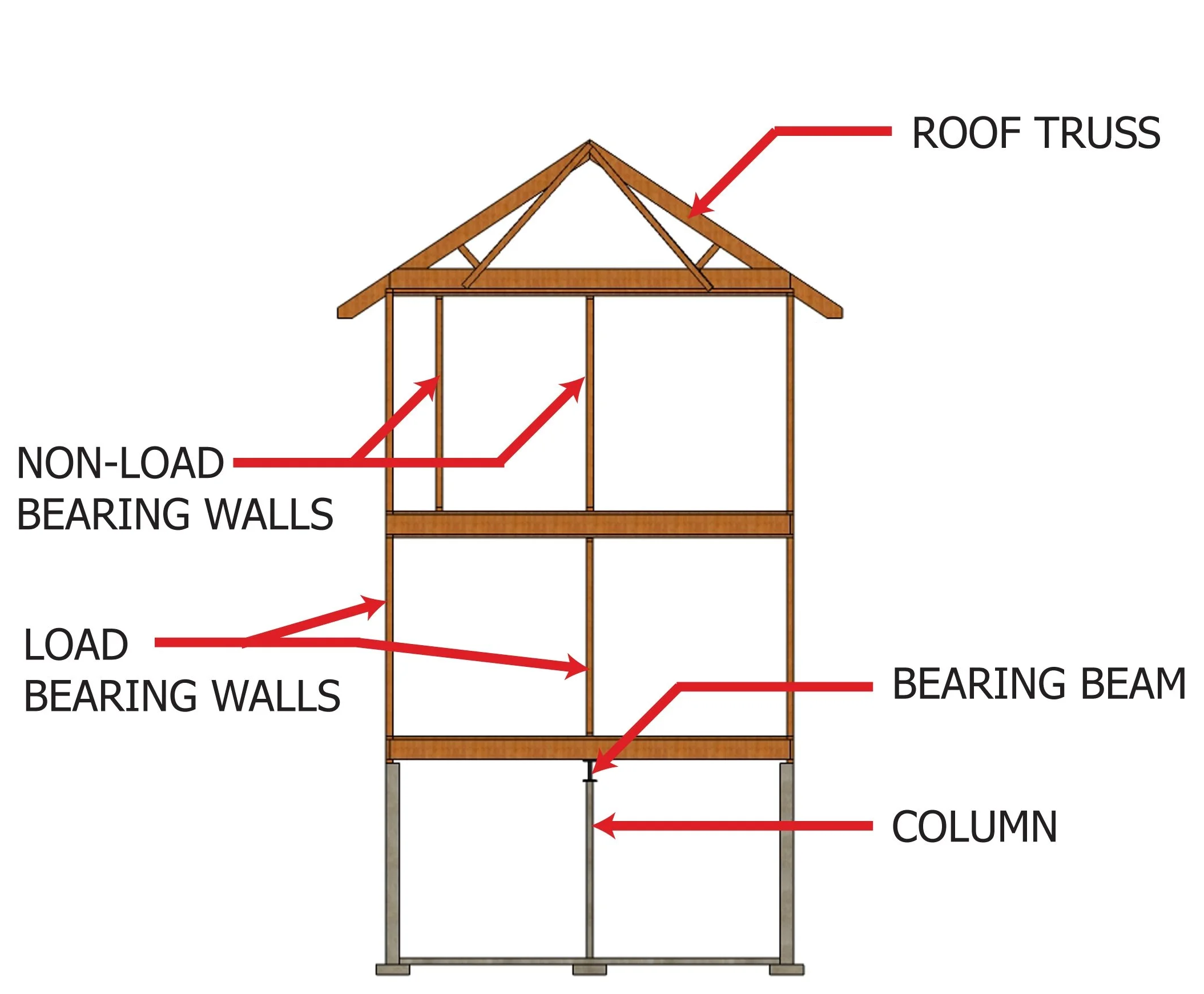
Functions of walls
Walls serve several important purposes in building construction:
Protection: Walls create a protective barrier around the building. They shield occupants from weather conditions, pollution, fire hazards, and noise from outside.
Support and stability: Load-bearing walls provide crucial structural support for roofs and ceilings. They transfer these loads safely down to the foundations, maintaining the building's stability.
Space separation: Walls act as partitions that divide large open areas into smaller, more functional rooms and spaces.
Privacy: Walls create private spaces by separating one area from another, ensuring occupants have personal space.
Construction principles
Proper wall construction is critical for building safety. Walls must be built straight, strong, and stable. Block and brick walls use a staggered pattern to improve stability and distribute loads evenly across the structure.
Rising walls
Important
Critical Construction Detail: Rising Walls
Walls built from foundation level up to ground level are called rising walls. These sections are filled with concrete for two important reasons:
- Additional strength: The concrete fill provides extra structural support to the wall system
- Moisture control: It helps direct moisture build-up outward through the external layer of cavity walls, preventing dampness problems inside
This concrete fill is not optional - it's essential for both structural integrity and moisture management.
Summary
Key Points to Remember:
- Load-bearing walls carry structural loads and must sit on foundations, while non-load-bearing walls mainly divide spaces
- Walls serve four main functions: protection, support/stability, space separation, and privacy
- Rising walls are filled with concrete to add strength and control moisture movement
- Proper construction requires walls to be straight, strong, and stable with appropriate load distribution