Information and Communications Technology (Leaving Cert Engineering): Revision Notes
📚Revision Notes
Information and Communications Technology
What is ICT?
ICT (Information and Communications Technology) refers to the infrastructure and components that enable modern computing. The primary goals of ICT are to improve how humans create, process and share data or information with each other. ICT also helps people enhance their abilities across numerous areas including business, education, medicine, problem-solving, and leisure activities.

Note
There is no universal definition of ICT because the technologies, devices and ideas related to ICT are constantly evolving. However, the term generally encompasses all devices, networking components and applications that help people and organisations interact in the digital world.
ICT vs IT
ICT is sometimes used interchangeably with IT (Information Technology). However, ICT represents a more comprehensive range of components related to computer systems and digital technologies.
Important
Key Difference: IT focuses more on managing technologies related to information and technical aspects, including software, hardware and networking. IT management does not include considerations of telecommunications devices and technologies, whilst ICT does. IT can be considered a subset of ICT.
Components of ICT
The list of ICT components is extensive and continues to grow. Some components, such as computers and telephones, have existed for decades, whilst others like smartphones, digital TVs and robots are more recent additions.
ICT components include:
- Devices (hardware)
- Software
- Middleware
- Data
- Wired networks
- Wireless networks
- Computer networks
- Communication technologies
- Cloud entities and services
- Communications protocols and interfaces
- Information security and information governance policies
Note
ICT encompasses more than just its list of components. It includes the application of all the various components working together. This combination presents the real potential, power and challenges of ICT for economic, societal and interpersonal transactions and interactions.
What technologies are included in ICT?
ICT encompasses the internet and mobile infrastructures powered by wireless networks. It includes traditional technologies such as landline telephone, radio, television and broadcast systems, which remain widely used alongside modern ICT components like smartphones, artificial intelligence (AI) and robotics.
Modern ICT technologies include:
- Internet of Things (IoT)
- Metaverse
- Virtual reality
- Social media
- Cloud computing services
- Video conferencing and collaboration tools
- Unified communications systems
- Mobile communication networks
- 5G, 6G, Web3 and quantum computing
Note
Any technology, infrastructure, component or device that enables communications, data sharing and global connectivity between humans and between humans and machines may be considered part of ICT.
Why ICT is important for businesses
For businesses, advances in ICT have brought significant cost savings, opportunities and conveniences:
- Highly automated business processes that reduce costs
- Big data capabilities that turn vast amounts of data into insights for new products and services
- ICT-enabled transactions such as internet-based shopping, telemedicine and social media that give customers more choices in how they shop, communicate and interact
Example
Business Transformation Example:
A retail company implements ICT solutions:
- Automated inventory management reduces manual counting by 80%
- Big data analytics identify customer buying patterns, increasing sales by 25%
- E-commerce platform expands market reach globally, doubling customer base
Challenges ICT creates
Despite its many benefits, ICT has created problems and challenges for organisations, individuals and society. The digitisation of data, expanding use of high-speed internet and growing global networks have created new opportunities for crime.
Bad actors take advantage of these opportunities to develop schemes that gain unauthorised access to enterprise or government information systems. They steal money, intellectual property or private information. Many cybercrimes aim to disrupt systems that control critical infrastructure, ultimately creating widespread chaos and panic.
Important
Critical Security Concerns: ICT developments have also introduced automation technologies and robots that sometimes displace workers, especially those in repetitive, low-value tasks. ICT has resulted in some people limiting their face-to-face interactions with others, creating social issues such as trolling, cyberbullying, isolation, loneliness and depression.
ICT, the digital age, and the digital divide
ICT has drastically changed how people work, communicate, learn and live. It continues to revolutionise all aspects of human experience, as computers and robots now perform many tasks humans once handled.
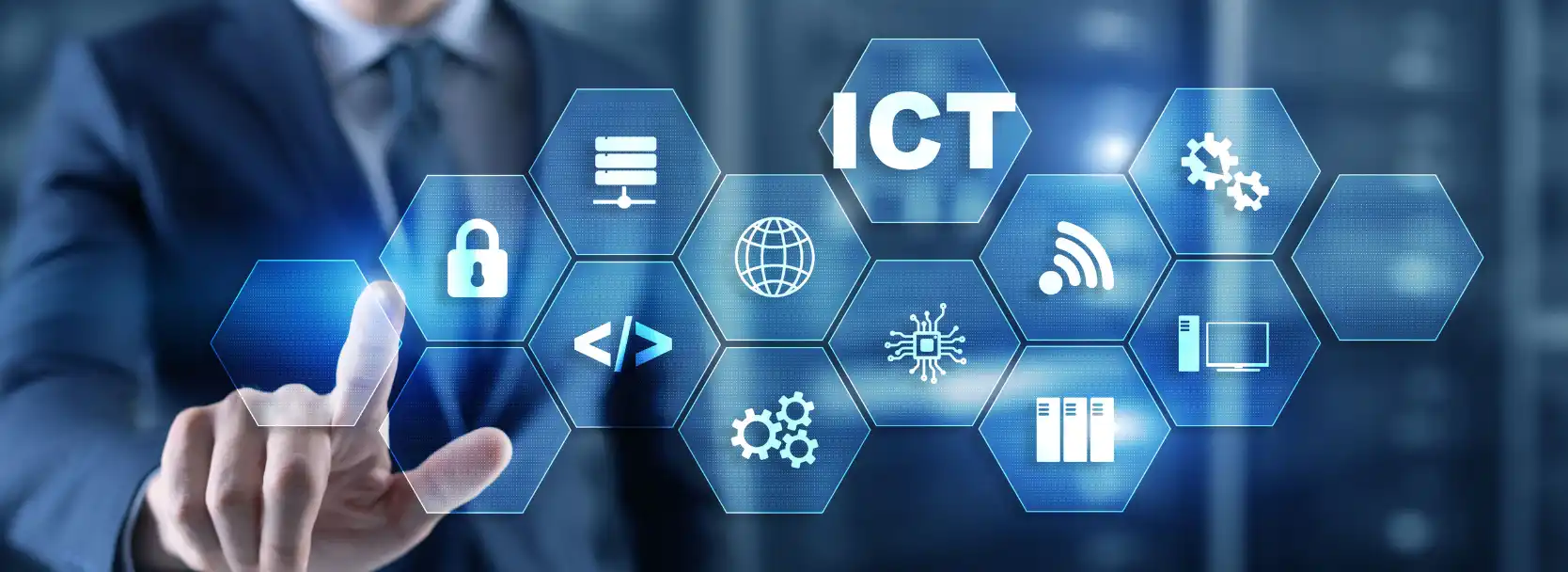
ICT's importance to economic development and business growth has been so significant that it's often credited with ushering in the Fourth Industrial Revolution. ICT underpins broad shifts in society, as individuals move from personal, face-to-face interactions to relationships in digital technology spaces.
Note
The Digital Divide Challenge: ICT capabilities are not evenly distributed, with richer countries and individuals enjoying more access to ICT. This discrepancy in access has created what is known as the digital divide. Governmental authorities and non-governmental organisations advocate policies and programmes that aim to bridge the digital divide by providing greater access to ICT among struggling individuals and populations.
The impact of artificial intelligence on ICT
Many technologies associated with ICT have existed for years, such as telephone systems and networks. Others, such as cloud technology and IoT, are more recent but equally important. The advent of AI and its rapid adoption across all aspects of ICT promises a significant future for all ICT.
AI positively impacts virtually every aspect of ICT, making everything associated with ICT better, faster, more efficient, more automated and more innovative. Areas where AI enhances ICT include:
- Network management improvements - Sophisticated network analysis algorithms can accommodate and adapt to unplanned anomalies that could disrupt network performance
- Enhanced cybersecurity support - AI can examine network anomalies, determine issues and provide recommendations or automatically address problems with minimal human intervention
- Intelligent maintenance - AI can assess device, software or network system performance, identify update needs and potential risks, and advise on maintenance requirements
- Task automation - Routine activities such as network monitoring, remote diagnostics and threat hunting can be automated, freeing technical teams for more complex tasks
- ICT performance data analytics - AI can capture and analyse vast amounts of performance data to deliver recommendations for improvements and actionable information
- User experience enhancements - AI can develop personalised content and access to specific functions based on user requirements and behaviour
- Resource optimisation - AI can optimise network bandwidth, data storage and other resources based on demand and utilisation requirements
- Service innovation - AI can use ICT resources to develop advanced applications such as smart homes, smart automobiles and IoT products and services
Note
The future of ICT will be greatly enhanced through the use of AI and related technologies, creating unprecedented opportunities for innovation and efficiency across all sectors.
Summary
Key Points to Remember:
- ICT encompasses infrastructure and components that enable modern computing, focusing on improving how humans create, process and share data
- ICT is broader than IT - it includes telecommunications whilst IT focuses more on managing information technologies
- ICT components include hardware, software, networks, data, cloud services, communication technologies and security policies
- Modern ICT challenges include cybercrime, job displacement, social issues and the digital divide between those with and without access
- Artificial Intelligence is transforming ICT by enhancing network management, cybersecurity, maintenance, automation and user experiences