Wheel Balancing (Leaving Cert Engineering): Revision Notes
📚Revision Notes
Wheel Balancing
Introduction to precision grinding
Precision grinding is a machining process that achieves extremely accurate dimensions and superior surface finishes. The process requires carefully maintained equipment, with wheel balancing being a critical maintenance procedure that ensures optimal performance and prevents damage to both the machine and workpiece.
Note
Precision grinding operations demand exceptional accuracy, often achieving tolerances within micrometres. This level of precision is only possible when all system components, including the grinding wheel, operate in perfect harmony.
Wheel balancing
Definition and purpose
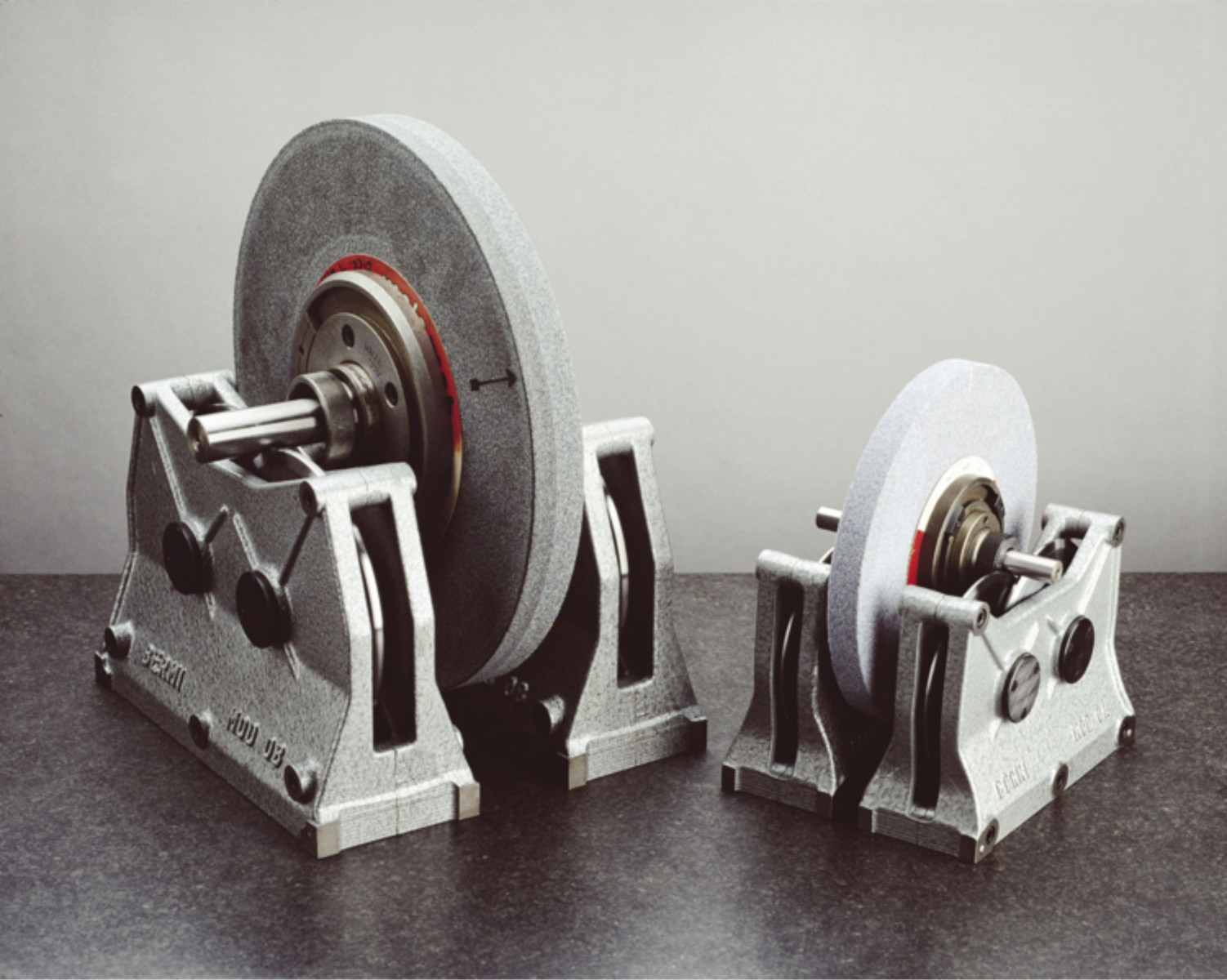
Wheel balancing is performed to eliminate vibration from an improperly weighted grinding wheel. This process is essential because unbalanced wheels create vibrations that travel through the machine structure, similar to how unbalanced car wheels cause steering wheel vibration.
Note
The physics behind wheel balancing relates to centrifugal force - even small weight imbalances become magnified exponentially as rotational speed increases, making precision balancing crucial for high-speed grinding operations.
The balancing process
Example
Step-by-Step Wheel Balancing Procedure
Step 1: Equipment setup The grinding wheel is mounted on an arbour and placed on a specialised stand containing knife edge wheels. These knife edge wheels are designed to reduce friction, allowing the wheel to move freely during the balancing process.
Step 2: Weight adjustment Small weights are positioned on the face of the grinding wheel. The wheel is then spun several times while these weights are carefully repositioned until the grinding wheel rotates freely and smoothly without vibration.
Step 3: Testing The process continues until the wheel spins easily without any noticeable vibration or irregular movement.
Why wheel balancing matters
Proper wheel balancing is crucial for several interconnected reasons that affect both safety and quality:
Important
Critical Safety Consideration: Excessive vibration can lead to wheel failure, creating dangerous flying debris that poses serious injury risks to operators and nearby personnel.
- Machine protection: Vibration can cause serious damage to the grinding machine's spindle, bearings, and other precision components
- Wheel longevity: Unbalanced wheels wear unevenly and may break apart at high speeds
- Workpiece quality: Vibration produces poor surface finishes and dimensional inaccuracies
- Safety: Excessive vibration can lead to wheel failure, creating dangerous flying debris
As grinding speeds increase, any existing imbalance becomes magnified, making proper balancing even more critical for high-speed operations.
Summary
Key Points to Remember:
- Wheel balancing eliminates dangerous vibrations that can damage machines and create poor quality work
- Small weights on the wheel face are repositioned until the wheel spins freely without vibration
- Knife edge wheels reduce friction during the balancing process, allowing accurate weight positioning
- Proper balancing becomes more critical as grinding speeds increase