Introduction to Semiconductor Technology (Leaving Cert Engineering): Revision Notes
📚Revision Notes
Introduction to Semiconductor Technology
What is a semiconductor?
A semiconductor is a special type of material that can change its ability to conduct electricity depending on external conditions. These materials sit between conductors (which allow electricity to flow easily) and insulators (which block electrical flow completely). This unique property makes semiconductors the foundation of all modern electronic devices.
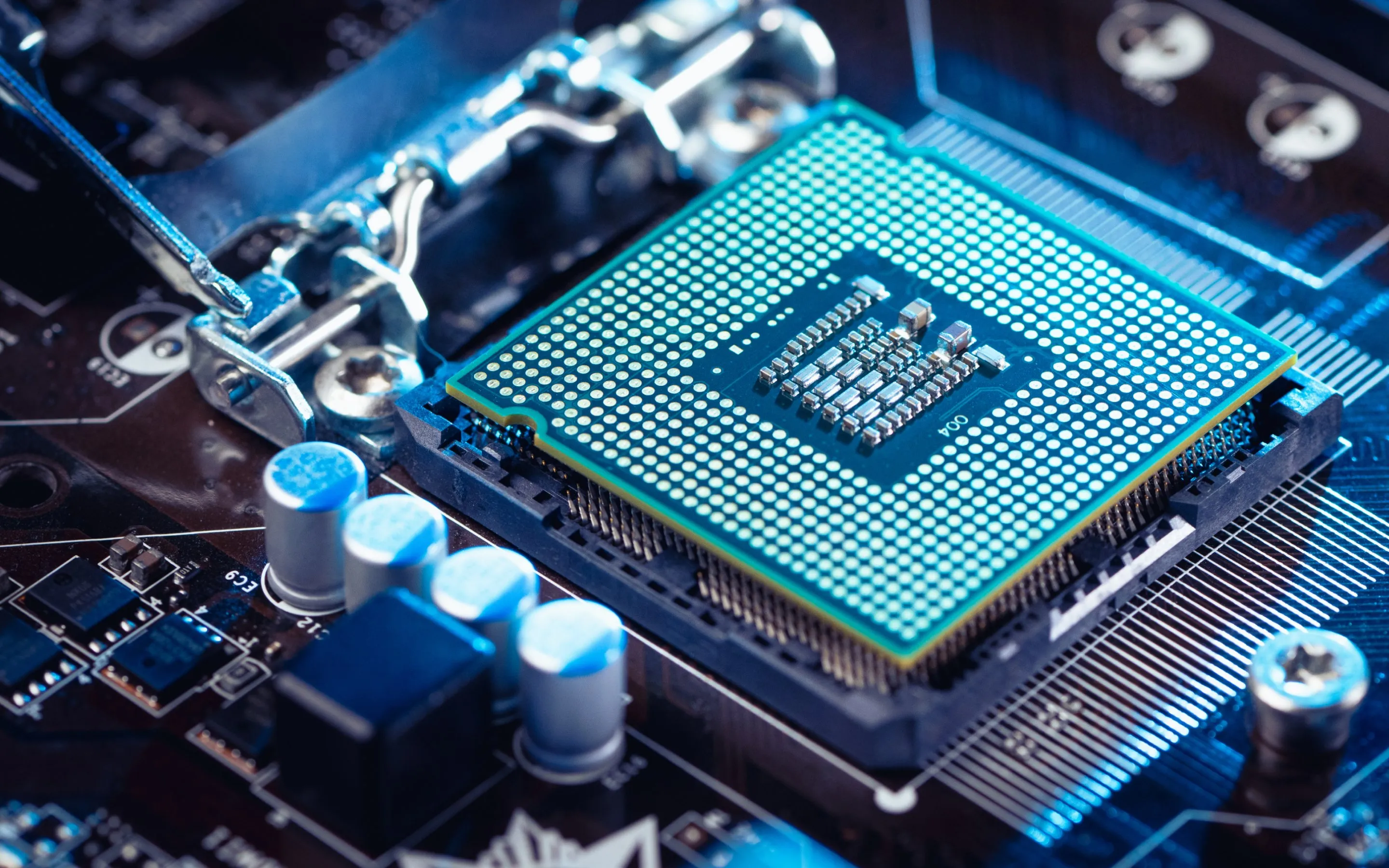
Important
A semiconductor is a substance that can act as a conductor or insulator depending on other factors, enabling it to serve as a foundation for computers and other electronic devices.
Think of a semiconductor as an electrical switch that can be turned on or off by applying electricity, light, or heat. The ability to control when electricity flows through the material is what makes semiconductors so valuable in electronics.
Key properties of semiconductors:
- Can act as either a conductor or insulator
- Electrical behaviour changes with temperature, light, or applied voltage
- Form the basis of all computer chips and electronic devices
- Most commonly made from silicon crystals
How semiconductors work
To understand semiconductors, we need to look at how atoms are structured. Electrons are arranged in layers called shells around the nucleus of an atom. The outermost shell is called the valence shell, and this is where the magic happens.
In semiconductor materials like silicon, atoms have four electrons in their valence shell. These electrons form covalent bonds with neighbouring atoms, creating a crystal structure. When atoms with similar valence electrons are close together, they share electrons and organise themselves into organised crystal patterns.
Note
Silicon is the most important semiconductor material because it has exactly four valence electrons, which allows it to form strong crystal structures that can be easily purified and processed.
Silicon is the most important semiconductor material because:
- It has exactly four valence electrons
- Forms strong crystal structures
- Can be easily purified and processed
- Abundant and relatively inexpensive
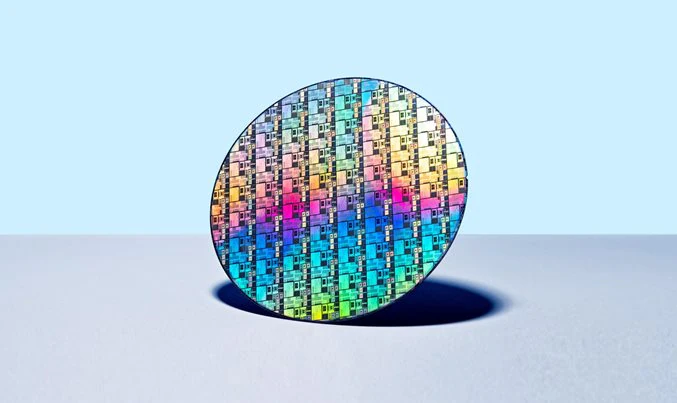
The crystal structure of semiconductors allows manufacturers to create wafers containing hundreds of individual chips at once, making mass production possible.
Types of semiconductors
Intrinsic vs extrinsic semiconductors
Intrinsic semiconductors are pure materials containing only one type of atom (like pure silicon). However, pure semiconductors have limited practical applications because their electrical properties cannot be easily controlled.
Extrinsic semiconductors are much more useful. These are created by adding small amounts of other materials (called impurities) to change the electrical properties. The process of adding these impurities is called doping.
Important
Adding the impurities is called doping. This process is essential for creating semiconductors with controllable electrical properties.
N-type semiconductors
When we add atoms that have five valence electrons (like phosphorus) to silicon, we create N-type semiconductors. The extra electron from the dopant atom becomes free to move around the crystal, creating negative charge carriers.
Note
When doped with a material with an extra valence electron, it gives an overall negative charge. This is called an N-type semiconductor.
Key features of N-type semiconductors:
- Have extra free electrons
- Negative charge carriers
- Created by doping with atoms having 5 valence electrons
- The 'N' stands for negative
P-type semiconductors
When we add atoms that have only three valence electrons (like boron) to silicon, we create P-type semiconductors. These create gaps called electron holes where electrons are missing. These holes act like positive charges.
Note
When doped with a material that is short of one valence electron, it gives an overall positive charge. These areas where an electron is needed are called electron holes. These are P-type semiconductors.
Key features of P-type semiconductors:
- Have electron holes (missing electrons)
- Positive charge carriers
- Created by doping with atoms having 3 valence electrons
- The 'P' stands for positive
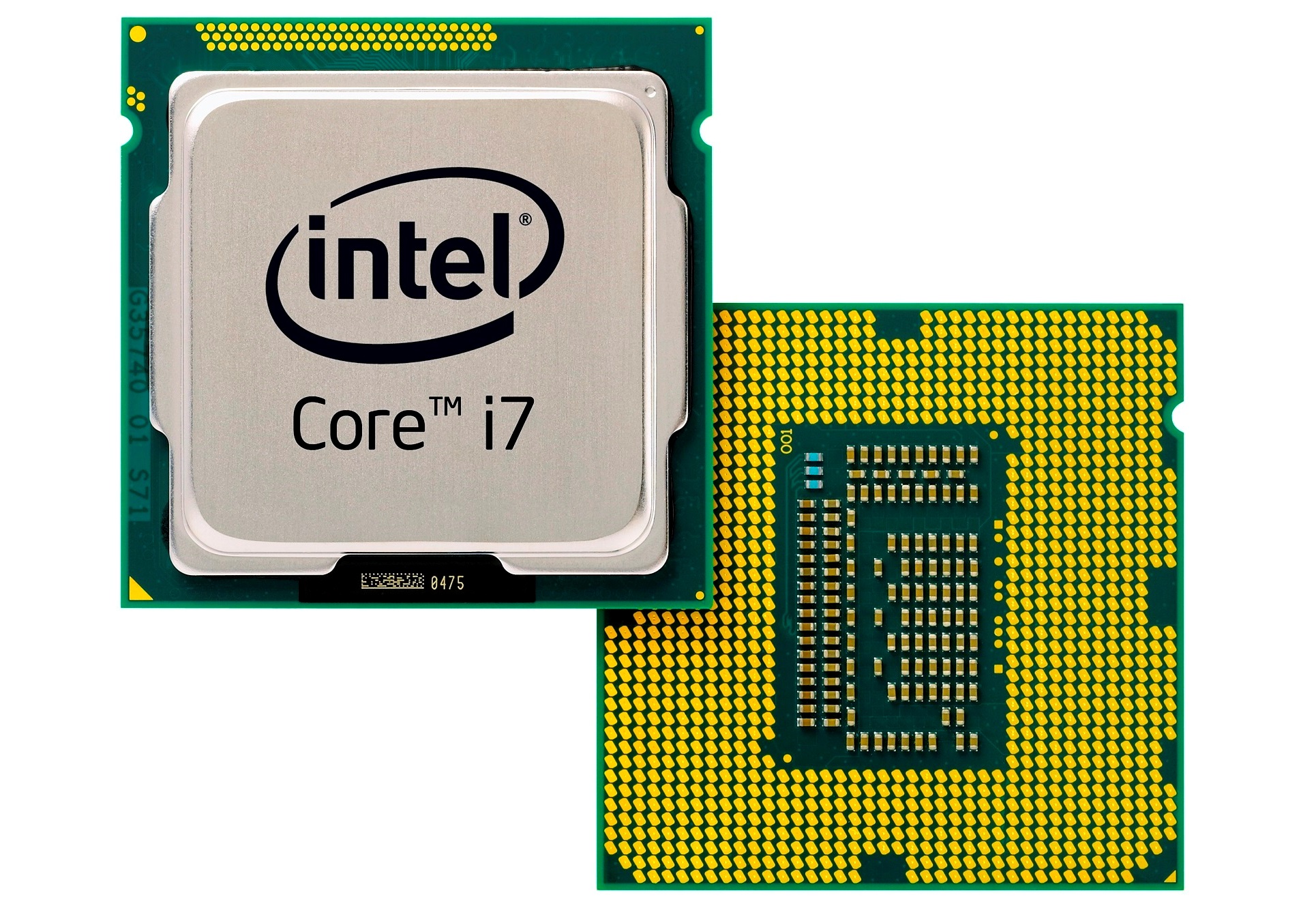
Modern integrated circuits like microprocessors contain millions of tiny semiconductor devices working together to process information.
Applications and importance in modern technology
Semiconductors are absolutely essential to modern life. When N-type and P-type materials are combined, they form junctions that can control electrical flow, creating transistors - the basic building blocks of all digital technology.
Example
Practical Applications of Semiconductors:
Consumer Electronics:
- Computer processors and memory chips
- Mobile phones and tablets
- LED lights and displays
Energy and Environment:
- Solar panels for renewable energy
- Car electronics and engine management systems
Healthcare and Industry:
- Medical devices and diagnostic equipment
- Industrial control systems
Modern technology relies on semiconductors because a single chip can perform the same functions as thousands of older vacuum tubes, but using much less power and taking up far less space. A modern microprocessor contains billions of tiny transistors working together.
The semiconductor industry requires specialised manufacturing facilities called semiconductor fabs that cost millions of pounds and take years to build. The most advanced chips can only be manufactured in a few factories worldwide, making the semiconductor supply chain critically important for global technology.
Solid-state storage devices like SSDs use semiconductor technology to store data without moving parts, making them faster and more reliable than traditional hard drives.
Key semiconductor devices
Transistors
Transistors are the most important semiconductor devices. They work as electrical switches that can be turned on or off by applying a small control voltage. Modern computer chips contain billions of these tiny switches working together.
Note
Transistors are formed by combining N-type and P-type materials, creating junctions that can control electrical flow with remarkable precision.
Diodes
Diodes allow electricity to flow in only one direction. They are created by joining N-type and P-type materials together, forming a junction that blocks reverse current flow.
Integrated circuits
Integrated circuits (ICs) combine many transistors, diodes, and other components on a single semiconductor chip. These range from simple circuits with a few components to complex microprocessors with billions of transistors.
Summary
Key Points to Remember:
-
Semiconductors are materials that can act as conductors or insulators depending on conditions - they're the foundation of all modern electronics
-
Doping involves adding impurities to pure semiconductors: N-type (extra electrons) and P-type (electron holes) create controllable electrical properties
-
Silicon is the primary semiconductor material because it has four valence electrons, making it perfect for forming crystal structures and creating stable electronic devices
-
Transistors formed by combining N-type and P-type materials act as electrical switches, enabling all digital technology from mobile phones to computers
-
The semiconductor industry is critical to modern society, with applications ranging from renewable energy systems to medical devices and communication technology