Military Technology & Advances in Information Technology (Leaving Cert History): Revision Notes
📚Revision Notes
Military Technology & Advances in Information Technology
The United States has made significant military and space technology advances driven by various political, economic, and strategic factors. Understanding these developments helps explain the reasons for high military spending, the creation of nuclear bombs, and the establishment of various missile and defence systems.
Reasons for High Military Spending
- Cold War Tensions - The primary driver of high military spending during the mid-20th century was the Cold War. The ideological and military rivalry between the U.S. and the Soviet Union led to an arms race, with each side striving to outdo the other in military capability.
- National Security - The need to protect national interests and maintain global dominance required significant investment in advanced technology and military capabilities.
- Technological Innovation - The U.S. aimed to stay ahead of potential adversaries by continually developing new technologies, which was believed to be essential for maintaining a strategic advantage.
Nuclear Bomb Development
- Manhattan Project - During World War II, the U.S. initiated the Manhattan Project, a secret programme to develop the first atomic bomb. This effort was motivated by fears that Nazi Germany was also working on nuclear weapons.
- Hiroshima and Nagasaki - The atomic bombs dropped on Hiroshima and Nagasaki in 1945 demonstrated the devastating power of nuclear weapons and marked the beginning of the atomic age. The hydrogen bomb, or thermonuclear bomb, represents a significant advancement over the atomic bomb. Developed in the early 1950s, its creation was driven by the Cold War arms race between the United States and the Soviet Union. Unlike atomic bombs, which rely on nuclear fission, hydrogen bombs use nuclear fusion—the same process that powers the sun. This results in a much more powerful explosion. The U.S. conducted the first successful test, Ivy Mike, in 1952.
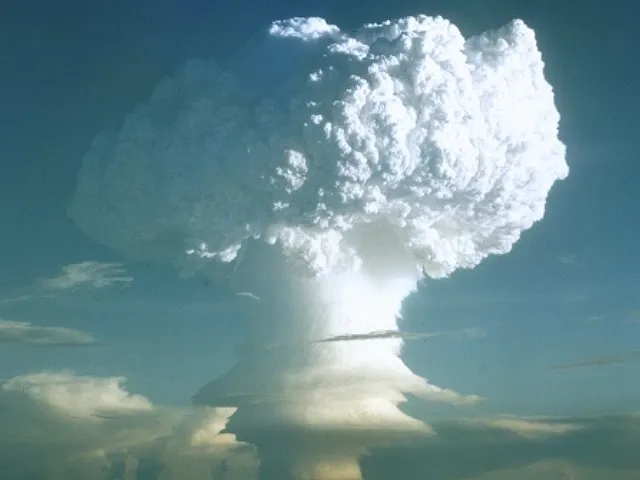
The sheer destructive power of hydrogen bombs, which can be hundreds or even thousands of times more powerful than atomic bombs, marked a new era in nuclear weapons. The development of these bombs intensified fears of global annihilation. It significantly influenced military strategies, emphasising deterrence and the Mutually Assured Destruction (MAD) policy to prevent any direct conflict between nuclear-armed superpowers.
Missiles
- Intercontinental Ballistic Missiles (ICBM) - ICBMs, capable of delivering nuclear warheads over long distances, became a cornerstone of the U.S. strategic deterrent. They could strike targets anywhere in the world.
- Pershing Missiles - These were medium-range ballistic missiles deployed in Europe during the Cold War to counter the Soviet threat. The Pershing II was designed for rapid deployment and had advanced accuracy.
- Minuteman Missiles - Minuteman ICBMs were solid-fuelled missiles that could be launched quickly and were highly reliable. They became a key part of the U.S. strategic missile force.
- Polaris Missiles - These submarine-launched ballistic missiles (SLBMs) provided a secure second-strike capability. Deployed on submarines, Polaris missiles could be launched undetected from beneath the ocean.
Mutually Assured Destruction (MAD)
- The doctrine of MAD posited that if both the U.S. and the Soviet Union had enough nuclear weapons to destroy each other, neither would initiate a conflict. The potential for total annihilation acted as a deterrent against nuclear war.
- Arms Race: This doctrine fuelled the arms race, with both superpowers continually increasing their nuclear arsenals to maintain the balance of power.
Defence Systems
- Distant Early Warning (DEW) Line - This network of radar stations in the Arctic was designed to detect incoming Soviet bombers and provide early warning of an attack on North America.
- Airborne Warning and Control System (AWACS)—AWACS aircraft provided radar surveillance and control, allowing for the detection and tracking of enemy aircraft over vast distances.
- SAMOS - The SAMOS satellite programme aimed to provide real-time reconnaissance and surveillance from space, enhancing U.S. intelligence capabilities.
- North American Aerospace Defence Command (NORAD) - NORAD was established to provide integrated aerospace warning and defence for North America. It coordinated the detection and response to potential air and space threats.
Information Technology - How it Advanced
The First Computers
The first computers were developed during World War II to break codes, with Alan Turing's work at Bletchley Park being the most famous. In 1946, ENIAC was built at the University of Pennsylvania, becoming the world's first electronic, large-scale, general-purpose computer. It measured approximately 2.1 metres by 1 metre by 30 metres and contained 19,000 vacuum tubes and 6,000 switches. It could add 5,000 numbers in one second and was used by the military to perform initial calculations for the hydrogen bomb, artillery shell trajectory tables, and other military and scientific purposes.
In 1951, the Universal Automatic Computer (UNIVAC 1) became the first computer for commercial use. By 1953, International Business Machine (IBM) 650 and 700 series computers were launched, using transistors instead of vacuum tubes due to their smaller size and greater reliability.

Personal Computers
In the late 1960s, engineers at Intel invented the microchip to replace the transistor, which became the heart of future computers. With microchips, computers became smaller, more powerful, and more reliable, capable of running many programmes simultaneously. In 1976, Steve Wozniak and Steve Jobs designed the Apple I, the first computer with a graphical interface usable at home or in the office. Apple was the first to offer a Windows-type graphical interface.
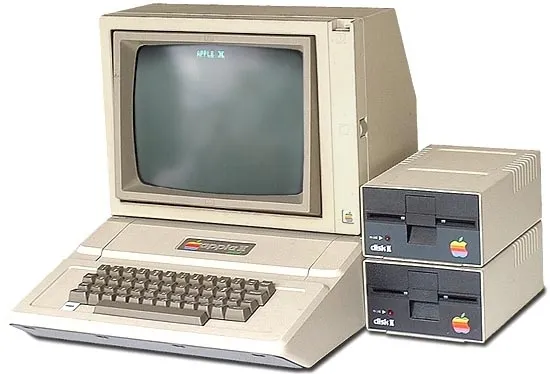
Modern computers featured keyboards, mouse controls, and 3.5-inch disc floppy drives. In 1980, the Microsoft Disc Operating System (MS-DOS) was created, and in 1981, IBM mass-produced personal computers for home and office use.
The Internet, originally the ARPANet (Advanced Research Projects Agency Network), began as a military computer network in 1969. In 1990, Tim Berners-Lee invented the networked hypertext system, making the World Wide Web available to the general public.
Computer Industry
The computer industry became vital to the U.S. economy. Research and development for computers were concentrated in areas like Silicon Valley, California. In 1958, the computer industry produced about $1 million worth of goods, growing to $17 million by 1978 and exploding to $100 billion by 1990. By the 1990s, the U.S. had the largest computer industry in the world and the most extensive use of computers.
Impact of the Computer
- Military - Initially, computers calculated missile trajectories and Soviet targets. By the 1960s, they ran early warning systems to detect Soviet attacks. The U.S. military also used satellites for espionage and global communication.
- Government - Post-WWII, computers processed large amounts of data for programmes like the Great Society, the census, and the National Security Agency's surveillance.
- Business - By the 1970s, computers managed vast amounts of data in finance and banking. This early adoption helped the U.S. emerge as the largest economy during the Cold War.
- Personal Use - In the 1980s, personal computers became available for home use, revolutionising daily life with gaming and working from home. The Internet revolutionised communication and information access in the 1990s.
Key Personality - Rachel Carson (1907-1964)
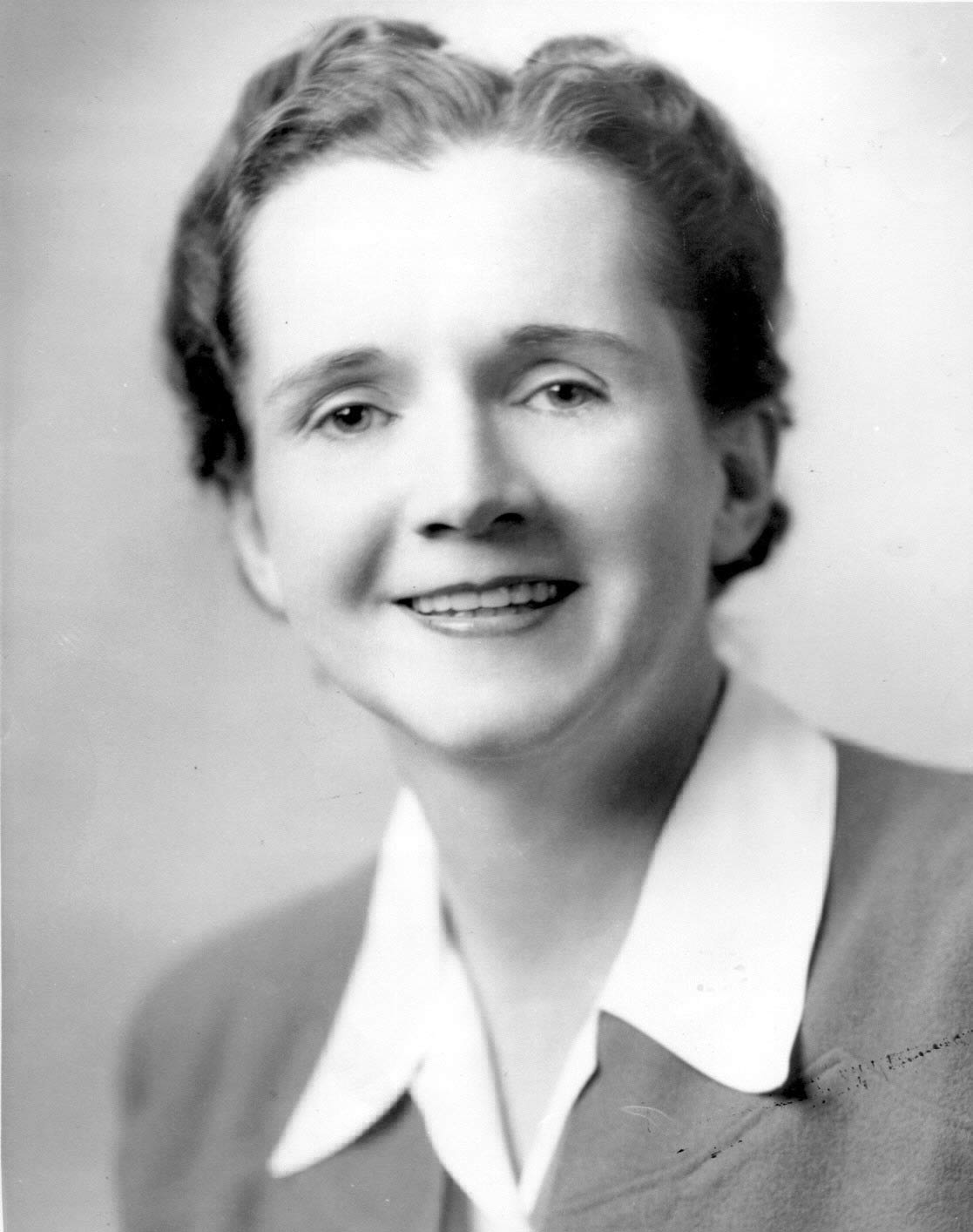
Rachel Carson is credited with founding the modern environmental movement. She worked as a marine biologist for the U.S. Bureau of Fisheries and published popular science books on oceans and sea life. Her research on pesticides' impact on ecosystems, particularly in her 1962 book "Silent Spring," raised global awareness of environmental hazards. She challenged the belief that technological progress was unerringly positive, advocating for regulating harmful chemicals like DDT. Carson's work faced significant opposition from the chemical and agricultural industries but was endorsed by a presidential commission set up by President Kennedy. She passed away from bone cancer in 1964.