Focus on: Rosa Parks (Leaving Cert History): Revision Notes
📚Revision Notes
Focus on: Rosa Parks
One of the key figures in all of the Civil Rights Movement is Rosa Parks. Below is a series of key context notes on her life and her significance as a catalyst for the Bus Boycott. Use these context-filled notes to inform any essay you write on the Civil Rights Movement.
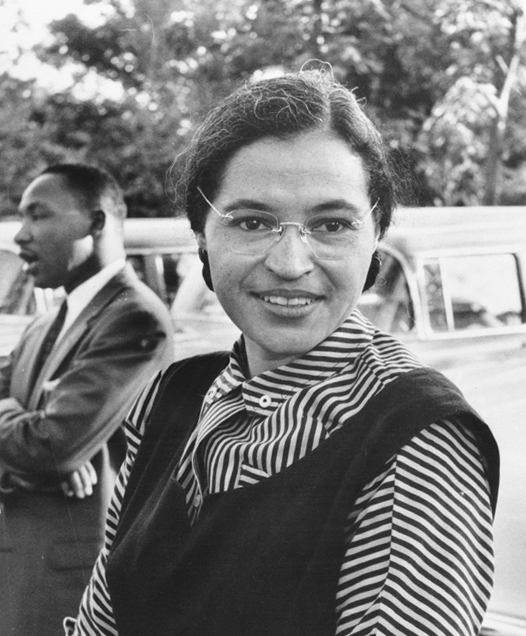
Early Life and Background
Rosa Louise McCauley Parks was born on February 4, 1913, in Tuskegee, Alabama. She grew up in a time of strict racial segregation and witnessed first-hand the harsh realities of racism in the South. Her parents separated when she was young, and her mother and grandparents raised her in Pine Level, Alabama. They emphasised the importance of self-respect and standing up for one's rights.
Education and Early Influences
Rosa Parks attended the Industrial School for Girls in Montgomery, which was a private school founded by white northerners. She later enrolled in Alabama State Teachers College for Negroes (now Alabama State University), but had to leave to care for her ailing grandmother and later her mother. Despite these challenges, she was determined to continue her education and improve her circumstances.
Rosa Parks married Raymond Parks in 1932. Raymond was an active member of the NAACP (National Association for the Advancement of Coloured People), and his involvement in civil rights issues greatly influenced Rosa. Together, they worked on various issues, including cases involving racial injustice and voter registration for Black people.
Civil Rights Activism and NAACP Involvement
Rosa Parks became heavily involved with the NAACP in the 1940s. She served as the secretary of the Montgomery chapter, working closely with other civil rights leaders to fight against racial discrimination and injustice. Her role in the NAACP allowed her to support and document numerous cases of racial inequality, preparing her for the significant role she would later play in the civil rights movement.
The Montgomery Bus Boycott
On December 1, 1955, Rosa Parks' act of defiance on a Montgomery city bus became a pivotal moment in U.S. history. Parks refused to give up her seat to a white passenger, which was required by the city's segregation laws. Her arrest for this act of civil disobedience sparked the Montgomery Bus Boycott.
The boycott, led by Dr. Martin Luther King Jr. and the Montgomery Improvement Association, lasted 381 days. It successfully ended with the Supreme Court ruling that segregation on public buses was unconstitutional. This victory was a major milestone in the civil rights movement and highlighted the power of peaceful protest and collective action.
Legacy and Recognition
Rosa Parks is often referred to as "the mother of the civil rights movement" due to her courageous stand and the impact it had on the fight for racial equality. Her actions inspired countless others to join the movement and work towards ending segregation and discrimination in the United States.
Throughout her life, Parks received numerous accolades and awards for her contributions to civil rights, including the Presidential Medal of Freedom in 1996 and the Congressional Gold Medal in 1999. She continued to be an advocate for justice and equality until her death on October 24, 2005.
Key Quotes to use in essays
"I would like to be remembered as a person who wanted to be free... so other people would be also free."
"I have learned over the years that when one's mind is made up, this diminishes fear; knowing what must be done does away with fear."
"Each person must live their life as a model for others."