The Apollo Missions - Launch, Journey and Landing - The Return and Media Reaction (Leaving Cert History): Revision Notes
📚Revision Notes
The Apollo Missions - Launch, Journey and Landing - The Return and Media Reaction
Note
Now that the general cause and context have been established, it is important to detail exactly what the Apollo missions entailed and how they shaped the course of history. Below are key notes on the various Apollo missions leading to Apollo 11, brief notes on the landing and return, and the opposition to the 'Space Race' as a whole. There is also a brief paragraph on Katherine Johnson and a figure providing some additional context.
Apollo Programme
Apollo was the programme designed to land a man on the Moon. NASA needed to create technology that allowed a spacecraft with three astronauts to break free of Earth's atmosphere and gravity and then propel it towards the Moon. To achieve this, NASA used technology initially developed for ICBMs (Intercontinental Ballistic Missiles) and built the Saturn V rocket. The actual Apollo spacecraft was composed of three parts:
- Command Module (CM): Known as Columbia, this housed the crew's quarters and flight control section.
- Service Module (SM): This held the propulsion and support systems.
- Lunar Module (LM): Called the Eagle by Apollo 11, this would land two of the crew on the lunar surface and return them to Columbia in lunar orbit. Apollo experienced setbacks, such as the tragic fire during a launch simulation in January 1967 that killed three astronauts. However, the programme continued, and by December 1968, Apollo 8 successfully orbited the Moon. In May 1969, Apollo 10 performed a full practice run for the Moon landing.
Apollo 11
Apollo 11 launched from Kennedy Space Centre on July 16, 1969. The crew included Neil Armstrong (mission commander), Edwin "Buzz" Aldrin (lunar module pilot), and Michael Collins (command module pilot). Millions of people watched the mission unfold on television. During the flight, the crew broadcast and answered questions from the media and schoolchildren. They orbited the Moon on July 19, preparing for the historic landing.
Landing on the Moon
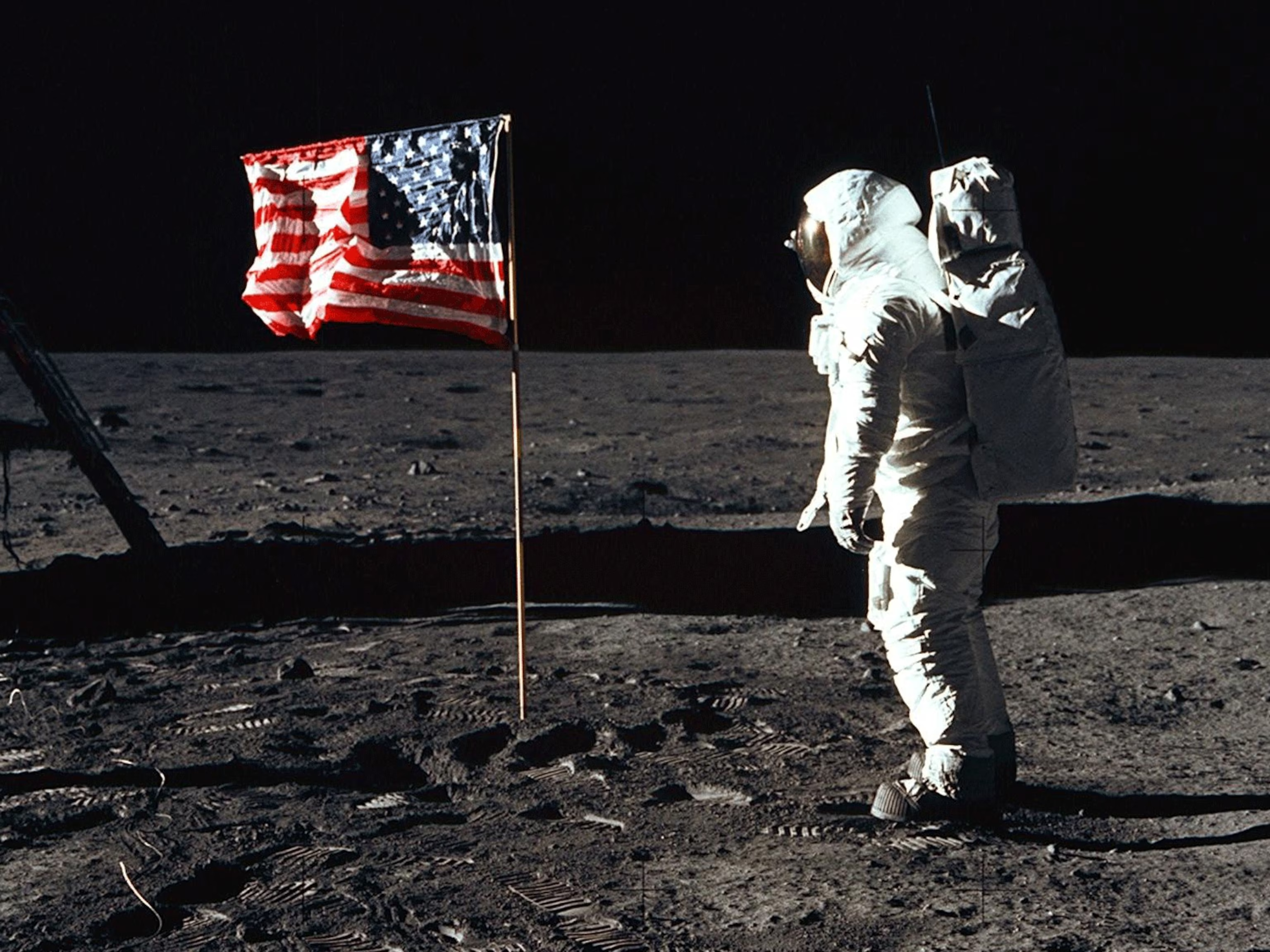
On July 20, 1969, Armstrong and Aldrin entered the lunar module, Eagle, and headed for the lunar surface. They landed in the Moon's Sea of Tranquillity, with Armstrong famously announcing, "Houston, this is Tranquillity Base. The Eagle has landed." Armstrong then descended the ladder and said, "That's one small step for man, one giant leap for mankind." Over 500 million people watched the broadcast. Aldrin joined Armstrong 20 minutes later, and the two conducted experiments, collected samples, and set up a plaque and a U.S. flag.
Return to Earth
After spending over 21 hours on the Moon, the lunar module returned to rejoin Collins in Columbia. The crew set course for Earth and splashed down in the Pacific Ocean on July 24. The USS Hornet recovered them and placed them in quarantine until August 10. The astronauts received a hero's welcome, with parades and media appearances across the U.S.
Added Context - Katherine Johnson (1918-2020)
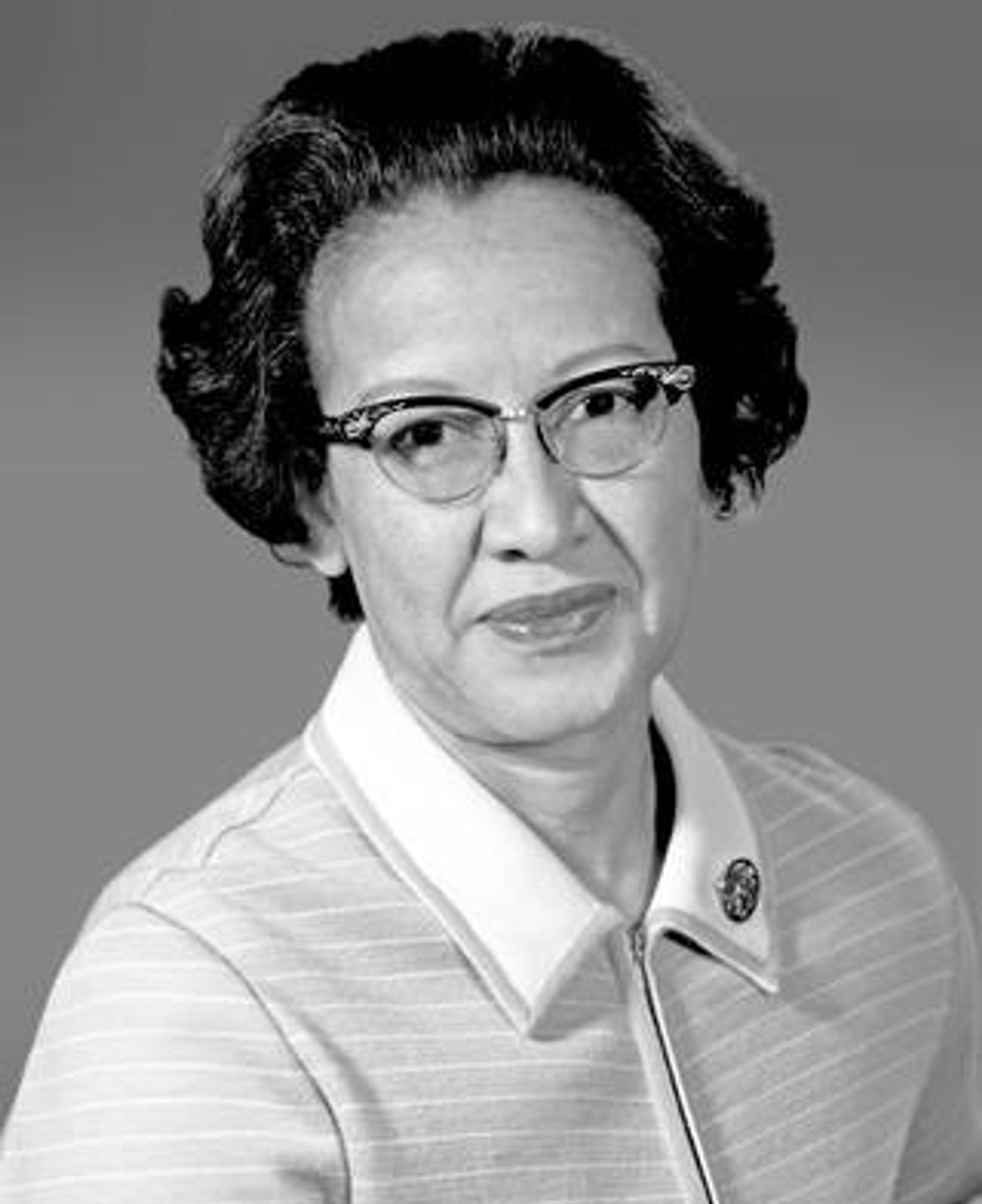
Katherine Johnson was a brilliant mathematician who worked for NASA. She played a crucial role in the success of America's space missions. After graduating high school at ten and college at 18, she joined NASA's predecessor in 1953. Johnson's calculations were critical for Alan Shepard's 1961 flight, John Glenn's 1962 orbit, and the Apollo 11 mission to the Moon. Her precise work ensured the safe return of astronauts. Johnson continued her groundbreaking work at NASA until her retirement in the 1980s when she received the Presidential Medal of Freedom in 2015.
Opposition to the Space Race
While many celebrated the Space Race, there was significant opposition. Some Americans believed the government spent too much on space, neglecting urgent social issues like poverty and civil rights. Protests, especially from African American communities, highlighted the vast sums spent on sending astronauts to space while inner-city areas struggled. Historian Roger Launius noted that throughout the 1960s, many Americans opposed the Apollo programme's costs. An African American leader at the Apollo 14 launch expressed frustration, saying, "America is sending lazy white boys to the Moon because all they're doing is looking for moon rocks. If there was work to be done, they'd send a n****r."