Ronald Reagan and STAR WARS (Leaving Cert History): Revision Notes
📚Revision Notes
Ronald Reagan and STAR WARS
Ronald Reagan and His Appeal to US Voters in the 1980s
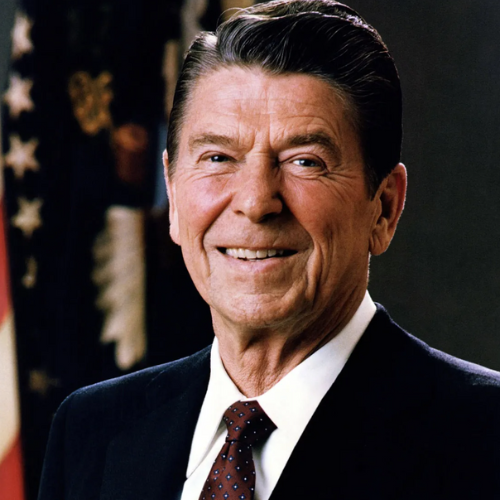
Who Was Ronald Reagan?
-
Early Life and Career: Ronald Reagan was born on February 6, 1911, in Tampico, Illinois. Before entering politics, he worked as a radio sports announcer and a Hollywood actor. Reagan served as the president of the Screen Actors Guild and became involved in anti-communist activities.
-
Political Career: Reagan was elected Governor of California in 1966 and served two terms. He ran for the Republican presidential nomination in 1968 and 1976 and eventually won the presidency in 1980.
-
Presidency: Reagan served as the 40th President of the United States from 1981 to 1989. His administration is known for its conservative policies, economic reforms, and a strong stance against the Soviet Union.
Why Reagan's Attitude Was Appealing to US Voters
- Economic Concerns: By the late 1970s, the U.S. was facing significant economic challenges, including high inflation, unemployment, and slow economic growth. Reagan's promise to cut taxes, reduce government spending, and deregulate industries resonated with voters who were frustrated with the economic situation.
- Strong Leadership Image: Reagan's background as a former actor and his effective communication skills earned him the nickname "The Great Communicator". He projected a strong, confident image that appealed to many Americans who felt uncertain and disillusioned.
- Conservative Values: Reagan's conservative stance on social issues, such as his opposition to abortion and support for traditional family values, attracted many voters who felt that American society was becoming too liberal.
- Anti-Communist Stance: During the Cold War, Reagan's firm opposition to the Soviet Union and his commitment to rebuilding the U.S. military appealed to voters who were concerned about national security and the perceived threat of communism.
- Optimism and Patriotism: Reagan's message of optimism and his belief in the American dream resonated with many voters. He frequently spoke about the potential for American renewal and greatness, fostering a sense of national pride and hope for the future.
Key Quotes
"Government is not the solution to our problem; government is the problem."
"Peace is not absence of conflict, it is the ability to handle conflict by peaceful means."
"America is too great for small dreams."
Reagan's Approach to Foreign Policy
Ronald Reagan's foreign policy, known as the Reagan Doctrine, was characterised by a strong anti-communist stance and a commitment to confronting the Soviet Union and its allies. His administration aimed to roll back communist influence globally, support anti-communist movements, and strengthen U.S. military capabilities.
- Military Buildup: Reagan significantly increased defence spending to bolster the U.S. military. This included expanding the nuclear arsenal, modernising conventional forces, and investing in advanced technology.
- Support for Anti-Communist Insurgencies: The Reagan Doctrine provided aid to anti-communist resistance movements in countries such as Afghanistan, Nicaragua, Angola, and Cambodia. This support aimed to weaken Soviet influence and promote democratic governments.
Strategic Defence Initiative (SDI) - IMPORTANT
- Introduction: Reagan announced the Strategic Defence Initiative (SDI), commonly known as "Star Wars," in 1983. It was a proposed missile defence system intended to protect the United States from nuclear attacks by intercepting incoming missiles.
- Technology: SDI envisioned using ground-based and space-based systems, including lasers and other advanced technologies, to detect and destroy incoming ballistic missiles.
- Goals: The initiative aimed to provide a strategic advantage by neutralising the threat of a Soviet nuclear strike, thereby enhancing U.S. security and deterring Soviet aggression.
Success and Criticisms of the SDI
- Successes: SDI showcased Reagan's commitment to defence and technological innovation, putting pressure on the Soviet Union to compete in the arms race.
- Criticisms: Many experts and policymakers were sceptical of SDI's feasibility, due to the technological challenges and high costs involved. Critics argued it could escalate the arms race and undermine existing arms control agreements.
Reagan's Relationship with Mikhail Gorbachev
- Reagan and Soviet leader Mikhail Gorbachev initially had a cautious relationship. Reagan's tough anti-communist rhetoric and military buildup contrasted with Gorbachev's more reformist approach to Soviet governance.
- The two leaders held a series of high-profile summit meetings that significantly impacted U.S.-Soviet relations:
- Geneva Summit (1985): The first meeting where both leaders expressed a desire to improve relations and reduce the risk of nuclear war.
- Reykjavik Summit (1986): Although no agreement was reached, this summit laid the groundwork for future arms control negotiations.
- Washington Summit (1987): The Intermediate-Range Nuclear Forces (INF) Treaty was signed, eliminating an entire class of nuclear missiles.
- Moscow Summit (1988): Further discussions on arms control and bilateral cooperation, highlighting the improving relationship.
- Reagan's willingness to engage in dialogue with Gorbachev, combined with his strong defence policies, contributed to a thawing of Cold War tensions. Gorbachev's reforms (glasnost and perestroika) and the improved U.S.-Soviet relations under Reagan played a significant role in the eventual end of the Cold War.