Focus on: Mohammad Ali (Leaving Cert History): Revision Notes
📚Revision Notes
Focus on: Mohammad Ali
Note
In the Leaving Cert exam, it is not uncommon to see a question asking about key figures in US culture or various movements in the US and asking you to pick one or two of them to talk about in detail (Ali, Norman Mailer, Marilyn Monroe etc). To that end, it is always good to have a few key points on lesser-discussed US figures in your back pocket, because those questions can be quite nice and will be useful if other questions that have been asked don't match up with what you have studied. Let's look at the life and contributions of Muhammad Ali.
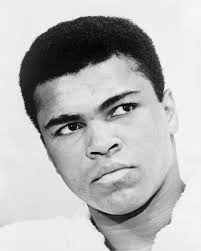
A brief look at his life
(remember, this is all narrative and shouldn't take up too much of your essay)
Muhammad Ali was born Cassius Marcellus Clay Jr. on January 17, 1942, in Louisville, Kentucky. He began boxing at age 12 and quickly demonstrated his talent. Ali won a gold medal in boxing at the 1960 Rome Olympics. In 1964, at the age of 22, he became the world heavyweight champion by defeating Sonny Liston. Shortly after his victory over Liston, Clay announced his conversion to Islam and changed his name to Muhammad Ali, embracing the teachings of the Nation of Islam and later mainstream Sunni Islam. Ali is regarded as one of the greatest boxers of all time. Known for his fast footwork and powerful punches, his career highlights include winning the heavyweight title three times and famous bouts such as the "Fight of the Century" against Joe Frazier and the "Rumble in the Jungle" against George Foreman.
His Impact and Role in the Anti-War Movement
In 1967, Ali refused to be drafted into the U.S. military, citing his religious beliefs and opposition to the Vietnam War. He famously stated;
I ain't got no quarrel with them Viet Cong... No Viet Cong ever called me (the N-word).
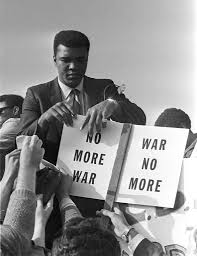
His stance made him a symbol of resistance against the war and a prominent figure in the anti-war movement. Ali's refusal to serve led to his arrest, the stripping of his boxing titles, and a ban from boxing for several years. Despite these challenges, he remained vocal about his beliefs, becoming an inspirational figure for many who opposed the war. His actions highlighted the intersection of race, religion, and politics in America and sparked debates on civil rights and personal freedom.
Contribution to US Culture
- Ali was a pioneer in sports entertainment, known for his charismatic personality, clever rhymes, and pre-fight banter.
- He brought attention to issues of racial equality and social justice, using his platform to speak out against discrimination and prejudice.
- Ali's battles in the ring, such as the "Fight of the Century" and the "Thrilla in Manila" are legendary and have become cultural touchstones.
- His life story, including his boxing triumphs and his stance on the Vietnam War, inspired numerous books, documentaries, and films, cementing his legacy in American culture.
- Ali's courage in the face of adversity, including his battle with Parkinson's disease later in life, made him a symbol of perseverance and resilience.
His Involvement in Politics
Ali's involvement in politics extended beyond his anti-war stance. He became a global ambassador for peace and humanitarian efforts. Ali travelled the world promoting humanitarian causes and working with charities. He was awarded the Presidential Medal of Freedom in 2005 for his contributions to civil rights and his humanitarian work. Ali's political and social activism influenced many athletes and public figures to use their platforms for advocacy and change. His willingness to speak out on controversial issues, even at great personal cost, underscored his commitment to his principles and left a lasting impact on both sports and society.