Food Additives (Leaving Cert Home Economics): Revision Notes
📚Revision Notes
Food Additives
What are food additives?
Important
Food additives are substances that manufacturers add to food products to improve their flavour, appearance, texture, or storage properties.
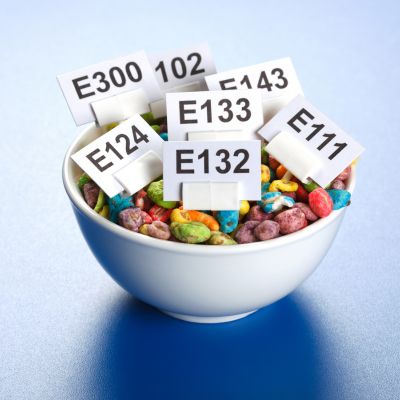
Food additives play a crucial role in modern food production and help ensure that processed foods remain safe, attractive, and nutritious for consumers. They are identified by either their chemical name or an E-number code that indicates approval for use within the European Union.
Note
E-numbers are not something to fear - they are simply European identification codes that indicate an additive has been thoroughly tested and approved as safe for consumption.
Types of food additives
Colourings
Colourings serve important functions in food production by addressing colour loss that occurs during processing and making foods more visually appealing to consumers.
Functions:
- Restore colour that gets lost during food processing
- Make naturally colourless foods more attractive to consumers
Natural colourings
These come from natural sources and are generally preferred by health-conscious consumers.
- Example: Beta-carotene (E160a) extracted from carrots
- Uses: Added to margarine, cheese, and butter to create appealing yellow colours
Artificial colourings
These are synthetic compounds created in laboratories.
- Example: Tartrazine (E102) - a bright yellow synthetic dye
- Uses: Common in soft drinks, sweets, and processed foods
Note
While artificial colourings are safe when used within approved limits, some individuals may experience sensitivity to certain synthetic dyes. Always check labels if you have known sensitivities.
Preservatives
Preservatives are essential for food safety as they prevent harmful microorganisms from growing in food products and causing spoilage or illness.
Functions:
- Extend the shelf life of food products
- Stop microbial growth that leads to spoilage
- Prevent foodborne illness
Natural preservatives
- Example: Salt - used for thousands of years as a preservation method
- Uses: Curing meats and fish products
Artificial preservatives
- Example: Sodium benzoate (E211)
- Uses: Commonly added to acidic foods such as salad dressings and carbonated drinks
Important
Without preservatives, many foods would spoil within days, leading to increased food waste and higher risk of foodborne illness. Preservatives are particularly crucial for foods with longer supply chains.
Antioxidants
Antioxidants protect food from oxidation, which is a chemical reaction that causes foods to become rancid and develop off-flavours and colours.
Functions:
- Prevent oxidation that leads to rancidity and unpleasant colour changes
- Extend the shelf life of fats and oils
Natural antioxidants
- Example: Vitamin C (ascorbic acid, E300)
- Uses: Added to fruit juices to prevent browning and maintain fresh appearance
Artificial antioxidants
- Example: Butylated hydroxyanisole (BHA, E320)
- Uses: Found in oils, snack foods, and breakfast cereals
Physical conditioning agents
These additives improve the texture and consistency of foods, making them easier to process and more appealing to consumers.
Functions:
- Improve texture and consistency of food products
- Help with food processing and handling
Examples and uses:
- Humectants (glycerol): Keep cakes and confectionery moist by retaining water
- Emulsifiers (lecithin): Help stabilise mixtures like mayonnaise that would normally separate
- Anti-caking agents (silicon dioxide): Prevent clumping in powdered foods like salt and spices
- Stabilisers (carrageenan): Provide smooth texture in dairy products like ice cream
Note
Physical conditioning agents are often the "invisible" additives that make processed foods possible. Without emulsifiers, for example, mayonnaise would separate into oil and water layers.
Flavour enhancers
Flavour enhancers work by boosting the existing taste and aroma of foods without adding any new flavours of their own.
Function:
- Enhance existing taste and aroma without adding new flavours
Example and uses:
- Monosodium glutamate (MSG, E621): Commonly used in soups, sauces, and processed meats to intensify savoury flavours
Important
Despite some misconceptions, MSG is recognised as safe by major food safety authorities worldwide. The "MSG syndrome" described in some reports has not been scientifically validated in controlled studies.
Sweeteners
Sweeteners provide sweetness with fewer calories than traditional sugar, making them popular for dietary and health purposes.
Functions:
- Provide sweetness with reduced or zero calories
- Suitable for dietary purposes and preventing tooth decay
Natural sweeteners
- Example: Stevia - extracted from the Stevia rebaudiana plant
- Uses: Added to beverages and used as a table-top sweetener
Artificial sweeteners
- Intense sweeteners (aspartame): Much sweeter than sugar, used in low-calorie foods
- Bulk sweeteners (sorbitol): Provide texture and sweetness in sugar-free gums and sweets
Flavourings
Flavourings are used to add, modify, or enhance the taste of food products.
Functions:
- Add new flavours to food products
- Modify or enhance existing flavours
Natural flavourings
- Example: Vanilla extract obtained from vanilla pods
- Uses: Essential in baking and dessert preparation
Artificial flavourings
- Example: Ethyl vanillin - a synthetic vanilla-like compound
- Uses: Common in confectionery and chocolate products
Nutritive additives
These additives boost the nutritional content of foods, helping to address dietary deficiencies in the population.
Functions:
- Supplement nutrients in food to enhance nutritional value
Examples and uses:
- Vitamin D: Added to milk to help with calcium absorption
- Folic acid: Fortified in breakfast cereals to prevent birth defects
Note
Nutritive additives play a crucial role in public health. For example, the addition of folic acid to grain products has significantly reduced the incidence of neural tube defects in newborns.
Legal controls on food additives
Legal regulations ensure that food additives are safe for consumption and properly labelled for consumer protection.
Important
Legal controls on food additives are essential for ensuring food safety and consumer protection. These regulations determine which additives can be used, in what amounts, and in which foods.
European Union legislation
Regulation (EC) No 1333/2008 serves as the main regulatory framework governing food additives throughout the EU.
Key provisions:
- Safety assessment: All additives must pass rigorous safety testing by the European Food Safety Authority (EFSA)
- Approved list: Only additives appearing on the EU's approved list may be used in food production
- Specific criteria: Each additive has defined limits for permissible foods and maximum usage levels
Labelling requirements:
- Additives must be clearly identified on food packaging using either their name or E-number
- Any potential allergens in additives must be clearly stated
Irish legislation
Food Safety Authority of Ireland (FSAI) oversees the implementation of EU regulations within Ireland.
FSAI's role:
- Monitoring: Conducts regular inspections to ensure businesses comply with legal standards
- Guidance and enforcement: Provides advice to food businesses and enforces regulations to protect public health
Consumer protection:
- Controls the use of potentially harmful additives
- Ensures transparency so consumers know what additives are in their food
International guidelines
Codex Alimentarius provides globally recognised standards for food additives that help harmonise food safety regulations between different countries.
World Health Organisation (WHO) and Food and Agriculture Organisation (FAO) work together through the Joint Expert Committee on Food Additives (JECFA) to conduct scientific assessments and make recommendations that inform global food safety standards.
Summary
Key Points to Remember:
- Food additives serve essential functions including preservation, colour enhancement, texture improvement, and nutritional supplementation
- Natural and artificial versions exist for most additive categories, each with specific applications and benefits
- All additives must undergo rigorous safety testing before approval for use in food products
- Legal controls at EU, national, and international levels ensure additives are used safely and appropriately
- Proper labelling helps consumers make informed choices about the foods they eat