Sauces (Leaving Cert Home Economics): Revision Notes
📚Revision Notes
Sauces
Introduction and importance in cooking
Sauces play a vital role in culinary arts and contribute significantly to creating balanced and appealing meals. They serve multiple purposes beyond simply adding flavour to dishes.
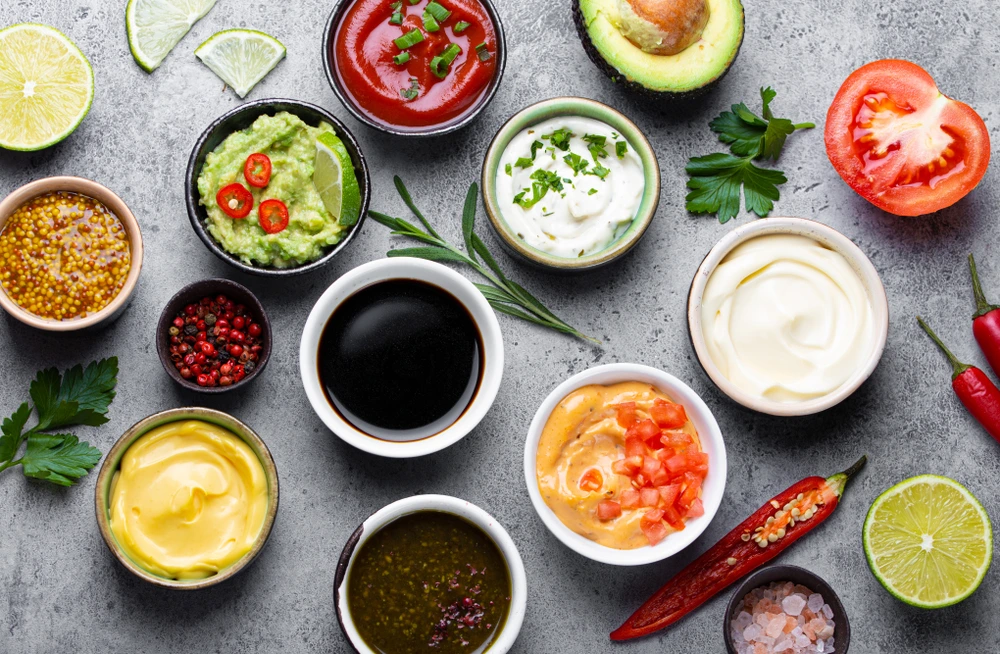
The primary reasons for incorporating sauces into our diet include enhancing flavour profiles by adding depth and complexity to food. They also improve the texture and consistency of meals, making them more appealing to eat. Visually, sauces can transform the appearance of a dish by adding colour and creating an attractive shine or gloss.
Note
From a nutritional perspective, sauces can contribute valuable nutrients such as vitamins and minerals, depending on their ingredients. For example, tomato-based sauces provide vitamin C and lycopene, making them both flavourful and nutritious additions to meals.
Sauces also add essential moisture to foods, particularly helpful with drier ingredients, improving overall palatability. Finally, they offer tremendous culinary variety, allowing cooks to create diverse flavour combinations and explore different cuisine styles.
Classification of sauces
Understanding how sauces are categorised helps in learning their preparation methods and appropriate uses.
Mother sauces
Important
Mother sauces are the five fundamental sauces in classical French cuisine that serve as the foundation for creating numerous derivative sauces.
The five mother sauces form the backbone of sauce-making:
Béchamel is a creamy white sauce created by combining milk with a white roux (butter and flour cooked together). It provides a rich, smooth base often used in dishes like macaroni and cheese or lasagne.
Velouté uses light-coloured stock (such as chicken or fish stock) thickened with a blonde roux. This creates a pale, velvety sauce commonly used in chicken pot pie or fish dishes.
Espagnole is a rich brown sauce made with brown stock, tomato purée, and mirepoix (diced vegetables), thickened using a brown roux. It serves as the base for demi-glace and other brown sauces.
Sauce Tomat is the tomato-based mother sauce, typically used as the foundation for marinara sauce and other Italian-style tomato sauces for pasta dishes.
Hollandaise differs from the others as it's an emulsion rather than a roux-based sauce. It combines egg yolks, melted butter, and lemon juice or vinegar to create the classic sauce served with eggs Benedict.
Secondary sauces
Secondary sauces are variations derived from the mother sauces by adding specific ingredients. For example, Mornay sauce is created by adding cheese to béchamel, whilst Béarnaise sauce is a variation of Hollandaise that incorporates shallots and tarragon for a more complex flavour profile.
Emulsified sauces
Important
Emulsified sauces are mixtures where oil is successfully blended with a water-based liquid, creating a stable combination using an emulsifier such as egg yolk.
These sauces rely on the principle of emulsification to combine ingredients that would normally separate. Mayonnaise is the most common example, where oil is gradually incorporated into egg yolks and acid (lemon juice or vinegar) whilst whisking continuously.
Reduction sauces
Reduction sauces are created by simmering liquids such as stock, wine, or vinegar until they concentrate and intensify in flavour. A balsamic reduction is a popular example where balsamic vinegar is reduced to a syrupy consistency.
Guidelines for successful sauce preparation
Creating excellent sauces requires attention to several key principles that ensure consistent, high-quality results.
Ingredient selection is fundamental - always choose fresh, high-quality ingredients as they directly impact the final flavour. Consider how the sauce will complement the main dish rather than overpower it.
Proper ratios and proportions are crucial for achieving the desired consistency. Balance the amount of liquid with thickening agents like roux or cornstarch. Too much thickener creates a gluey texture, whilst too little results in a watery sauce.
Note
Cooking technique plays a vital role in sauce development. Simmer sauces gently to allow flavours to meld and develop properly. For emulsified sauces, whisk continuously to prevent separation and ensure a smooth texture.
Seasoning and flavouring should be done thoughtfully throughout the cooking process. Season appropriately considering the sauce's role in the overall dish, and incorporate herbs and spices to add depth and complexity.
Achieving proper consistency requires patience and adjustment. Aim for a smooth, velvety texture that coats the back of a spoon evenly. Adjust thickness as needed using additional roux, cornstarch, or by further reduction.
Straining removes any solid particles and ensures a perfectly smooth finish. This step is particularly important for achieving professional-quality results.
Final touches can elevate a sauce significantly. Adding a small amount of butter at the end creates an attractive glossy appearance, whilst final seasoning adjustments ensure perfect flavour balance.
Characteristics of well-made sauces
Excellence in sauce-making is recognised through several distinct qualities that separate professional results from amateur attempts.
Flavour should complement and enhance the accompanying dish rather than dominate it. Well-balanced seasoning is essential - the sauce should neither be too bland nor overpowering.
Consistency is crucial for both appearance and functionality. The ideal sauce should coat the back of a spoon evenly without being too thick or too thin.
Appearance should be smooth and glossy without any signs of oil separation, curdling, or discolouration. A well-made sauce looks appetising and professional.
Texture must be completely smooth and free from lumps or graininess. Any solid particles should be completely eliminated through proper straining techniques.
Serving methods and presentation
The way sauces are presented can significantly impact the dining experience and visual appeal of dishes.
Drizzling and pouring over dishes creates an attractive presentation and ensures even distribution. This method works particularly well for reduction sauces and flavoured oils.
Dipping allows diners to control the amount of sauce they consume and creates an interactive eating experience. This approach works well for thicker sauces and is popular with appetisers and finger foods.
Layering involves incorporating sauces within dishes such as lasagne or casseroles, where the sauce becomes an integral structural component of the meal.
Popular sauce and food combinations
Certain sauce pairings have become classics due to their complementary flavours and textures. Béchamel with lasagne creates the creamy layers that define this Italian dish. Hollandaise with eggs Benedict provides the rich, buttery element that makes this breakfast dish special. Tomato sauce with pasta represents one of the most fundamental pairings in Italian cuisine. Gravy with roast meat enhances the natural flavours of the protein whilst adding moisture. Béarnaise with steak adds richness and herbal notes that complement grilled meats perfectly.
Commercial sauces: benefits and drawbacks
Ready-made sauces offer several practical advantages but also come with certain limitations that should be considered.
Note
Advantages include significant time savings and convenience, making them ideal for busy households. They provide consistent flavour and texture results, eliminating the guesswork involved in sauce preparation. Commercial sauces also typically have longer shelf lives than homemade versions, reducing food waste.
Disadvantages often include limited flavour complexity compared to freshly made sauces. Many commercial varieties contain preservatives and additives that some consumers prefer to avoid. Additionally, they frequently have high sodium content, which may not align with healthy eating goals.
Summary
Key Points to Remember:
-
Mother sauces (Béchamel, Velouté, Espagnole, Sauce Tomat, Hollandaise) form the foundation of classical sauce-making and serve as bases for countless variations
-
Proper technique is essential - gentle simmering, continuous whisking for emulsions, and careful attention to ratios ensure successful results
-
Quality ingredients and appropriate seasoning create sauces that enhance rather than mask the flavours of the main dish
-
Consistency and smoothness are hallmarks of well-made sauces - strain when necessary and adjust thickness appropriately
-
Commercial sauces offer convenience but may lack the complexity and nutritional benefits of homemade versions