Measuring and Predicting Earthquakes (Grade 10 NSC Matric Geography): Revision Notes
📚Revision Notes
Measuring and Predicting Earthquakes
Understanding earthquake measurement
Scientists have developed sophisticated methods to detect, measure, and study earthquakes. The key tool for this work is called a seismograph, which is an instrument designed to measure earthquake intensity and pinpoint the exact location where an earthquake occurs.
How seismographs work
A seismograph operates on a simple but clever scientific principle. The device uses a heavy weight suspended from a frame, with a pen attached that touches a recording surface called a seismogram. When the ground shakes during an earthquake, the heavy weight stays still due to inertia, while the recording surface moves with the ground. This creates a trace that shows the earthquake's movement patterns.
Note
The principle behind seismographs is based on inertia - the tendency of objects to resist changes in motion. While the ground (and the recording surface) moves during an earthquake, the heavy weight remains stationary, creating a clear record of the ground's movement patterns.
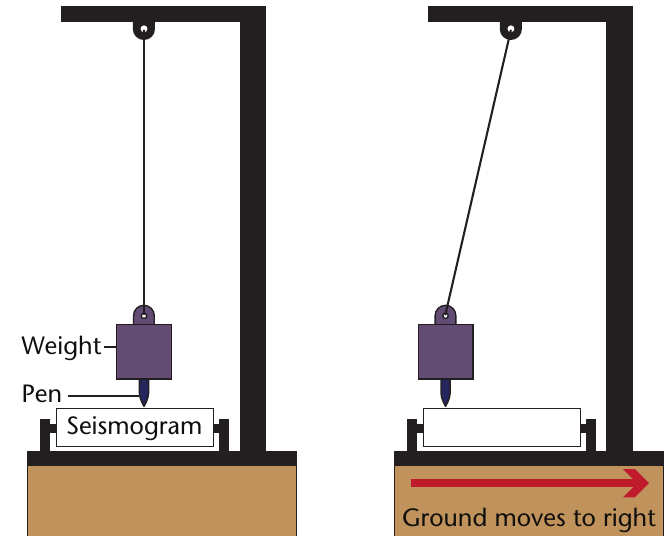
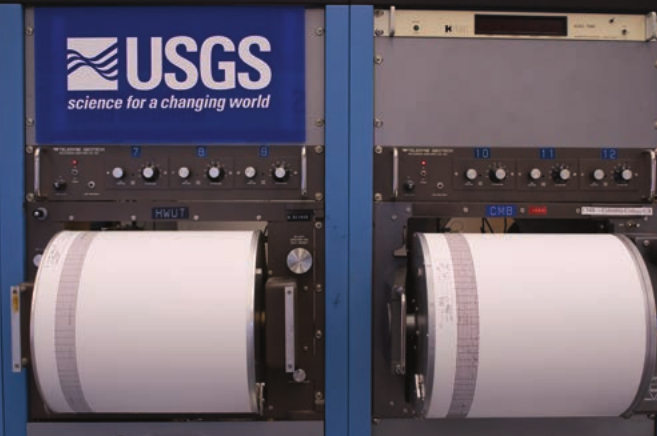
Modern seismographs are much more advanced than the old mechanical versions. Today's digital seismographs can record earthquake information electronically and transmit data instantly to monitoring centres around the world.
Types of earthquake waves
When an earthquake occurs, it produces different types of waves that travel through the Earth at different speeds:
-
P waves (Primary waves): These are the fastest-moving waves and arrive first at seismic stations. They travel quickly through the Earth's crust but cause relatively little damage. P waves are like ripples spreading through solid rock.
-
S waves (Secondary waves): These waves arrive second and move more slowly than P waves. Like P waves, they don't cause significant damage as they pass through rock.
-
L waves (Love waves): These are the most destructive waves that arrive last. L waves travel along the Earth's surface and cause the violent shaking that damages buildings and infrastructure.
Note
The time difference between when P waves and S waves arrive at a seismograph station helps scientists calculate how far away the earthquake occurred. This method, called triangulation, requires data from at least three seismic stations to pinpoint the earthquake's epicenter.
The Richter scale
The Richter scale is the standard system used to measure earthquake intensity or magnitude. This scale is logarithmic, which means each whole number represents ten times more energy than the previous number.
Example
Worked Example: Understanding Richter Scale Magnitude
The logarithmic nature of the Richter scale means:
- A magnitude 3 earthquake is times stronger than a magnitude 2
- A magnitude 4 earthquake is times stronger than a magnitude 2
- A magnitude 5 earthquake is times stronger than a magnitude 2
General formula: A magnitude earthquake is times stronger than a magnitude earthquake.
The scale describes different levels of impact:
- 1-2: Can only be detected by seismographs
- 3-3.9: Comparable to vibrations from passing trucks
- 4-4.9: May break windows and cause small structural damage
- 5-5.9: Furniture moves, plaster may fall from walls
- 6 and above: Causes major destruction
The Tohoku earthquake that struck Japan in 2011 measured 9.0 on the Richter scale, making it one of the most powerful earthquakes ever recorded.
Can earthquakes be predicted?
Currently, people cannot accurately predict when and where earthquakes will occur. However, scientists have made significant progress in understanding earthquake patterns and developing early warning systems.
Why prediction is difficult
Important
Unlike weather forecasting, earthquake prediction faces unique challenges that make accurate prediction extremely difficult:
- Earthquakes occur deep underground where direct observation is impossible
- The processes that trigger earthquakes are extremely complex
- Even with advanced technology, scientists can only provide very short-term warnings of a few minutes at most
Methods being researched
Scientists are exploring several approaches to improve earthquake prediction:
Rock behaviour monitoring: Researchers study how rocks change in seismically active areas. Different types of rocks emit varying magnetic frequencies when under stress, which might indicate when an earthquake is approaching. This technology is still being developed.
Gas detection: High concentrations of hydrogen and radon gases in soil may serve as warning signs that an earthquake is imminent.
Animal behaviour studies: The Chinese have observed that animals often behave unusually in the weeks before major earthquakes. Some animals appear to sense changes in the Earth's crust and move away from areas that are later affected by earthquakes. While this method shows promise, scientists are still studying how reliable these observations are.
Current warning systems
Although earthquakes cannot be predicted days or weeks in advance, seismographs can provide crucial early warnings:
Note
When P waves and S waves are detected, this indicates crustal movement has begun. This information can give people a few minutes' warning before the destructive L waves arrive. While brief, this warning time can be enough for people to take cover or evacuate dangerous areas.
Japan has invested heavily in earthquake monitoring technology and has some of the world's most sophisticated seismic networks. Despite this advanced technology, Japanese scientists were unable to predict recent major earthquakes, including the devastating 2011 Tohoku earthquake.
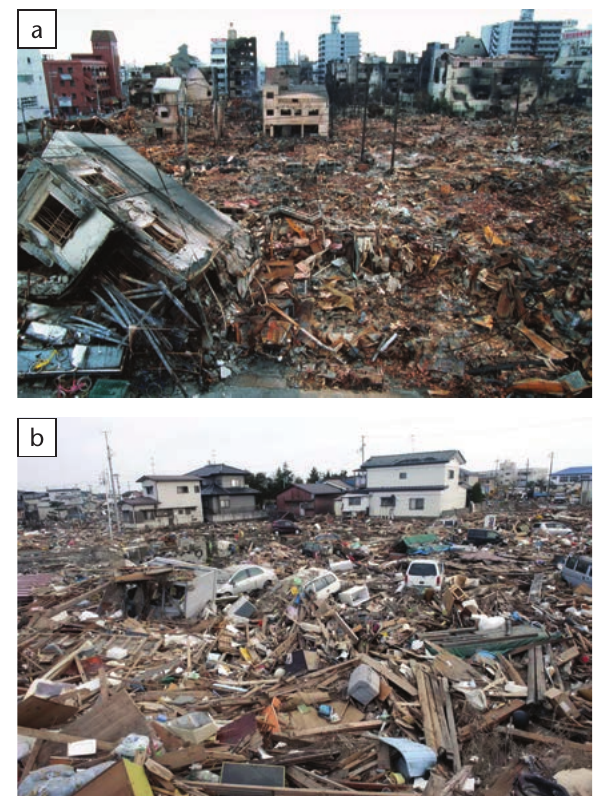
The images above show the extensive destruction caused by major earthquakes in Japan, demonstrating why accurate prediction methods are so desperately needed.
The importance of earthquake monitoring
Understanding and monitoring earthquakes is crucial because:
- It helps communities in seismically active zones prepare for potential earthquakes
- Early warning systems, even with just minutes of notice, can save thousands of lives
- Long-term monitoring helps scientists understand earthquake patterns and identify high-risk areas
- This knowledge influences building codes and urban planning in earthquake-prone regions
Note
Scientists continue to research new technologies, including laser-beam monitoring systems to track the movement of tectonic plates. Small movements detected by these systems might alert researchers to shifts along fault lines that could trigger future earthquakes.
Summary
Key Points to Remember:
- Seismographs measure earthquake waves and help locate earthquake epicentres
- Three types of waves: P waves (fastest, least damage), S waves (medium speed), L waves (slowest, most destructive)
- Richter scale: Each number represents 10 times more energy than the previous number
- Earthquakes cannot be accurately predicted, but scientists are developing various methods including rock monitoring, gas detection, and animal behaviour studies
- Early warning systems can provide a few minutes' notice when earthquake waves are detected, which can save lives even though it's not true prediction