Importance of the Atmosphere (Grade 10 NSC Matric Geography): Revision Notes
📚Revision Notes
Importance of the Atmosphere
What is the atmosphere?
The atmosphere is the protective layer of gases that surrounds our planet Earth. This invisible blanket contains mainly nitrogen, oxygen, argon, water vapour, and carbon dioxide. Think of it as Earth's life-support system that makes our planet suitable for living things to survive and thrive.
Note
Even though we can't see it, the atmosphere extends hundreds of kilometers above Earth's surface. This invisible layer is constantly in motion, creating weather patterns and climate conditions that affect all life on our planet.
Why the atmosphere is essential for life on Earth
The atmosphere performs several crucial functions that make life on our planet possible. Without it, Earth would be a lifeless, frozen rock floating in space.
Important
The atmosphere is absolutely critical for life - no known life forms can exist without the protection and resources it provides. Every breath we take, every drop of water we drink, and every plant that grows depends on our atmosphere.
Provides oxygen for breathing
The atmosphere contains about 21% oxygen, which is exactly what we and other animals need for respiration. When we breathe, our lungs take in oxygen from the air and our blood carries it to every cell in our body. Plants also need oxygen for their life processes, though they produce more oxygen than they use through photosynthesis.
Supports the water cycle
Water vapour in the atmosphere drives the water cycle, one of Earth's most important systems. The atmosphere carries water from oceans and rivers as invisible water vapour, then releases it as rain or snow when the vapour condenses. This process provides fresh water for all living things and helps distribute water around the world.
Enables photosynthesis
Plants use carbon dioxide from the atmosphere to make their own food through photosynthesis. During this amazing process, plants capture energy from sunlight and combine it with carbon dioxide and water to create glucose (plant food). As a bonus, plants release oxygen back into the atmosphere, which we then breathe!
Distributes heat around Earth
Without the atmosphere, places near the equator would be scorching hot while polar regions would be impossibly cold. Wind movement in the atmosphere acts like a giant heating system, carrying warm air from hot equatorial areas towards the colder poles, and bringing cool air back towards the equator. This process helps balance temperatures across our planet and makes most regions suitable for life.
Protects Earth from harmful radiation and space debris
The atmosphere acts as Earth's protective shield in two important ways:
- It blocks most of the sun's harmful ultraviolet (UV) radiation that could damage living things
- It burns up meteors (space rocks) as they enter our atmosphere, preventing them from hitting Earth's surface and causing damage
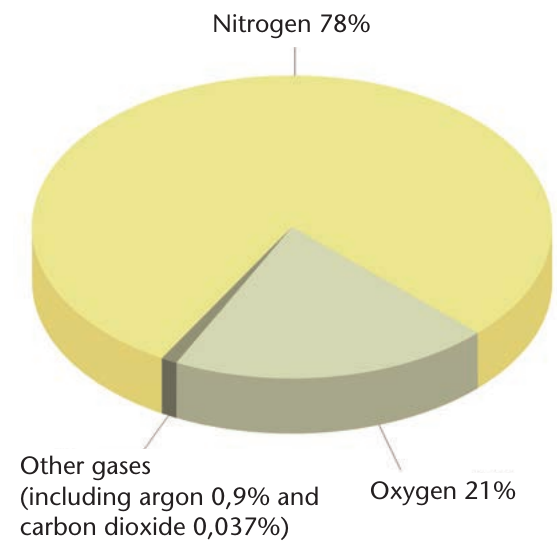
How different gases support life
The atmosphere contains two main types of gases that work together to support life on our planet.
Permanent gases
Permanent gases are those that stay at roughly the same percentage in the atmosphere all the time. These gases form the stable foundation of our atmosphere.
| Gas | Importance for Life |
|---|---|
| Nitrogen (78%) | Essential for plant growth as plants need nitrogen to develop properly. Nitrogen is also a key component of proteins, which all living things need to build and repair their bodies. |
| Oxygen (21%) | Vital for respiration in both humans and animals. Plants also use oxygen for their cellular processes, though they produce more than they consume. |
| Argon (0.9%) | While not directly involved in life processes, argon has practical uses such as filling electric light bulbs because it doesn't react with other substances. |
Variable gases
Variable gases are those whose amounts change over time and from place to place. Even though these gases make up a tiny fraction of the atmosphere, they play enormously important roles in supporting life.
| Gas | Importance for Life |
|---|---|
| Water vapour | Drives the water cycle by providing moisture that condenses into clouds and falls as precipitation, supplying fresh water for all living things. |
| Carbon dioxide (0.037%) | Essential for photosynthesis - plants absorb carbon dioxide from the air to make their food and release oxygen as a byproduct. |
Note
Even though carbon dioxide makes up less than 0.04% of the atmosphere, it's absolutely vital for life on Earth. Without this tiny amount, plants couldn't perform photosynthesis, and the entire food chain would collapse.
Beyond gases: liquids and solids in the atmosphere
The atmosphere isn't just made of gases. It also contains:
- Liquids: Tiny water droplets that form clouds and eventually fall as rain
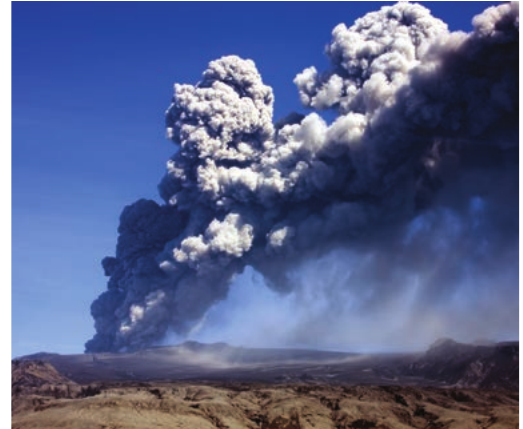
- Solid particles: Dust, salt crystals, smoke particles, soot, and volcanic ash that serve as condensation nuclei - surfaces where water vapour can condense to form water droplets
Note
These solid particles might seem unimportant, but they're actually crucial for the water cycle. Without them, water vapour couldn't easily condense into clouds and rain! This is why completely clean air can sometimes prevent cloud formation.
Summary
Key Points to Remember:
- The atmosphere is Earth's life-support system that makes our planet habitable
- Oxygen (21%) enables all animals and plants to breathe and carry out respiration
- Water vapour drives the water cycle, providing fresh water for all life on Earth
- Carbon dioxide enables plants to make food through photosynthesis, which also produces the oxygen we breathe
- The atmosphere protects us by blocking harmful UV radiation and burning up meteors before they reach Earth's surface
- Wind in the atmosphere distributes heat around the planet, preventing extreme temperature differences between different regions