Factors Affecting Temperature (Grade 10 NSC Matric Geography): Revision Notes
📚Revision Notes
Factors Affecting Temperature
Different places around the world experience vastly different temperatures throughout the year. Understanding why temperatures vary from place to place is crucial for studying global climate patterns and weather systems. There are four main factors that determine the temperature of any location on Earth: latitude, altitude, ocean currents, and distance from oceans.
1. Latitude
Latitude refers to the distance of a place from the equator, measured in degrees north or south. This is one of the most important factors affecting global temperature patterns.
Why latitude affects temperature
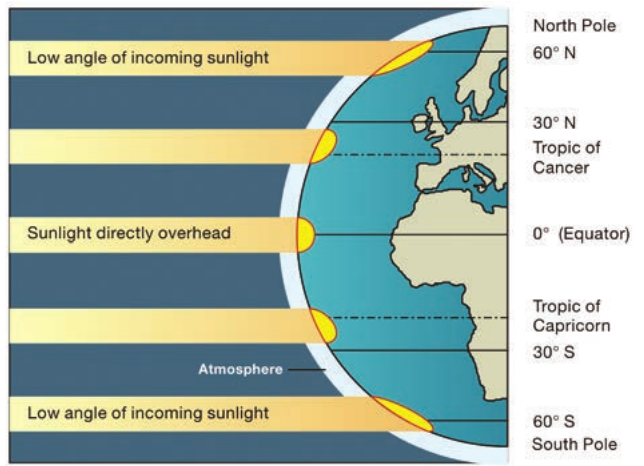
The Earth's spherical shape means that the sun's rays strike different parts of our planet at varying angles. Near the equator, the sun's rays hit the Earth almost directly overhead, providing intense heating. As you move towards the poles, the sun's rays arrive at increasingly shallow angles, spreading the same amount of energy over a much larger area.
Important
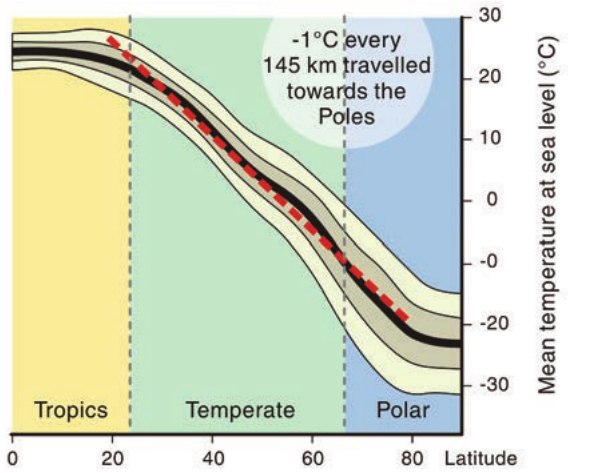
Key Temperature Relationship: Temperature decreases by approximately 1°C for every 145 kilometres you travel towards the poles.
This creates distinct climate zones on Earth - tropical regions near the equator remain warm year-round, while polar regions experience much colder temperatures.
Earth's shape and seasonal variations
Because Earth is tilted on its axis and orbits around the sun, different parts of the planet receive varying amounts of solar energy throughout the year. This tilt creates our seasons and explains why polar regions can experience months of continuous daylight in summer and continuous darkness in winter, while equatorial regions maintain relatively consistent day and night patterns throughout the year.
Note
The Earth's spherical shape is the fundamental reason why different latitudes receive different amounts of solar energy. This geometric principle drives global temperature patterns and creates the diverse climate zones we observe around the world.
2. Altitude
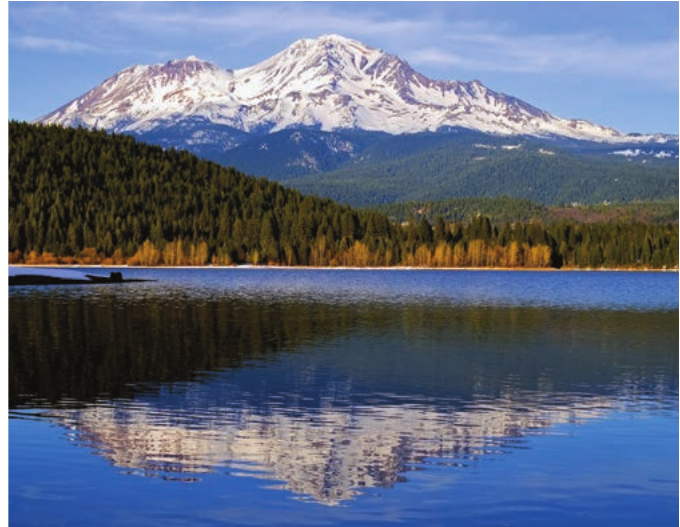
Altitude describes the height of a place above sea level. As you climb higher into the atmosphere, temperatures generally become cooler, which explains why mountain peaks are often snow-capped even in warm climates.
How altitude affects temperature
At sea level, the atmosphere is densest and contains the most greenhouse gases. These gases absorb and trap heat from Earth's surface, keeping temperatures warmer. As altitude increases, the air becomes thinner and contains fewer greenhouse gases, meaning less heat is retained in the atmosphere.
Important
Altitude Temperature Rule: Temperature decreases by 0.65°C for every 100 metres of elevation gained.
Using LaTeX: Temperature decrease =
This explains why places like Mount Everest can have temperatures well below freezing even during summer months, while locations at sea level at the same latitude remain much warmer.
3. Ocean currents
Ocean currents are large-scale movements of water that circulate around the world's oceans. These currents play a significant role in determining coastal temperatures by carrying either warm or cold water from different regions.
Warm and cold currents
Warm ocean currents originate from tropical regions and carry heated water towards cooler areas, raising the temperature of coastal regions they pass. Cold ocean currents flow from polar regions towards warmer areas, cooling the coastlines they influence.
The temperature of the air above any location is strongly influenced by what lies beneath it. When air masses move over warm ocean currents, they become warmer. When they pass over cold currents, they cool down.
South African examples
Note
South African Ocean Currents: South Africa provides excellent examples of how ocean currents affect coastal temperatures:
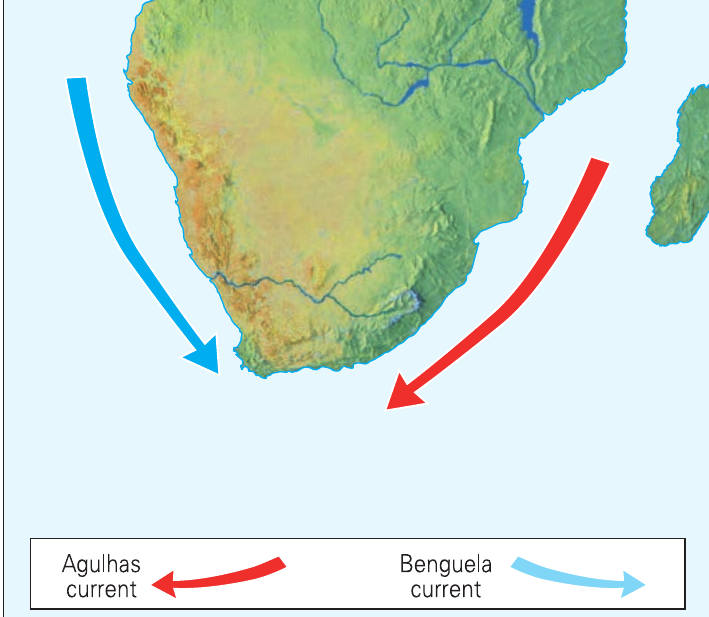
- The Agulhas Current (warm current) flows along the east coast, bringing warm water from the Indian Ocean and creating higher temperatures along the eastern coastline
- The Benguela Current (cold current) flows along the west coast, carrying cold water from the Atlantic Ocean and keeping western coastal areas cooler
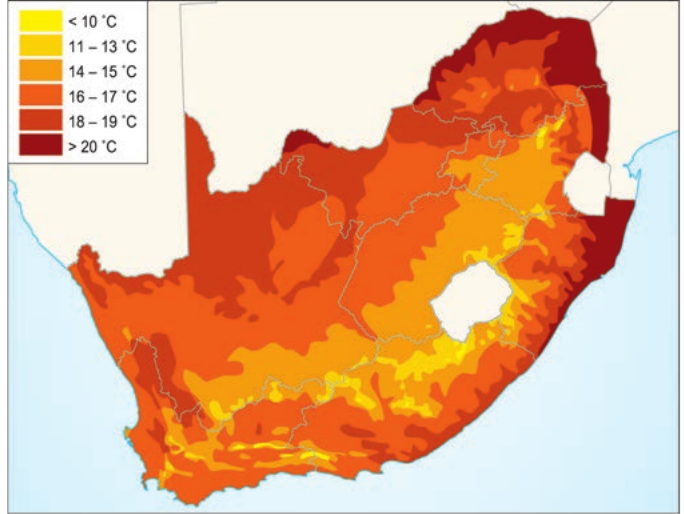
This explains why the east coast of South Africa generally experiences warmer temperatures than the west coast, even at similar latitudes.
4. Distance from oceans (continentality)
The distance a place is located from the ocean significantly affects its temperature patterns, particularly the temperature range (the difference between the highest and lowest temperatures experienced).
Note
Temperature Range Formula:
Maritime vs continental climates
Maritime climates occur in coastal areas and are characterised by:
- Moderate temperatures year-round
- Smaller temperature ranges between seasons
- The ocean's moderating influence on temperature
Continental climates develop in areas far from oceans and feature:
- More extreme temperatures (very hot summers, very cold winters)
- Larger temperature ranges between seasons
- Less temperature moderation from water bodies
Why oceans moderate temperature
Oceans heat up and cool down much more slowly than land surfaces. During summer, oceans remain relatively cool compared to land, providing a cooling effect on coastal areas. In winter, oceans retain heat longer than land, providing a warming effect. This creates the moderate temperatures experienced in maritime climates.
Inland areas lack this oceanic influence, so they heat up quickly in summer and cool down rapidly in winter, resulting in greater temperature extremes.
South African case study
Example
Worked Example: Comparing Maritime and Continental Climates in South Africa
The following temperature data demonstrates the difference between coastal and inland locations:
| City | Summer Day Temp | Summer Night Temp | Winter Day Temp | Winter Night Temp |
|---|---|---|---|---|
| Durban (coastal) | 28°C | 21°C | 23°C | 11°C |
| Johannesburg (inland) | 26°C | 15°C | 17°C | 4°C |
| Kimberley (inland) | 32°C | 17°C | 18°C | 3°C |
Analysis:
- Durban's temperature range: Summer (28-21=7°C), Winter (23-11=12°C)
- Johannesburg's temperature range: Summer (26-15=11°C), Winter (17-4=13°C)
- Kimberley's temperature range: Summer (32-17=15°C), Winter (18-3=15°C)
This clearly shows that inland cities experience much greater temperature ranges than coastal Durban.
Summary
Key Points to Remember:
- Latitude: Temperature decreases as you move away from the equator (1°C per 145 km towards poles)
- Altitude: Temperature decreases with height (0.65°C per 100 metres gained)
- Ocean currents: Warm currents heat coastlines, cold currents cool them
- Distance from oceans: Coastal areas have moderate temperatures, inland areas have extreme temperature ranges
- Temperature range = maximum temperature - minimum temperature