Heating of the Atmosphere: An Overview (Grade 10 NSC Matric Geography): Revision Notes
📚Revision Notes
Heating of the Atmosphere: An Overview
Understanding how the atmosphere gets heated is fundamental to geography. The sun provides virtually all the energy that drives weather patterns and climate systems on Earth. This heating process involves several key mechanisms that work together to distribute solar energy throughout our atmosphere.
Note
The study of atmospheric heating is essential for understanding weather patterns, climate change, and energy distribution across our planet. All weather phenomena ultimately trace back to how the sun's energy interacts with Earth's atmosphere and surface.
What is atmospheric heating?
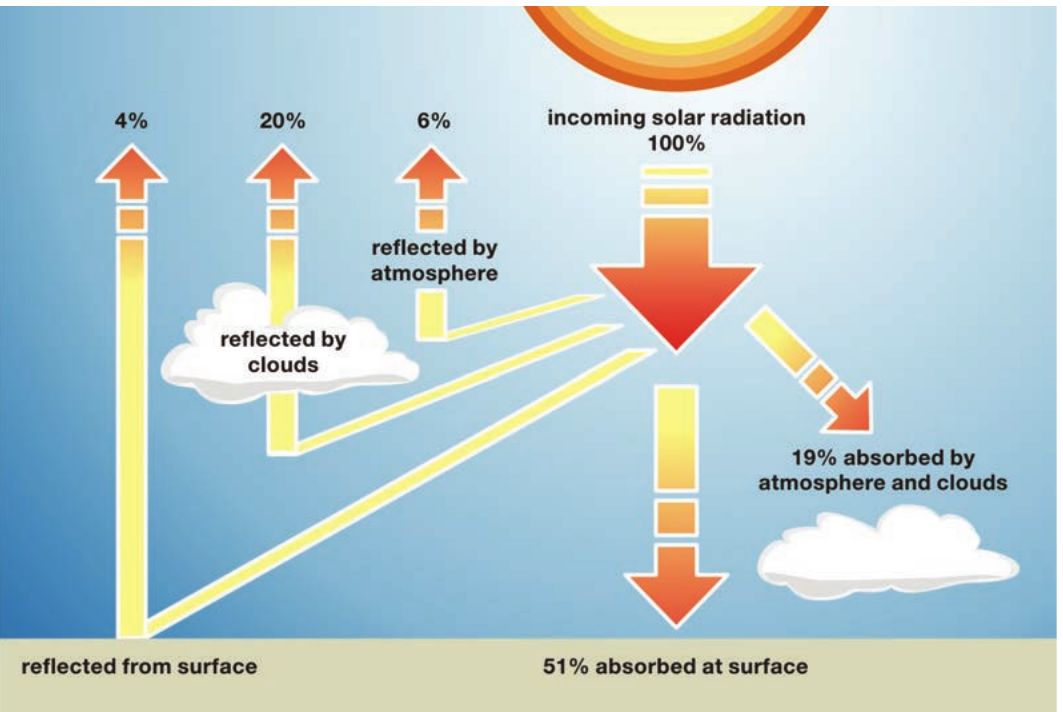
The atmosphere receives energy primarily from the sun through a process called insolation (incoming solar radiation). This energy arrives as short-wave radiation and undergoes various processes as it interacts with our atmosphere and Earth's surface. The sun acts as the chief source of heat for our atmosphere, sending energy across space in the form of electromagnetic waves.
Processes involved in heating the atmosphere
When solar energy reaches Earth's atmosphere, it doesn't all simply pass through to the surface. Instead, it undergoes four main processes that determine how much energy actually reaches the ground and how much gets redirected or absorbed along the way.
Insolation
Insolation is the technical term for incoming solar radiation from the sun. The word comes from three parts: "incoming solar radiation". This energy travels from the sun to Earth as short-wave radiation because the sun is extremely hot. Understanding insolation is crucial because it represents the starting point for all atmospheric heating processes.
Example
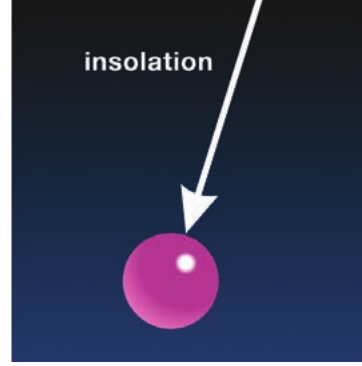
Energy Budget Example: Solar Radiation Distribution
When 100% of solar radiation reaches the top of Earth's atmosphere:
- Some gets absorbed by atmospheric particles
- Some gets scattered in random directions
- Some gets reflected back to space
- The remainder reaches Earth's surface
This distribution determines how much energy is available to heat different parts of the Earth system.
The solar energy budget shows that 100% of solar radiation arrives at the top of our atmosphere. However, not all of this energy makes it to Earth's surface due to the various processes that occur as it passes through the atmosphere.
Absorption
Absorption occurs when clouds, dust particles, and gases in the atmosphere take in some of the incoming solar energy. This process is particularly important in the thermosphere and stratosphere, though the troposphere (where we live) experiences relatively little absorption of incoming solar radiation.
Most absorption actually happens at Earth's surface, where about 51% of the original solar energy is absorbed. The absorbed energy heats up the surface, which then becomes a source of heat for the atmosphere above it. Clouds and dust particles play a significant role in absorption, capturing energy that would otherwise reach the ground.
Scattering
Scattering happens when tiny particles and gas molecules in the atmosphere cause incoming solar rays to bounce around in random directions without changing their wavelength. This process is responsible for redirecting some solar energy back to space, meaning it never reaches Earth's surface.
Small particles act like tiny mirrors, sending solar radiation in all directions. Some of this scattered radiation eventually makes its way back to space, while other scattered rays continue towards Earth's surface. This process helps explain why the sky appears blue during the day.
Note
Scattering is different from reflection because the energy bounces in random directions rather than following predictable angles. The size of particles determines how much scattering occurs and which wavelengths are most affected.
Reflection
Reflection occurs when solar energy bounces off surfaces without any change in wavelength. Unlike scattering, reflection typically happens at larger surfaces like cloud tops, ice sheets, and even buildings with reflective surfaces.
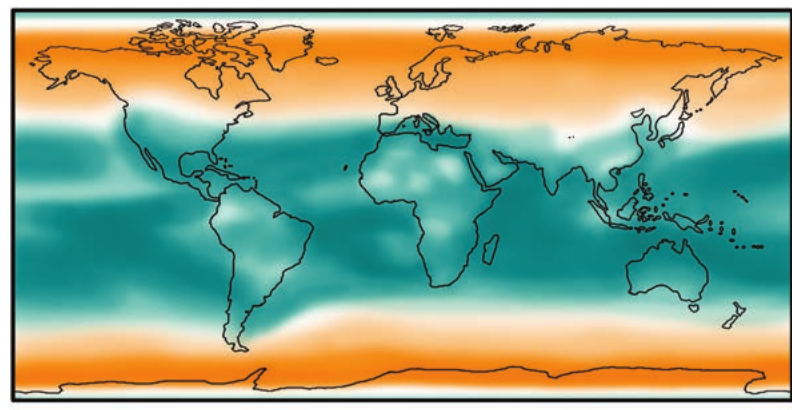
The amount of solar energy that gets reflected is measured as albedo, expressed as a percentage. Different surfaces have very different albedo values:
- Fresh snow can reflect up to 80% of incoming solar radiation (high albedo)
- Dark ocean water reflects only about 4% (low albedo)
- Clouds reflect approximately 20% of solar radiation
Important
Understanding albedo is critical for climate studies. Surfaces with high albedo (like ice caps) tend to stay cooler and help regulate global temperatures, while surfaces with low albedo (like dark soil) absorb more energy and contribute to warming. This is why the melting of polar ice caps creates a positive feedback loop in climate change.
How heat is transferred in the atmosphere
Once energy has been absorbed by Earth's surface and atmosphere, it needs to be redistributed. This happens through three main methods of heat transfer: radiation, conduction, and convection. Each method works differently and plays a specific role in moving heat around our planet.
Radiation
Radiation is heat transfer through electromagnetic waves that can travel through empty space. This is how energy originally reaches Earth from the sun, and it's also how Earth gives off heat back to space.
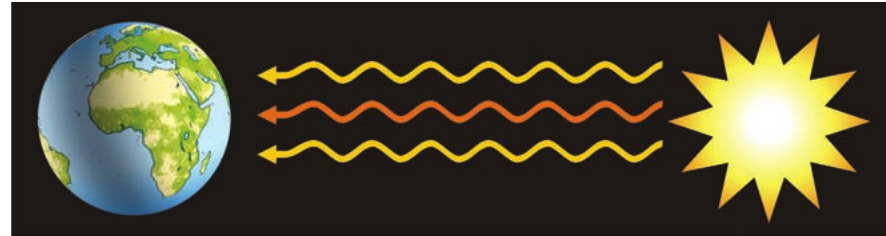
All objects that have temperature emit radiation. The sun is extremely hot, so it gives off short-wave radiation. Earth is much cooler than the sun, so it emits long-wave radiation, also called terrestrial radiation. This difference in wavelength is important because our atmosphere treats short-wave and long-wave radiation differently.
When Earth's surface absorbs solar energy and warms up, it begins radiating this energy back towards space as long-wave radiation. Some of this terrestrial radiation gets absorbed by greenhouse gases in the atmosphere, which helps keep our planet warm enough to support life.
Note
The wavelength difference between incoming solar radiation and outgoing terrestrial radiation is fundamental to the greenhouse effect. Our atmosphere is largely transparent to short-wave radiation from the sun but absorbs much of the long-wave radiation emitted by Earth's surface.
Conduction
Conduction involves heat transfer between molecules that are touching each other. When molecules vibrate with heat energy, they can pass this energy directly to neighbouring molecules through contact.
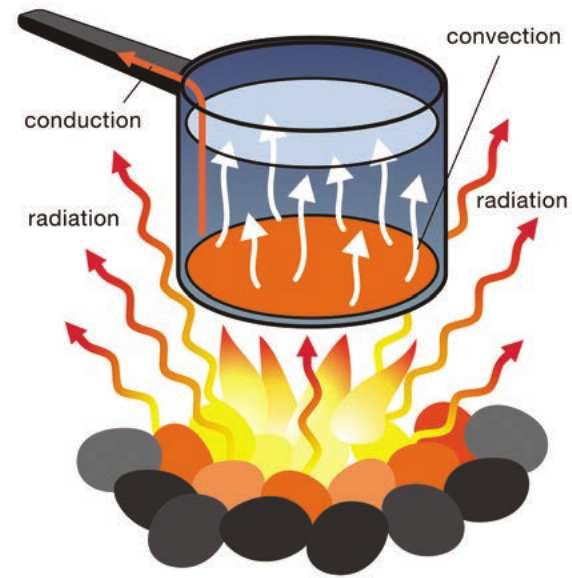
In the atmosphere, conduction is not a very effective method of heat transfer because gas molecules are spread far apart and constantly moving. However, conduction does occur where the atmosphere meets solid surfaces, such as when warm ground heats the air directly above it. This is why air temperatures are typically measured at a standard height above the ground rather than right at surface level.
Conduction works best in solids where molecules are tightly packed together. In liquids and gases, the molecules move around too much for conduction to be efficient, which is why other heat transfer methods become more important.
Convection
Convection occurs when heat is transferred through the actual movement of heated air or water. This is the most important method of heat transfer within the atmosphere because it can move large amounts of energy over great distances.
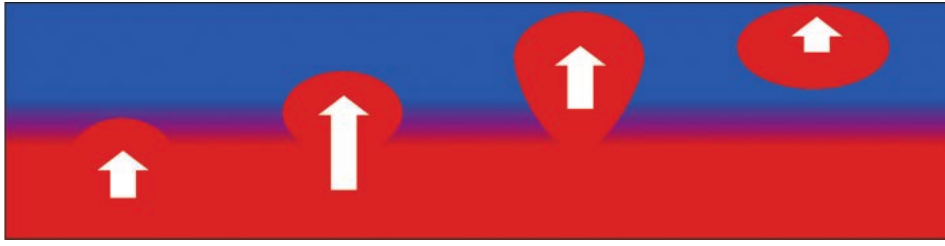
When air gets heated, it becomes less dense and rises upward. As it rises, cooler air moves in to replace it, creating circulation patterns called convection currents. This process is constantly happening in our atmosphere at various scales, from small local breezes to massive weather systems.
Example
Everyday Convection Examples
You can observe convection in familiar situations:
- Opening a hot oven: warm air moves toward your face through convection
- Cumulus cloud formation: convection currents lift moisture high into the atmosphere
- Hot air balloon rising: heated air becomes less dense and rises upward
- Sea breeze formation: differential heating creates local convection patterns
In the atmosphere, convection helps redistribute heat from Earth's surface upward through the troposphere. It also helps move heat horizontally, contributing to wind patterns and weather systems that transport energy from warmer regions towards cooler areas.
Important
Convection is responsible for most vertical heat transport in the atmosphere. Without convection, the surface would become much hotter while the upper atmosphere would remain much colder, making Earth's climate unsuitable for most life forms.
Summary
Key Points to Remember:
-
Insolation is incoming solar radiation - the sun provides virtually all energy for atmospheric heating through short-wave radiation
-
Four key processes affect solar energy: absorption (energy taken in), scattering (energy redirected randomly), reflection (energy bounced off surfaces), and direct transmission to Earth's surface
-
Albedo measures reflectivity - high albedo surfaces like snow stay cooler, while low albedo surfaces like dark soil absorb more energy and become warmer
-
Heat moves through the atmosphere in three ways: radiation (electromagnetic waves), conduction (molecule-to-molecule contact), and convection (movement of heated air masses)
-
Earth emits terrestrial radiation - our planet gives off long-wave radiation back to space, which is different from the short-wave radiation we receive from the sun