Parallel Resistors (Grade 10 NSC Matric Physical Sciences): Revision Notes
📚Revision Notes
Parallel Resistors
What are parallel resistors?
When resistors are connected in parallel, they are arranged so that they share the same connection points. This creates multiple pathways for electrical current to flow through the circuit. Think of it like having multiple lanes on a highway - the traffic (current) can split up and take different routes.
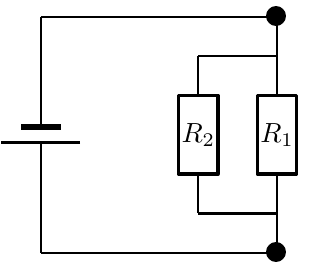
Key characteristics of parallel circuits
When you connect resistors in parallel to a circuit, three important things happen:
1. Current splits across different paths
The current from the battery divides itself among the different parallel branches. Each resistor gets its own portion of the total current, but the sum of all branch currents equals the total current from the battery.
2. Voltage remains the same
The voltage drop across each parallel resistor is identical and equals the battery voltage. This is because all resistors are connected directly across the same two points in the circuit.
Important
This is the fundamental principle of parallel circuits: all parallel resistors experience the same voltage, regardless of their individual resistance values.
3. Total resistance decreases
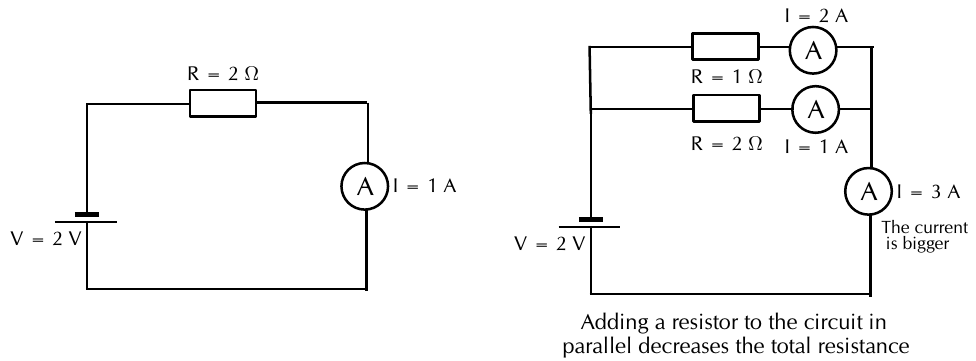
Adding more parallel resistors actually reduces the total resistance of the circuit. This happens because you're providing more pathways for current to flow, making it easier for electricity to move through the circuit.
Formula for parallel resistance
The total resistance of parallel resistors is calculated using the reciprocal formula:
For just two resistors in parallel, this simplifies to:
Note
This is known as the "product over sum" formula for two resistors. It's much faster to use when you only have two parallel resistors to combine.
Worked example 1: Two parallel resistors
Example
Worked Example: Calculating Parallel Resistance
Question: A circuit contains two resistors in parallel with resistance values of 15 Ω and 7 Ω. What is the total resistance?
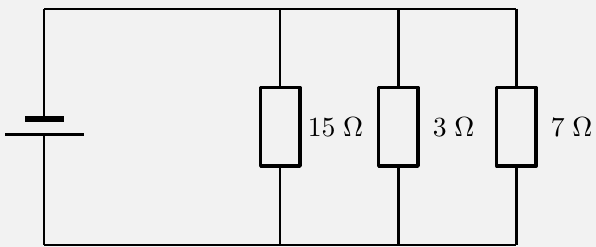
Solution:
Step 1: Identify what you know
- Two resistors in parallel: Ω and Ω
- Need to find total parallel resistance
Step 2: Apply the parallel resistance formula For two resistors:
Step 3: Calculate Ω
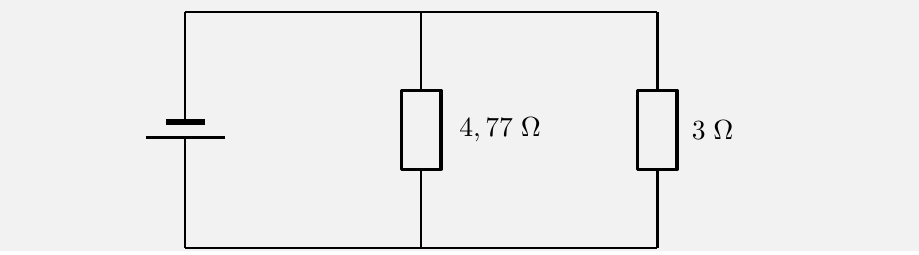
Result: The total resistance is 4.77 Ω, which is less than either individual resistor.
Worked example 2: Three parallel resistors
Example
Worked Example: Three Parallel Resistors
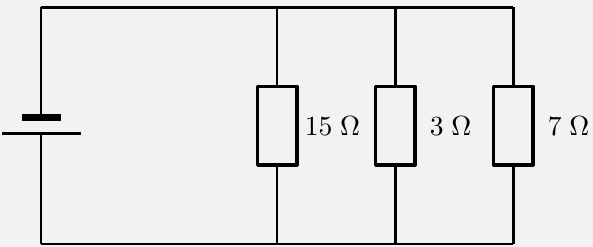
Question: We add a third parallel resistor with 3 Ω resistance to the previous circuit. What is the new total resistance?
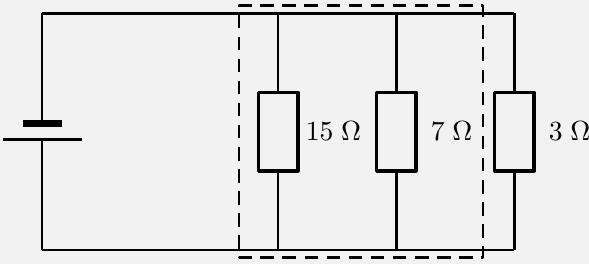
Solution:
Step 1: Apply the general parallel formula
Step 2: Substitute the values
Step 3: Find common denominator and add
Step 4: Calculate final resistance
Result: Adding the third resistor further reduced the total resistance to 1.84 Ω.
Voltage in parallel circuits
Since all parallel resistors experience the same voltage, you can use this principle to solve circuit problems.
Example
Worked Example: Voltage Calculation
In a circuit with a 2V battery and one resistor, the voltage across the resistor equals the battery voltage.
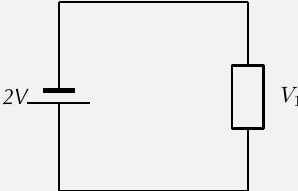
Key principle: This relationship holds true no matter how many resistors you add in parallel - each one experiences the full battery voltage.
Current divider experiment
Understanding how current splits in parallel circuits is crucial for circuit analysis.
Note
Current Divider Experiment
Aim: Test what happens to current and voltage in circuits when additional parallel resistors are added.
Method:
- Connect circuits with different numbers of parallel resistors
- Measure voltage across each resistor
- Measure current through each branch and total current
Key findings:
- Voltage across parallel resistors is identical
- Current through each resistor depends on its resistance value
- Total current increases as more parallel paths are added
- Total resistance decreases with additional parallel resistors
Simplifying complex circuits
When dealing with circuits containing multiple parallel resistors, you can simplify them step by step:
Note
Step-by-step simplification process:
- Calculate the equivalent resistance of any two parallel resistors
- Replace those resistors with a single equivalent resistor
- Repeat the process until you have one equivalent resistor
- This approach works for any number of parallel resistors
Summary
Key Points to Remember:
- Voltage is the same across all parallel resistors and equals the battery voltage
- Current splits among parallel branches, with each branch carrying current based on its resistance
- Total resistance decreases when you add more parallel resistors - more paths means easier current flow
- Use the reciprocal formula: for calculating parallel resistance
- For two resistors only: Use the product-over-sum formula