Potential Difference and EMF (Grade 10 NSC Matric Physical Sciences): Revision Notes
📚Revision Notes
Potential Difference and EMF
Introduction to electrical driving forces
In a complete electrical circuit, electric charges need a driving force to move through the components. Think of it like water flowing through pipes - just as water needs pressure to flow, electric charges need a "push" to move around a circuit. This push comes from the battery, which provides the energy needed to drive charges through the circuit.
Note
The Water Analogy
Just like water flowing through pipes needs pressure to move, electric charges need a driving force to flow through circuits. The battery acts like a pump, providing the necessary "push" to keep charges moving.
A battery contains stored potential energy that gets converted into electrical energy. This energy does work on the electric charges, forcing them to move around the circuit and power our devices.
What is potential difference?
Potential difference is the driving force that pushes electric charges around a circuit. It represents how much work is done to move each unit of charge between two points in the circuit.
Definition of potential difference
Important
Potential difference is the work done per unit charge, expressed as .
- Unit name: volt
- Unit symbol: V
- Definition of volt: One joule of work done per coulomb of charge ()
- Quantity symbol: V
This means that if a battery has a potential difference of 6 volts, it does 6 joules of work to move each coulomb of charge around the circuit.
Measuring potential difference - voltmeters
A voltmeter is an instrument designed to measure the potential difference between two points in an electrical circuit.
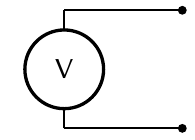
The circuit symbol for a voltmeter is a circle containing the letter "V", with connecting wires extending from it.
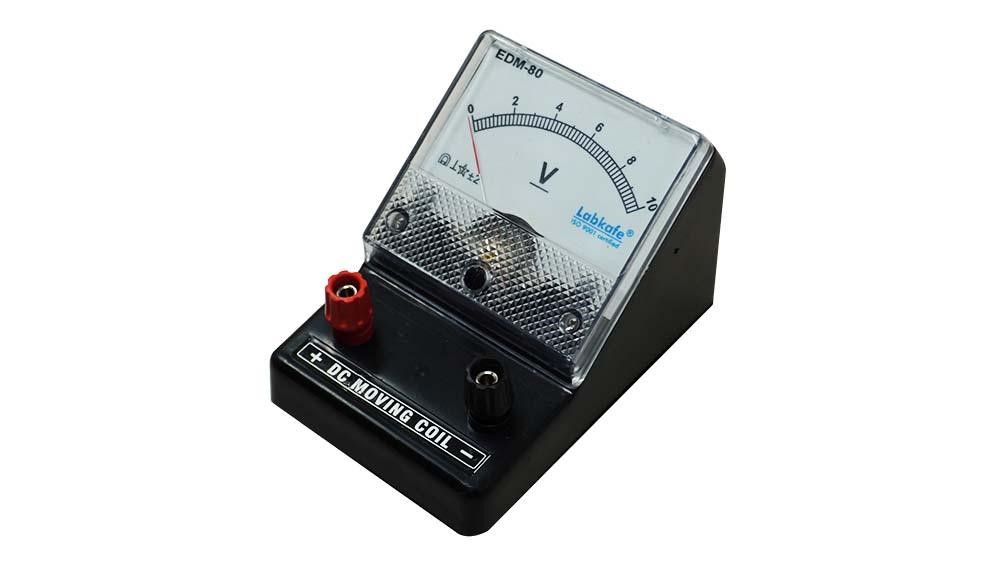
Note
Key points about voltmeters:
- They measure potential difference in volts
- Must be connected in parallel across the component being measured
- One lead connects to each end of the component
- Can measure voltage across resistors, batteries, or any circuit component
What is EMF?
EMF (electromotive force) is the maximum potential difference that a battery can provide when it's not connected in a complete circuit.
Understanding EMF vs terminal potential difference
When you measure the potential difference across battery terminals in different situations:
EMF measurement (not in complete circuit):
- Voltmeter connected across battery terminals when no current flows
- Measures the maximum potential difference the battery can provide
- This is the EMF of the battery
Terminal potential difference (in complete circuit):
- Voltmeter connected across battery terminals when current is flowing
- Measures actual voltage available to drive current through external circuit
- This value is less than the EMF due to internal resistance of the battery
Key differences between EMF and potential difference
| EMF | Terminal Potential Difference |
|---|---|
| Measured when no current flows | Measured when current flows |
| Maximum possible voltage | Actual available voltage |
| Not affected by circuit load | Decreases under load |
| Property of the battery alone | Depends on circuit conditions |
Important
Critical Distinction
Although both EMF and potential difference are measured in volts, they represent different aspects of electrical circuits. EMF tells us the battery's maximum capability, while terminal potential difference tells us what's actually available for the circuit.
Practical applications
Understanding potential difference and EMF helps us work effectively with electrical circuits and troubleshoot problems.
Note
Connecting a voltmeter:
- Always connect voltmeters in parallel with the component
- Never connect in series as this will change the circuit behaviour
- One lead goes to each terminal of the component being measured
- Can measure voltage across single components or groups of components
Example
Real-world Examples:
Car batteries: EMF around 12V, but terminal voltage drops when starting engine due to high current draw
Phone batteries: EMF decreases as battery drains and internal chemistry changes
Power supplies: Designed to maintain constant terminal voltage under load through voltage regulation circuits
Summary
Key Points to Remember:
- Potential difference is the work done per unit charge (), measured in volts
- One volt equals one joule per coulomb ()
- Voltmeters measure potential difference and must be connected in parallel
- EMF is the maximum potential difference when no current flows
- Terminal potential difference is less than EMF when current flows through the circuit
- The volt is named after Italian physicist Alessandro Volta (1745-1827)