City Climates (Grade 12 NSC Matric Geography): Revision Notes
📚Revision Notes
City Climates
What are city climates?
Cities experience a significantly different climate compared to the rural areas surrounding them. This creates what geographers call an urban heat island - a phenomenon where urban areas become noticeably warmer than the countryside around them. Understanding this concept is crucial for NSC Geography as it demonstrates how human activities can modify local climate patterns.
The urban heat island effect occurs because cities contain different materials, structures, and activities that absorb, store, and release heat differently than natural environments. This temperature difference can be quite substantial, sometimes reaching several degrees Celsius between the city centre and rural areas.
Note
The urban heat island effect is not just a local curiosity - it has real impacts on energy consumption, air quality, and human health in urban areas. Cities with strong heat island effects often require more air conditioning and face greater challenges with air pollution.
Temperature patterns across urban areas
The temperature in urban areas doesn't increase uniformly - instead, it follows a specific pattern as you move from rural areas towards the city centre. This pattern is best understood by examining how different urban zones contribute to heating.
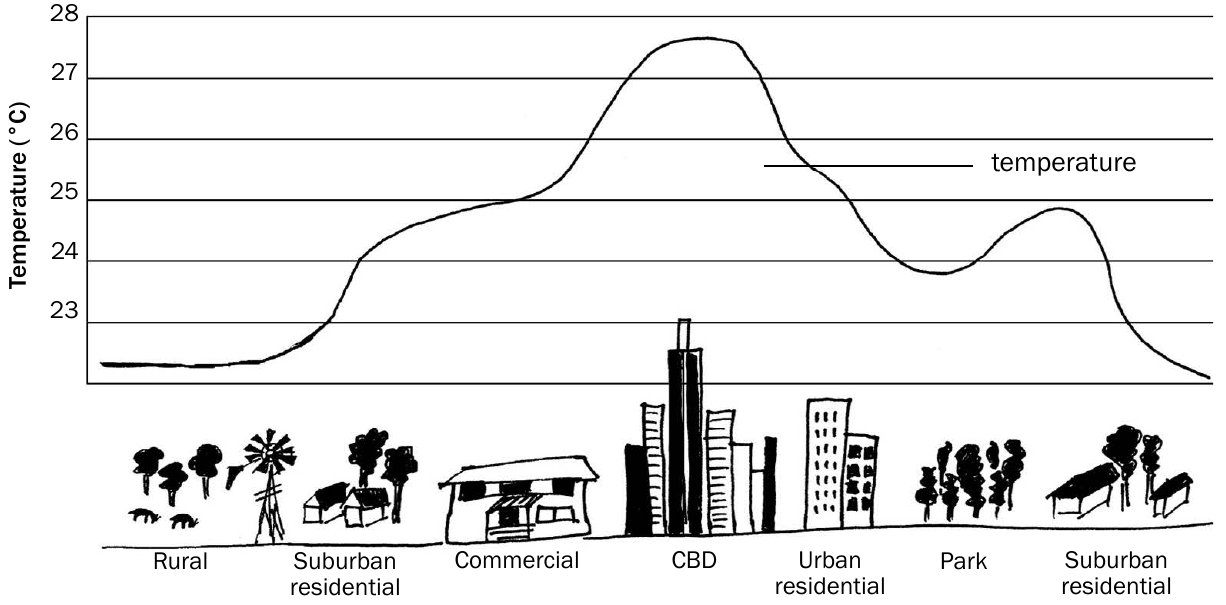
The temperature profile shows several distinct zones:
- Rural areas have the coolest temperatures due to natural vegetation and fewer heat-absorbing surfaces
- Suburban residential areas show moderate temperature increases as housing density increases
- Commercial zones experience higher temperatures due to more concrete and asphalt surfaces
- Central Business District (CBD) typically reaches the highest temperatures due to concentrated buildings, traffic, and human activities
- Parks and green spaces create notable cool spots within the urban environment, demonstrating the cooling effect of vegetation
- Urban residential areas show intermediate temperatures between commercial and suburban zones
This temperature variation creates a distinctive dome-like pattern when viewed from the side, with the CBD forming the peak of the "heat island."
Important
The Central Business District (CBD) consistently shows the highest temperatures in urban areas due to the concentration of buildings, traffic, and human activities. This makes it the "peak" of the urban heat island effect.
Factors causing urban heat islands
Four main factors work together to create warmer temperatures in cities. Understanding these factors is essential for exam success, as you may be asked to explain why cities are warmer than rural areas.
Example
Memory Aid: "ASAP" for Heat Island Factors
Remember the four main causes using ASAP:
- Artificial surfaces
- Surface area (increased)
- Artificial heat sources
- Pollution
Artificial surfaces
Human-made materials such as concrete, asphalt, and tar absorb and store much more heat than natural surfaces like soil and grass. These materials have different thermal properties - they heat up quickly during the day and release this stored heat slowly at night, keeping cities warmer for longer periods.
Increased surface area
Buildings add vertical surfaces to the urban environment, dramatically increasing the total surface area available to absorb solar radiation. When you consider the sides of buildings, rooftops, and street surfaces, cities have much more heat-absorbing area per square metre than flat rural landscapes.
Pollution effects
Cities produce significant amounts of air pollution from factories, vehicles, and other sources. This pollution acts like a blanket in the atmosphere, trapping heat that would otherwise escape to space. The pollution particles also absorb and re-emit heat, contributing to higher temperatures.
Artificial heat sources
Cities generate enormous amounts of heat from human activities that don't exist in rural areas. Factories, vehicles, air conditioning systems, and other machinery all release heat directly into the urban environment, adding to the natural solar heating.
Urban pollution domes
Cities don't just trap heat - they also trap pollution, creating what's known as a pollution dome. This phenomenon varies dramatically between day and night due to changes in air circulation patterns.
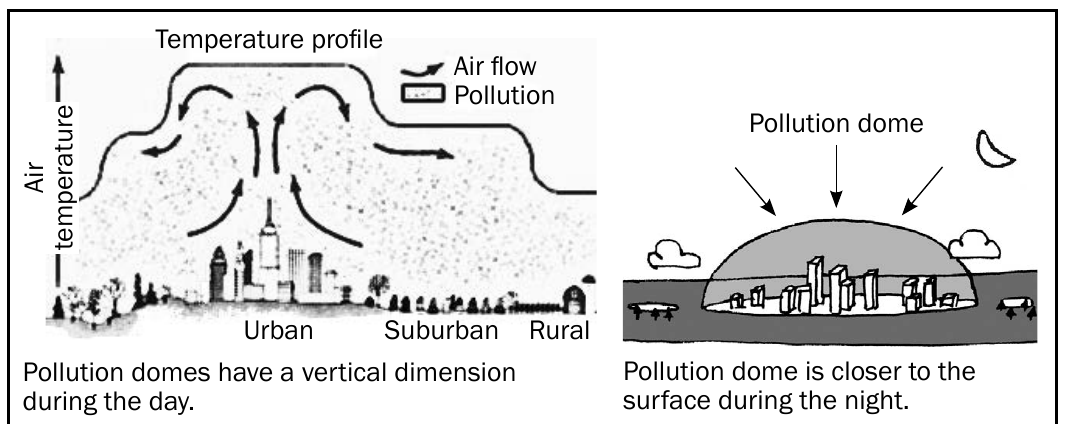
During the day, heated air rises from the warm city surfaces, creating vertical air circulation that helps disperse pollution upward and outward. However, at night, cooler air settles over the city, forming a dome-like layer that traps pollutants close to the surface. This creates poor air quality conditions and can contribute to health problems for city residents.
Note
Day vs Night Pollution Patterns
During the day, heated air rises from warm city surfaces, creating vertical air circulation that helps disperse pollution upward and outward. At night, cooler air settles over the city, forming a dome-like layer that traps pollutants close to the surface.
The pollution dome effect is particularly problematic during calm weather conditions when there's insufficient wind to disperse the trapped pollutants. This can lead to smog formation and reduced visibility in urban areas.
Sustainable solutions to reduce heat island effects
Fortunately, there are many practical ways to reduce the urban heat island effect and create more comfortable city environments:
Green infrastructure solutions:
- Create more parks and recreational areas with trees and plants to provide natural cooling
- Plant additional trees throughout the city to increase shade and evapotranspiration
- Develop rooftop gardens and green walls to replace heat-absorbing surfaces with vegetation
- Establish green belts around cities to maintain cooler rural conditions nearby
Building and planning improvements:
- Avoid using highly reflective materials like glass that can create additional heating
- Implement building height restrictions to improve air circulation
- Design buildings with better ventilation and energy efficiency
- Use lighter-coloured materials for roofs and pavements to reflect more heat
Transport and pollution reduction:
- Improve public transport systems to reduce the number of private vehicles
- Encourage lift clubs and carpooling to decrease traffic-related heat generation
- Implement stricter pollution controls on factories and industrial activities
- Promote cycling and walking infrastructure to reduce vehicle emissions
Note
These solutions work best when implemented together as part of comprehensive urban planning strategies. Cities that successfully reduce their heat island effects create more comfortable living conditions and use less energy for cooling.
Summary
Key Points to Remember:
- Urban heat islands occur when cities become warmer than surrounding rural areas due to human activities and urban materials
- Temperature patterns show the CBD as the warmest area, with parks providing cooling effects throughout the urban environment
- Four main factors create heat islands: artificial surfaces, increased surface area, pollution, and artificial heat sources
- Pollution domes trap pollutants over cities, especially at night when air circulation decreases
- Green solutions like parks, trees, and vegetation are among the most effective ways to cool urban areas