The Peripheral Nervous System (Grade 12 NSC Matric Life Sciences): Revision Notes
📚Revision Notes
The Peripheral Nervous System
What is the peripheral nervous system?
The peripheral nervous system is made up of all nerve pathways that exist outside the central nervous system (brain and spinal cord). This extensive network is composed of 12 pairs of cranial nerves that connect directly to the brain, plus 31 pairs of spinal nerves that link to the spinal cord.
Note
The main role of the peripheral nervous system is to act as a communication highway between your body and your central nervous system. It carries messages in both directions - bringing sensory information from receptors throughout your body to the brain and spinal cord, and then transmitting motor commands from the central nervous system out to the muscles and organs that need to respond.
Two main divisions
The peripheral nervous system can be split into two major parts, each with very different jobs:
Somatic nervous system
The somatic nervous system is responsible for controlling your voluntary muscles - these are the skeletal muscles that you can consciously move and control. When you decide to pick up a pen, wave your hand, or walk across a room, you're using your somatic nervous system.
This division helps your body respond appropriately to changes happening in the external environment around you.
Example
Practical Example: Catching a Ball
If you see a ball flying towards you, your somatic system processes this visual information and coordinates the muscle movements needed to catch it or duck out of the way. This demonstrates how the somatic system links sensory input with voluntary motor responses.
Autonomic nervous system
The autonomic nervous system takes care of involuntary actions - all the vital processes that happen automatically without you having to think about them. This includes controlling your heart rate, breathing, digestion, and many other essential functions.
Note
The autonomic system monitors and responds to changes in your internal environment to maintain homeostasis (keeping your body's internal conditions stable and balanced). It constantly makes adjustments to keep things like your body temperature, blood pressure, and blood sugar levels within healthy ranges.
Subdivisions of the autonomic nervous system
The autonomic nervous system is further divided into two parts that work in opposition to each other:
Sympathetic nervous system
The sympathetic nervous system is your body's emergency response system, often called the "fight or flight" response. When you face a dangerous, stressful, or exciting situation, this system springs into action to prepare your body for intense physical activity.
Important
The sympathetic system gets you ready to either fight the threat or run away from it by making rapid changes throughout your body. This is a crucial survival mechanism that has evolved to help us respond quickly to threats.
Parasympathetic nervous system
The parasympathetic nervous system does the opposite job - it's often called the "rest and digest" system. After an emergency or stressful situation passes, the parasympathetic system works to return your body back to its normal, calm state.
This system promotes activities that help your body recover, repair itself, and conserve energy when you're in a safe, relaxed environment.
How the two systems work together
What makes the autonomic nervous system so effective is that most organs in your body receive nerve supply from both the sympathetic and parasympathetic divisions. These two systems work antagonistically - meaning they have opposite effects on the same organs and work against each other to maintain perfect balance.
Important
When one system increases its activity, the other typically decreases its activity. This opposing relationship allows for very precise control of your body's internal functions and is essential for maintaining homeostasis.
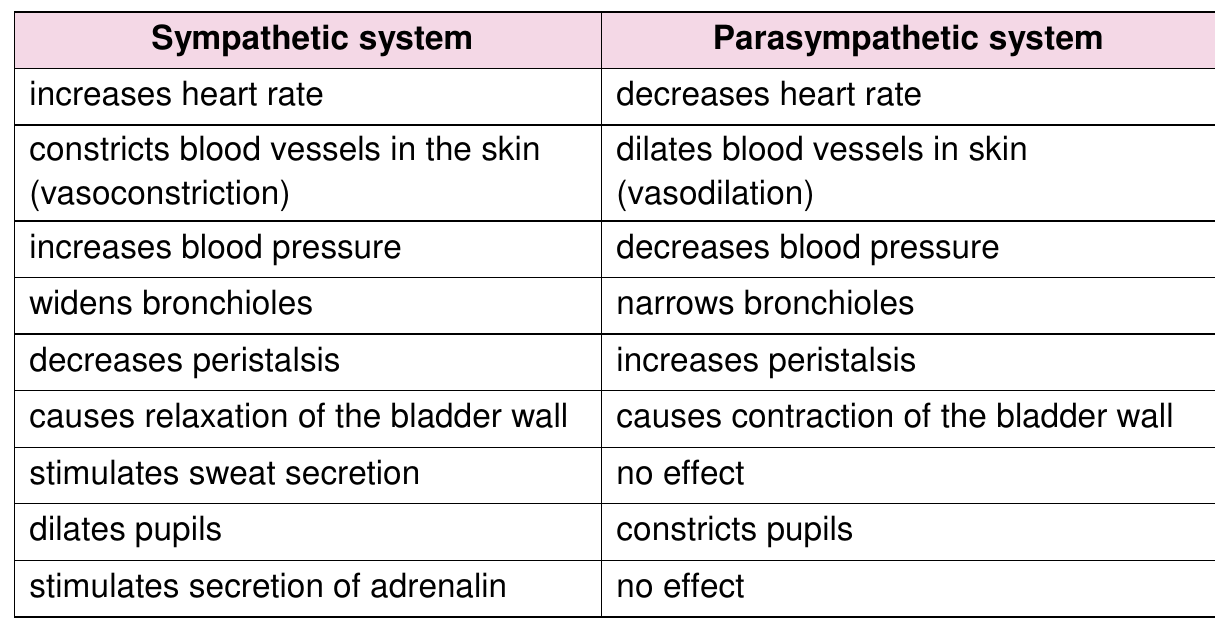
The table above shows exactly how these two systems create opposite effects throughout your body. Notice how the sympathetic system generally speeds things up and increases activity (higher heart rate, wider airways, increased alertness), while the parasympathetic system slows things down and promotes rest (lower heart rate, increased digestion, smaller pupils).
Understanding the responses
Example
Sympathetic Responses prepare you for action by:
- Increasing heart rate to pump more blood to muscles
- Widening bronchioles to get more oxygen into your lungs
- Dilating pupils to improve vision
- Stimulating sweat production to cool you down during activity
- Reducing digestive activity since it's not a priority during emergencies
Example
Parasympathetic Responses help you recover by:
- Slowing heart rate to conserve energy
- Increasing digestive activity to process nutrients
- Constricting pupils since you don't need enhanced vision
- Contracting the bladder wall to eliminate waste
Note
An important hormone called adrenalin works closely with the sympathetic nervous system to amplify these emergency responses and help prepare your body for stressful or dangerous situations.
Remember!
Summary
Key Points to Remember:
-
The peripheral nervous system includes all nerves outside the brain and spinal cord, consisting of cranial nerves and spinal nerves
-
The somatic division controls voluntary muscle movements and responses to external environment changes
-
The autonomic division controls involuntary functions and maintains internal homeostasis
-
Sympathetic nerves create "fight or flight" responses during emergencies while parasympathetic nerves promote "rest and digest" activities during calm periods
-
These two autonomic divisions work antagonistically on the same organs to provide precise control and maintain balance in your body