Negative Feedback: Thyroxin Levels (Grade 12 NSC Matric Life Sciences): Revision Notes
📚Revision Notes
Negative Feedback: Thyroxin Levels
Introduction to thyroxin and metabolism
The body needs to maintain a steady rate of energy use to keep all vital functions working properly. This energy usage rate when the body is at rest is called the basal metabolic rate (BMR). Think of it as the minimum amount of energy your body needs just to stay alive and functioning.
Thyroxin is the key hormone that controls this metabolic rate. This important hormone is made in the thyroid gland and has several crucial jobs in your body:
- Controls how fast your body uses energy by increasing metabolic rate when needed
- Keeps your heart and digestive system working properly
- Helps with bone and brain development, especially important during growth
- Maintains proper muscle tone throughout your body
For thyroxin to be produced, your body needs iodine - an essential element found in sea salt and iodised table salt. Without enough iodine in your diet, your thyroid gland cannot make sufficient thyroxin.
Note
Iodine deficiency is still a major health issue in many parts of the world. In areas where the soil lacks iodine, people may develop goitre (enlarged thyroid gland) as the thyroid works harder to produce enough thyroxin.
The thyroid control system
The regulation of thyroxin involves a complex system of glands working together like a well-coordinated team.
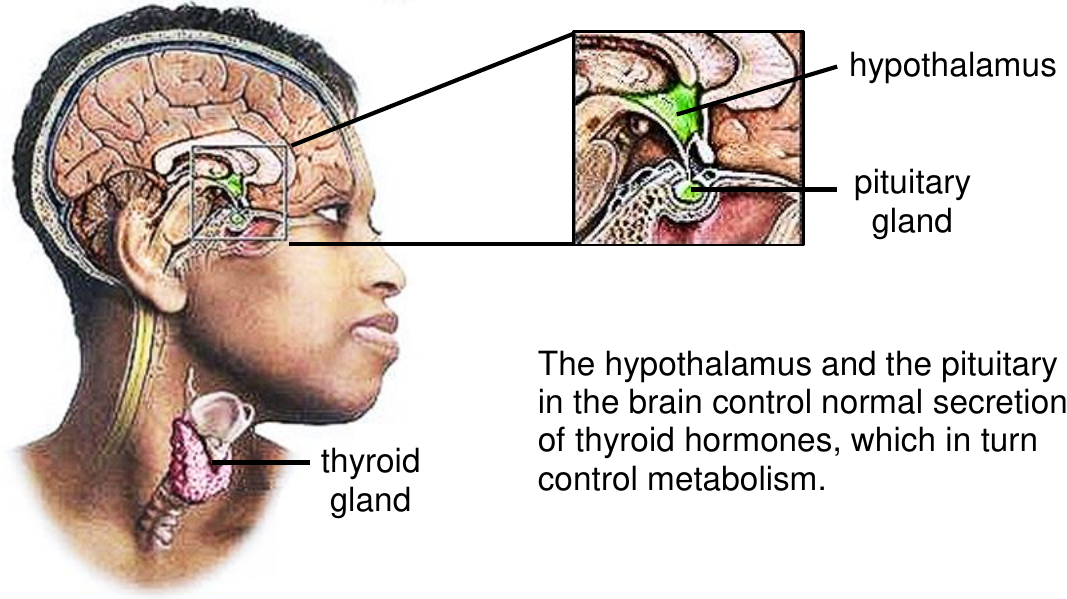
Two main glands control thyroxin levels in your body:
- Pituitary gland - located in your brain, this gland releases thyroid-stimulating hormone (TSH)
- Thyroid gland - found in your neck, this gland produces and releases thyroxin
The hypothalamus in your brain acts as the master controller, monitoring and coordinating the normal secretion of thyroid hormones. This entire system works together to control your metabolism.
Note
The hypothalamus, pituitary gland, and thyroid gland form what's called the hypothalamic-pituitary-thyroid (HPT) axis - a crucial communication pathway that maintains metabolic balance.
Understanding negative feedback regulation
Your body uses a negative feedback mechanism to keep thyroxin levels just right - not too high and not too low. This is similar to how a thermostat works in your home, automatically adjusting to maintain the perfect temperature.
Important
Understanding the thermostat analogy is key: just as a thermostat turns heating on when it's too cold and off when it's too warm, your body increases thyroxin production when levels are low and decreases it when levels are high.
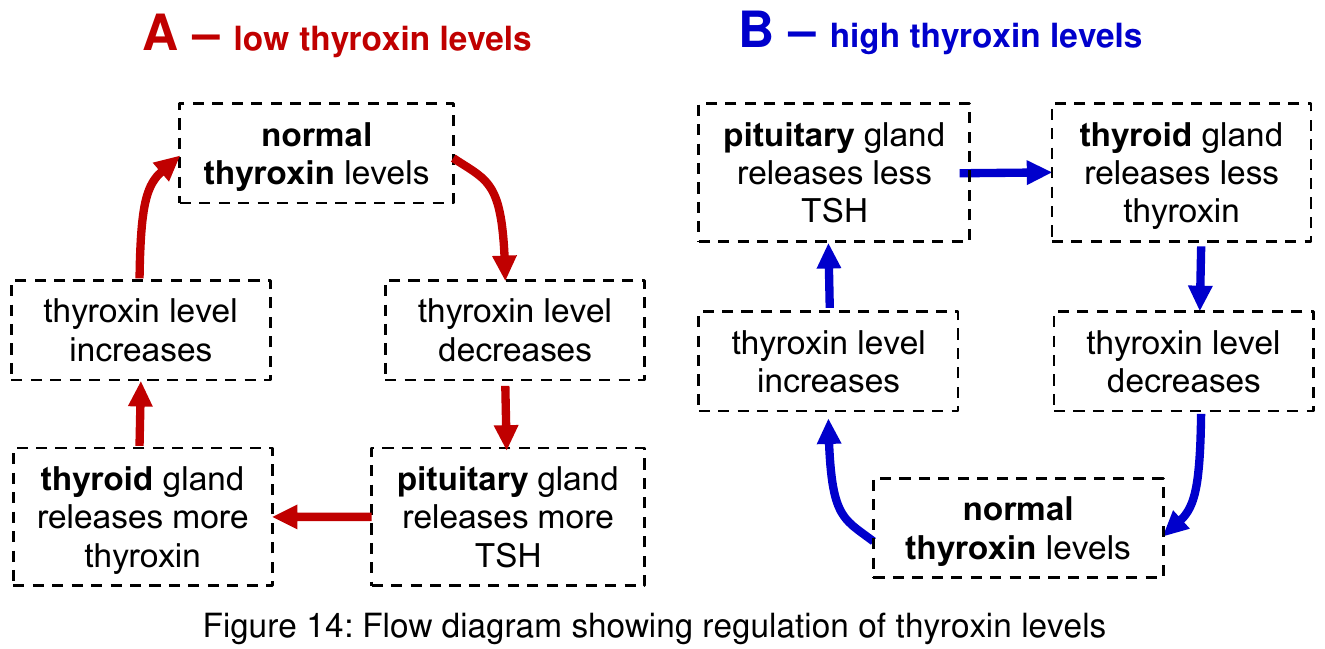
The negative feedback system works in two opposing pathways:
When thyroxin levels are too low (Pathway A - Red)
When your body detects that thyroxin levels have dropped below normal, it responds by increasing production:
- Detection: The pituitary gland senses low thyroxin levels in the blood
- Response: The pituitary gland increases its production of TSH
- Action: More TSH travels through the bloodstream to the thyroid gland
- Stimulation: TSH signals the thyroid gland to produce more thyroxin
- Correction: Thyroxin levels rise back to normal
When thyroxin levels are too high (Pathway B - Blue)
When thyroxin levels become higher than normal, the body reduces production:
- Detection: The pituitary gland detects elevated thyroxin levels
- Response: The pituitary gland becomes inhibited and reduces TSH production
- Reduction: Less TSH means less stimulation of the thyroid gland
- Decrease: The thyroid gland produces less thyroxin
- Correction: Thyroxin levels decrease back to normal
Step-by-step process of negative feedback
To better understand how this regulatory system works in practice, let's examine the complete process that occurs when thyroxin levels drop below normal.
Example
Worked Example: Complete Negative Feedback Process
Here's how the complete negative feedback mechanism works when thyroxin levels become too low:
Step 1: Thyroxin concentration in the blood drops below normal levels
Step 2: The pituitary gland detects this decrease and becomes stimulated
Step 3: The pituitary gland responds by increasing its production of TSH
Step 4: TSH travels via the bloodstream to reach the thyroid gland
Step 5: TSH stimulates the thyroid gland to boost its thyroxin production
Step 6: More thyroxin is released into the bloodstream, raising thyroxin levels
Step 7: Normal thyroxin levels are restored, completing the feedback loop
Why negative feedback is essential
This negative feedback system is crucial for maintaining homeostasis - the body's ability to keep internal conditions stable despite changes in the external environment. Without this regulatory mechanism, your metabolic rate could become dangerously high or low, affecting your heart rate, body temperature, energy levels, and overall health.
The beauty of negative feedback is that it's automatic - your body constantly monitors and adjusts thyroxin levels without you having to think about it, ensuring your metabolism stays within the healthy range needed for optimal functioning.
Important
If the negative feedback system fails, serious health problems can occur. Hyperthyroidism (too much thyroxin) can cause rapid heartbeat, weight loss, and anxiety, while hypothyroidism (too little thyroxin) can lead to fatigue, weight gain, and depression.
Remember!
Understanding thyroxin regulation is essential for grasping how your body maintains metabolic balance. The key concepts work together to form an elegant control system.
Summary
Key Points to Remember:
- Thyroxin controls your basal metabolic rate and is essential for proper heart, digestive, bone, and brain function
- The pituitary gland produces TSH, which stimulates the thyroid gland to make thyroxin
- Negative feedback automatically maintains normal thyroxin levels through opposing pathways
- Low thyroxin triggers more TSH production, leading to increased thyroxin
- High thyroxin reduces TSH production, leading to decreased thyroxin
- This system maintains homeostasis by keeping your metabolism stable and healthy